


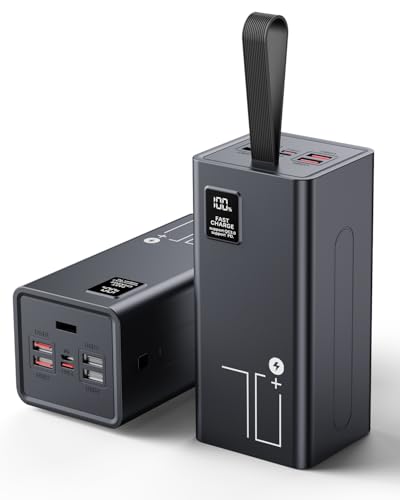
Running out of battery during a long commute creates instant frustration, especially when standard commercial chargers feel too bulky or restrictive for your custom mobile gear. Rebuilding a portable charger from salvaged 18650 cells gives you complete control over capacity, but pairing those cells with the wrong step-up board can cause unexpected thermal cutoffs or sluggish charging speeds. Selecting the best power bank module makes all the difference when you need stable voltage conversion, reliable multi-port output, and integrated circuit safety. Checking a detailed specs comparison of power bank features helps you evaluate how these compact circuits handle real current demands under everyday carry conditions.
Modern DIY charging circuits pack serious versatility into miniature circuit boards, from basic 5V 2.4A dual USB step-up boards to advanced 18W and 22.5W bidirectional fast-charging modules supporting Quick Charge and USB Power Delivery. Some custom setups also benefit from specialized dummy load resistors to stop automatic sleep modes when powering low-drain accessories like fitness trackers. Careful analysis of manufacturer specifications, lithium battery protection chips, maximum charging wattage, and user feedback ensures your DIY build delivers consistent power without sudden voltage sags.




Frequently Asked Questions About Best Power Bank Module
Can a best power bank module charge multiple devices at once?
Yes, multi-port charging boards can power several devices simultaneously, but total output current is shared across all active ports. Dual USB-A modules rated for 5V 2.4A split that available amperage when two phones connect at the same time. If connected gadgets pull more current than the circuit can supply, charging rates drop to prevent overheating. If you prefer factory-built hardware rather than soldering DIY components, a universal power bank under 25 dollars offers a reliable ready-made alternative.
What built-in safety protections are essential on a DIY lithium charging board?
Overcharge protection, overdischarge cutoff, and short-circuit protection are vital features on any dependable lithium module. Bare 18650 and 21700 cells can degrade quickly or become hazardous if discharged below safe voltage thresholds or charged beyond 4.2V. Quality boards integrate dedicated protection chips that automatically cut power during voltage spikes or load overcurrent, preventing battery damage during regular cycles.
Why do power banks shut off when charging low-drain devices like smartwatches?
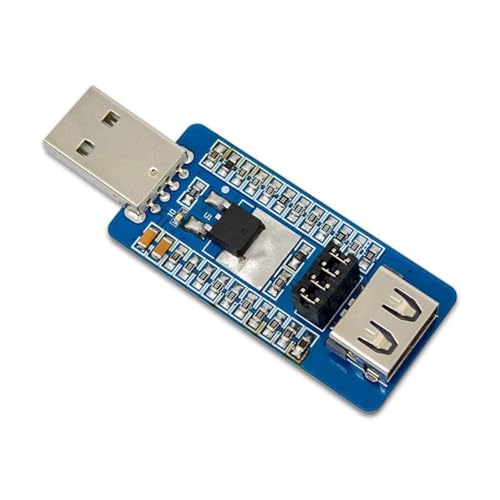
Most portable charger modules enter auto-sleep mode when the connected gadget draws current below their minimum detection threshold. Low-power electronics such as wireless earbuds and fitness trackers often draw very little current, prompting the boost converter to shut down. Adding an adjustable USB dummy load module simulates an active load with selectable jumper settings, keeping the power bank awake without interruption.
Does a USB-C port guarantee USB Power Delivery on DIY modules?
No, a USB-C connector on a charging board does not automatically indicate USB Power Delivery or high-speed voltage negotiation. Entry-level boards use USB-C solely as a physical connector for standard 5V 2A input or output. Higher-end boards, like those using IP5328P or 22.5W controllers, explicitly document multi-voltage support for 9V and 12V outputs alongside protocols like QC3.0 and PD.
Can you connect solar panels directly to a best power bank module in 2026?
Direct connection of raw solar panels to a standard DIY power bank board is not recommended because fluctuating voltages can trigger input protection faults. Standard USB modules expect stable 5V input rather than erratic current from varying sunlight. If off-grid energy capture is your main goal, a specialized solar power bank provides an integrated controller engineered to manage dynamic photovoltaic power safely.


Write Your Review
No reviews yet. Be the first to share your experience!