


Running out of juice during a travel day or remote work session gets frustrating fast, especially when your essential gear relies on a standard wall plug. Standard pocket chargers handle smartphones, but they cannot run laptop power supplies, camera battery docks, or small cooling fans. That is where a portable power bank with ac outlet proves invaluable for mobile setups. Having built-in 110V AC output alongside fast USB-C Power Delivery lets you power traditional electronics anywhere without searching for a wall socket. Before picking an external pack, checking whether it can reliably charge a laptop on the go helps prevent unexpected mid-day shutdowns.
Selecting the right portable unit comes down to continuous output wattage, physical weight, and true storage capacity. Most airline-ready units feature energy storage between 88.8Wh and 99.9Wh, staying safely under standard carry-on limits while delivering steady off-grid power. Some options feature resilient LiFePO4 battery cells with extended cycle lifespans, while others utilize high-density 21700 EV-grade cells for a lighter carry. Reviewing battery specifications, much like evaluating battery life across portable chargers, ensures your external battery handles everyday demands without unnecessary bulk.
Pros
- Built-in 110V AC outlet powers laptops, small fans, and battery chargers rated under 65 watts
- Three-way recharging capability supports AC wall input, 12V car adapters, and compatible solar panels
- Includes both a Quick Charge USB port and a 12V DC output for multi-device flexibility
- Ships with both an AC wall adapter and a 12V vehicle charging cable included
Cons
- AC outlet is strictly limited to low-draw electronics drawing 65 watts or less
- Exact battery capacity in milliamp-hours or watt-hours is not specified in the primary manufacturer data
- AC power requires manual switching and the DC circuit auto-shuts off after 20 seconds without a connected load
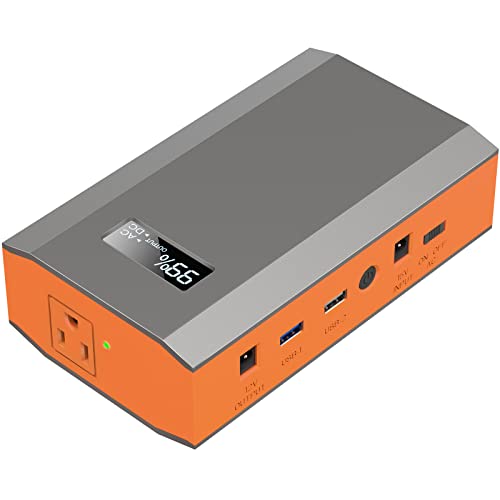
The ZeroKor Portable Power Bank is a versatile multi-port mobile power supply built around a 110V AC three-prong outlet, engineered primarily for road trippers, outdoor campers, students, and mobile workers needing plug-in power off the grid. Unlike standard smartphone battery packs that only offer low-voltage USB jacks, this device bridges the gap between pocket-sized chargers and bulky power stations by providing a continuous 65W AC outlet. Weighing approximately 1.6 pounds, it offers practical utility for running notebook computers, mini desk fans, or camera battery cradles during power outages or outdoor trips.
Charging versatility is supported through multiple physical output interfaces. The main attraction is the 110V 65W AC port, which can run any small electronic device with a rated power draw at or below 65 watts. For mobile devices, the unit includes two USB-A ports: a dedicated Quick Charge USB-1 output (supporting 5V/3A and 9V/2A) for fast-charging compatible phones, and a standard USB-2 port delivering 5V/2.1A for headphones or smart accessories. An auxiliary DC output rated between 9V and 12.6V at up to 10A expands utility for small 12-volt camp gear, though higher-draw appliances like electric heaters, blenders, or air compressors exceed the system limits and cannot be powered.
The physical housing features a two-tone orange and grey enclosure measuring 6.89 by 3.98 by 1.89 inches, balancing durability with manageable packability. Built directly into the exterior casing is a multi-function LED flashlight with both a steady reading mode and an SOS emergency flashing mode for roadside or campsite signaling. Internal safety is managed by an integrated Battery Management System (BMS) that monitors operation to help mitigate risks related to short circuits, overcurrent, overvoltage, and overload conditions.
Recharging options are flexible and well-suited for diverse travel scenarios. The battery bank can be replenished at home using the included DC 15V/2A wall AC adapter, inside a vehicle using the included 12V car charging cable, or in off-grid environments using a DC 13V to 23V solar panel (purchased separately). Operational handling requires attention to manual switching: the AC output must be toggled on manually to supply power, and the DC output automatically powers down within 20 seconds if no load is detected. The manufacturer also notes that the unit should be charged and discharged regularly rather than left fully depleted in storage, ensuring the circuitry remains active and ready.
The most important limitation to consider is the 65-watt ceiling on the AC outlet. Laptops requiring higher-wattage power bricks, as well as appliances with large inductive startup surges, will trip the safety cut-off and render the port unavailable. Additionally, because the manufacturer does not specify the exact battery capacity in milliamp-hours (mAh) or watt-hours (Wh) in the primary specifications, buyers cannot calculate precise full-recharge counts for specific devices prior to use. At 1.6 pounds, it is also significantly larger and heavier than typical pocket-sized smartphone battery banks.
This ZeroKor charging unit is best suited for budget-conscious campers, road trippers, and remote workers who require an affordable, lightweight 110V AC wall plug for low-draw laptops, lighting, and portable electronics. It serves as an accessible entry-level power solution when full-sized generator units are unnecessarily heavy. Users who need to charge high-draw gaming laptops, power tools, or medical devices requiring higher sustained wattage will be better served by a full-scale portable power station.
The ZeroKor power bank offers a balanced port configuration designed to handle both AC and DC electronics simultaneously, provided the combined draw stays within operational parameters. The front panel hosts a single standard 110V AC outlet rated at 65 watts maximum, an unregulated 9V-12.6V / 10A DC output, a Quick Charge USB-1 port (5V/3A, 9V/2A), and a standard 5V/2.1A USB-2 port. This assortment allows users to charge multiple devices, such as a notebook computer and a smartphone, at the same time.
Replenishing the internal battery pack can be accomplished through three separate input methods depending on your location. The package includes a dedicated AC wall charging adapter delivering DC 15V at 2A max for standard home wall outlets, along with a 12V car adapter cable for recharging while driving. For outdoor and off-grid users, the unit also supports solar recharging via compatible third-party panels outputting DC 13V to 23V, making it adaptable to extended outdoor excursions.

Pros
- Durable LiFePO4 battery pack rated for over 3,500 charge cycles, far outlasting standard lithium cells
- Dual AC wall outlets and a 45W USB-C PD port accommodate laptops and everyday electronics
- Ultra-quiet fanless construction operates without disruptive background noise
- Rapid recharging technology replenishes the battery up to 80 percent in 1.5 hours
Cons
- 100W AC output limit is unsuitable for high-draw heating appliances, coffee makers, or hair dryers
- Solar charging panel and solar connection cable must be purchased separately
- At 2.54 pounds, it is heavier and bulkier than standard pocket smartphone power banks
The Daran 89.6Wh Portable Power Station is a compact, multi-output mobile power bank engineered for users who need more versatility than a standard pocket charger can deliver. Built with durable LiFePO4 battery cells and dual AC sockets, this 2.54-pound generator alternative bridges the gap between pocket battery packs and bulky home backup stations. It serves remote workers running laptops away from wall sockets, campers wanting quiet off-grid charging, photographers managing camera gear, and families building portable emergency kits.
Charging capability centers around an 89.6Wh capacity pack paired with seven distinct output connections. Users get two standard AC wall sockets capable of delivering 100W continuous output with a 200W surge peak, suitable for running compatible laptops, small electronics, or compact equipment. For mobile electronics, the unit includes two USB-C ports offering up to 45W and 15W respectively, alongside two USB-A ports delivering up to 18W and 15W for smartphones, tablets, or earbuds. A dedicated 60W DC5521 port adds auxiliary 12V connectivity, while the manufacturer notes compatibility with devices such as drones, cameras, and mini-coolers within the 100W threshold.
Measuring 6.5 by 3.3 by 4 inches, the enclosure adopts a dark gray finish designed with a practical soft carry handle for convenient transit in backpacks or vehicle trunks. A clear LED status display indicates real-time operational status and remaining battery level, guarded by a protective peel-away shipping film. Operation is completely silent thanks to a fanless thermal structure, making it unobtrusive when placed beside a sleeping bag or on a quiet desk. For blackout preparedness and outdoor nights, an integrated four-level LED flashlight offers both continuous illumination and SOS signaling modes, secured by a long-press accidental-touch activation mechanism.
Replenishing the internal battery is straightforward, with the manufacturer providing four distinct recharge pathways. Owners can charge via a standard AC wall socket, bidirectional USB-C PD, a 12V vehicle port, or an external solar panel. Fast-charging technology allows the battery to reach an 80 percent charge in approximately 1.5 hours, and the system even supports simultaneous AC and DC input charging to maximize turnaround speed. An internal battery management system (BMS) incorporates 12 safety safeguards that monitor voltage, current, and internal temperatures during both discharge and recharge cycles.
Realistic operational limits revolve primarily around power output and physical footprint. The AC sockets are strictly capped at 100W total output, meaning this unit cannot run high-draw household appliances such as coffee makers, blenders, hair dryers, or space heaters. In addition, while 2.54 pounds is relatively lightweight for an AC-equipped power station, it remains significantly heavier and bulkier than standard 10,000mAh smartphone chargers. Buyers planning to recharge with solar energy should also note that the solar panel and connection cables must be purchased separately.
The Daran 89.6Wh Power Station is a sensible choice for road trippers, students, and mobile professionals seeking an all-in-one power hub with genuine AC utility and USB-C fast charging. The standout reason to choose this model over conventional lithium-ion battery packs is its LiFePO4 battery chemistry, which delivers a rated lifespan exceeding 3,500 cycles for sustained reliability. Those requiring sustained output above 100W for demanding appliances will need a larger power station, but users needing dependable power for laptops, phones, and travel essentials will find great utility in this compact design.
The Daran power station features seven total output ports to support multiple devices at once. The two standard three-prong AC outlets share up to 100W of continuous output (200W peak), making them suitable for compatible laptops, small drones, and low-draw desktop gear.
Mobile charging is anchored by two USB-C ports and two USB-A ports. The primary USB-C connection delivers up to 45W Power Delivery for rapidly charging modern USB-C laptops, tablets, and flagship smartphones, while the secondary USB-C port provides 15W. The USB-A ports output up to 18W and 15W respectively, allowing legacy charging cables to operate alongside modern Type-C connections.
A 60W DC5521 round barrel port provides direct 12V output for compatible auxiliary equipment. Because the unit offers such varied port options, users can charge an array of gear including cameras, smartphones, and low-power travel devices without carrying separate wall adapters.
At the core of this power bank is an 89.6Wh lithium iron phosphate (LiFePO4) battery pack. Unlike conventional NCM lithium-ion cells that typically degrade after 500 to 1,000 charge cycles, this LiFePO4 chemistry is rated for over 3,500 life cycles, offering substantial long-term durability across years of routine use.
Safety is managed through an advanced integrated Battery Management System (BMS) that actively tracks 12 protective metrics. This system oversees cell voltage, current output, and thermal conditions to safeguard against common electrical issues such as overcharging, overcurrent, and short circuits.
For optimal battery calibration and gauge accuracy, the manufacturer recommends fully discharging and recharging the battery pack twice upon initial unboxing. The listed 89.6Wh capacity also provides a helpful baseline for comparing the unit against airline carry-on regulations, though travelers should always verify specific carrier battery policies before flying.

Pros
- Built-in 110V AC outlet powers devices up to 65W that standard USB-only battery packs cannot run
- Multiple recharging methods supported out of the box with included AC wall adapter and 12V vehicle charging cable
- Manufacturer-listed 88.8Wh capacity rating sits below typical airline battery limits for transparent travel planning
- Integrated multi-mode flashlight adds practical utility for roadside emergencies and outdoor camping
Cons
- Lacks modern USB-C and USB Power Delivery (PD) ports for direct USB-C laptop charging
- Strict 65W AC power ceiling cannot operate high-draw gaming laptops, heating elements, or motorized tools
- At 1.6 pounds, it is heavier and bulkier than standard pocket-sized smartphone battery packs
The ZeroKor 88.8Wh Portable Power Bank is a compact multi-port battery station designed for users who require a standard two-prong 110V AC wall outlet in a portable form factor. Built around an internal 88.8Wh lithium-ion battery pack, this unit bridges the gap between conventional pocket chargers and heavy outdoor power stations. It is primarily built for students, business travelers, campers, and remote workers who need to power low-draw laptops, camera batteries, mini fans, or personal electronics when standard electrical outlets are unavailable.
Charging performance centers on a single 110V AC outlet rated for a maximum continuous output of 65W. For direct mobile device charging, the unit includes two USB-A ports: a Quick Charge USB-1 port supporting 5V/3A and 9V/2A outputs, alongside a standard USB-2 port offering 5V/2.1A output. A high-current DC barrel output rated between 9V and 12.6V at up to 10A expands utility for compatible 12V DC electronics. Connected equipment must stay within the unit's 65W operational envelope, making it suitable for compact laptops, tablets, drones, and smartphones, but unsuitable for high-draw appliances such as hair dryers, coffee makers, or air compressors.
The physical housing features a two-tone red and grey finish measuring 6.89 by 3.98 by 1.89 inches and weighing approximately 1.6 pounds. Port placement is grouped on the front panel alongside an integrated multi-mode flashlight that provides standard reading illumination as well as an SOS emergency flash pattern. Internally, an integrated Battery Management System (BMS) manages operational safety by providing short-circuit protection, overcurrent protection, overvoltage protection, and overload shutdown.
Operating and recharging the battery pack is straightforward thanks to multiple bundled input accessories. The ZeroKor power bank is recharged via its DC5521 input port (15V/2A Max) using either the supplied AC wall adapter or the included 12V vehicle cigarette-lighter adapter cable. The unit can also connect to third-party solar panels outputting 13V to 16V with a DC5521 connector, though solar panels must be purchased separately. Operation requires manually toggling the AC output switch, which prevents idle drain, while the DC output circuit automatically shuts off after 20 seconds if no load is detected.
The primary limitation of this power bank is the total absence of native USB-C or USB Power Delivery (PD) ports. Users wishing to fast-charge USB-C laptops must plug their laptop's original AC charging brick directly into the 65W AC outlet rather than using a direct USB-C cable. Furthermore, the 88.8Wh total capacity and 65W maximum output ceiling represent hard physical boundaries. Attempting to power laptops that draw more than 65W under load will trigger the unit's automatic overload protection, and the manufacturer recommends against fully discharging the unit down to empty to maintain optimal battery health.
The ZeroKor 65W Portable Power Bank is a solid recommendation for road trippers, students, photographers, and outdoor enthusiasts who specifically need an affordable, portable 110V AC socket for low-wattage devices. Buyers looking exclusively for USB-C fast charging for modern smartphones or high-wattage gaming laptops should consider a dedicated USB-C PD power bank instead. For anyone needing flexible 110V AC plug-in power in a 1.6-pound package, this model delivers substantial everyday value.
The ZeroKor power bank offers a versatile output configuration designed to accommodate both legacy electronics and everyday mobile devices. Its centerpiece is the 110V AC outlet, which delivers up to 65W of continuous power for equipment requiring a standard two-prong plug. This setup lets users power small laptops, drone battery docks, mini desk fans, and DSLR camera chargers directly without special adapters.
For mobile charging, the station provides two standard USB-A ports with distinct power delivery capabilities. The USB-1 port features Quick Charge protocol support with 5V/3A and 9V/2A profiles, making it suitable for rapid smartphone and accessory top-ups. The secondary USB-2 port provides steady 5V/2.1A power for smaller gadgets, Bluetooth earbuds, and standard tablets. A dedicated DC barrel port delivering 9V to 12.6V at up to 10A allows direct connection to compatible 12V vehicle accessories and specialized field electronics.
Recharging the ZeroKor 88.8Wh power bank is handled through a dedicated DC5521 input port rated for 15V at up to 2A. The manufacturer includes two distinct input accessories in the retail package: a standard AC wall power adapter for home charging and a 12V automotive cigarette lighter cable for on-the-road replenishment during long drives.
Off-grid travelers can also replenish the internal battery using compatible third-party solar panels providing between 13V and 16V with a standard DC5521 connection. To maintain optimal lithium-ion cell performance over time, the manufacturer recommends charging the battery regularly rather than letting it sit in a fully depleted state, ensuring reliable backup power whenever emergencies or off-grid trips arise.

Pros
- High 140W USB-C PD 3.1 output easily charges demanding laptops and fast-charging mobile electronics
- Built-in 100W AC outlet expands versatility beyond standard USB ports for small household plugs and field gear
- Supports rapid 100W USB-C input for a full one-hour recharge cycle with an appropriate wall charger
- Informative color display provides real-time visibility into power draw, charging speed, and operating temperatures
Cons
- Weighs 1.82 pounds and measures 2 inches thick, making it significantly bulkier than standard pocket phone chargers
- High-speed 100W GaN wall charger required for one-hour recharging is sold separately
- AC outlet is rated for 100W continuous output (150W peak), making it unsuitable for high-draw heating appliances or full-sized power tools
The ZOUPW 140W Portable Power Bank is a hybrid high-output battery pack and mini portable power station equipped with both high-wattage USB-C PD 3.1 and a built-in 100W AC wall outlet. Designed specifically for power users, business travelers, remote professionals, and outdoor enthusiasts, this unit bridges the gap between conventional pocket chargers and heavy power stations. Its primary purpose is to keep power-hungry electronics-ranging from modern workstations to drone batteries and field equipment-operating reliably when wall power is out of reach.
At the core of this power bank is a 99.9Wh energy capacity driven by premium 21700 EV-grade lithium-ion cells with a 3C discharge rating, supporting a combined total output of up to 160W. The flagship charging channel is a USB-C port supporting up to 140W under the USB Power Delivery 3.1 standard, delivering sufficient sustained power to charge high-performance laptops without throttling. Complementing the USB-C performance is an integrated 100W AC outlet capable of handling up to 150W peak loads through X-Boost functionality. This allows users to plug in traditional two-prong wall adapters for small RV fridges, compact projectors, and camera gear directly into the battery pack.
Constructed with a rugged black exterior, the battery pack measures 6.9 by 2.7 by 2.0 inches and weighs 1.82 pounds, balancing substantial capacity with portable handling. A standout hardware element is the vibrant color screen, which provides clear real-time monitoring of input wattage, output wattage, and operating temperature. This real-time visibility takes the guesswork out of device power draw and safety status. Additionally, the unit incorporates an outdoor-ready 150-lumen LED flashlight with dedicated SOS and flashing modes, transforming the battery into a functional backup tool for night travel, roadside emergencies, or backcountry campsites.
Replenishing the internal cells is exceptionally fast thanks to 100W USB-C input support, which can recharge the power bank from empty to full in approximately one hour when using a compatible 100W GaN charger. For outdoor off-grid use, the system also accepts direct 45W USB-C input from compatible ZOUPW solar panels, enabling functional mini solar generator setups. A comprehensive Smart Battery Management System (BMS) continuously protects against overcharging and overheating. Routine operation is simple: users can plug their USB-C cables or AC cords directly into the designated ports and track power distribution live on the digital interface.
While highly versatile, the ZOUPW power bank carries practical limitations inherent to high-output hybrid designs. Weighing 1.82 pounds with a 2-inch thickness, it is significantly heavier and bulkier than standard pocket-friendly battery packs meant exclusively for smartphones. Furthermore, the AC outlet is strictly limited to 100W continuous output (with a 150W peak), which means it cannot power high-draw heating appliances such as hair dryers, coffee makers, or heavy power tools. Buyers should also note that achieving the advertised one-hour recharge requires a 100W GaN wall charger, which is not included in the box and must be acquired separately.
This high-output battery pack is an outstanding choice for digital nomads, photographers, remote field workers, and campers who require both rapid 140W USB-C laptop power and the flexibility of an AC wall socket in an FAA-compliant carry-on size. Users who only need occasional emergency phone top-ups during daily commutes would be better served by a smaller, lighter pocket charger. However, for those who demand serious portable wattage and true AC versatility in a sub-two-pound form factor, the ZOUPW power bank provides exceptional utility and performance.
The ZOUPW portable power bank is engineered around a 99.9Wh battery pack composed of 21700 EV-grade lithium-ion cells. These cells feature a 3C high-discharge rate capable of sustaining a 160W combined total output. For laptops and high-power mobile devices, the primary USB-C port provides up to 140W Power Delivery 3.1 output, ensuring rapid, steady power transfer even during intensive computing tasks.
In addition to USB output, the unit integrates a 100W continuous AC outlet capable of handling surges up to 150W using X-Boost technology. This allows users to operate small appliances, cameras, and drones that depend on traditional AC wall plugs without needing specialized DC converters.
Recharging flexibility is a key strength of the ZOUPW system. Utilizing 100W USB-C input, the 99.9Wh battery can complete a zero to 100 percent recharge in roughly one hour when connected to a separately sold 100W GaN wall adapter. Outdoor users can also replenish the battery pack using direct 45W USB-C solar charging when paired with compatible ZOUPW solar panels.
Pros
- 99.9Wh capacity hits the sweet spot for FAA carry-on compliance while offering laptop-grade backup power
- Built-in 110V/100W AC outlet powers devices that rely on traditional two-prong or three-prong wall plugs
- Bidirectional 65W USB-C PD port supports both high-speed device charging and quick two-hour power bank replenishment
- Multiple recharging methods including USB-C PD, the included car charger, or an optional solar panel
- Informative LCD status screen and integrated LED flashlight enhance utility during outdoor activities and emergencies
Cons
- At 1.7 pounds and over 8.6 inches long, it is significantly bulkier than standard pocket-sized smartphone battery packs
- 100W AC outlet rating is limited to small electronics and cannot power high-draw heating appliances, power tools, or hair dryers
- A 65W USB-C wall adapter is required to achieve the two-hour recharge speed but is not included in the box
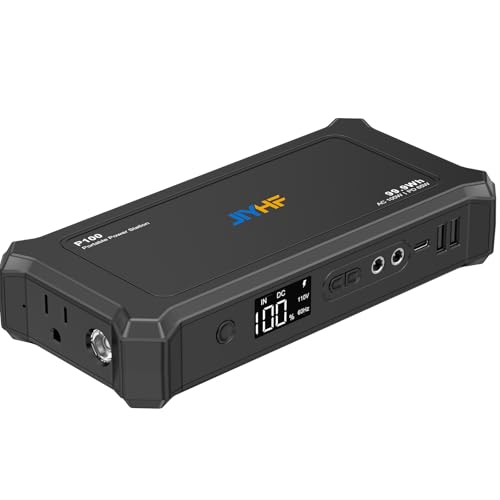
The JIYHF Portable Power Bank with AC Outlet is a high-capacity multi-port charging station engineered for users who need versatile off-grid electricity for laptops, mobile gear, and small AC appliances. Rated at 99.9 watt-hours (Wh), this battery pack is specifically sized to stay within the general FAA 100Wh threshold for airline carry-on baggage. It caters directly to business travelers, outdoor campers, digital nomads, and emergency-preparedness shoppers who require more than just standard 5-volt USB charging.
Equipped with five distinct power outputs, the unit delivers broad device compatibility across modern USB standards and legacy plug types. The marquee feature is a 110V/100W AC outlet capable of powering small laptops, camera battery chargers, and light electronics. Alongside the AC socket, the bidirectional 65W USB-C Power Delivery (PD) port fast-charges compatible USB-C laptops, tablets, and phones, while two Quick Charge 3.0 (QC3.0) USB-A ports handle standard smartphones and accessories. A dedicated 12V DC port rounds out the interface for specialized 12-volt equipment.
In terms of build and interface, the JIYHF power bank measures 8.65 by 3.9 by 1.65 inches and weighs 1.7 pounds, featuring a solid black rectangular housing suited for gear bags. An integrated LCD display screen visually conveys exact remaining power levels, eliminating guesswork associated with basic four-dot LED indicators. For outdoor and emergency scenarios, the casing incorporates an adjustable multi-mode LED flashlight. The manufacturer integrates a battery management system (BMS) that monitors internal temperature, voltage, and current to safeguard both the internal cells and connected electronics during active operation.
Recharging flexibility is a key operational strength, supporting input via the 65W USB-C port, the included 12V car adapter, or an optional direct solar panel. When connected to a 65W or greater USB-C PD wall charger, the 99.9Wh pack can reach full capacity in approximately two hours according to manufacturer specifications. The unit also supports pass-through charging, enabling it to power devices while simultaneously replenishing its internal battery, though the manufacturer advises against prolonged continuous pass-through usage. The package includes a USB-C to USB-C charging cable, a vehicle adapter, and a protective storage bag for streamlined cable management.
Prospective buyers should account for the physical footprint and power ceiling inherent to this form factor. Weighing nearly two pounds, this device is built for backpacks, vehicle consoles, and carry-ons rather than everyday coat pockets. Furthermore, while the 100W AC inverter handles computing electronics, it will trip or shut down if connected to high-draw resistive loads like coffee makers, hair dryers, or heavy power tools. Buyers should also verify their individual device requirements, as replenishing the bank at its top two-hour speed requires sourcing a dedicated 65W USB-C wall plug.
For travelers, remote professionals, and campers seeking a multi-device charging hub with both a true AC plug and 65W USB-C laptop delivery, the JIYHF 99.9Wh power bank represents a practical and flight-ready power solution. Commuters who only need to top up a smartphone during a daily train ride will likely find it heavier than necessary and would be better served by a slim pocket charger. However, anyone requiring reliable backup electricity for laptops, camera gear, and emergency lighting will appreciate its balanced capacity and rich port selection.
The JIYHF power bank features a five-output configuration designed to power multiple devices simultaneously. The array includes one 110V/100W AC socket, one 65W USB-C PD port, two QC3.0 USB-A ports, and a 12V DC output port.
The bidirectional 65W USB-C port supports high-speed charging for compatible laptops, phones, and tablets, while also serving as the primary high-speed input port for recharging the power bank itself.
With an energy rating of 99.9Wh, this battery pack is manufactured to align with FAA carry-on guidelines that permit lithium batteries under 100Wh in passenger carry-on luggage without airline approval.
An internal Battery Management System (BMS) manages voltage, current, and heat dissipation to provide active safety protection for both the internal battery cells and attached hardware.

Pros
- Integrated 100W AC outlet powers small electronics that require standard two-prong or three-prong plugs
- Bidirectional 65W USB-C PD port supports laptop charging and recharges the bank in 1.5 hours
- Listed 98Wh energy rating complies with standard 100Wh airline carry-on limits
- Four versatile output ports accommodate both modern USB-C gear and legacy USB-A accessories
Cons
- AC outlet output is capped at 100W, making it unsuitable for high-draw heating elements or large appliances
- The 6.7 x 2.6 x 2.6-inch tower design is bulkier than flat, pocket-sized smartphone power banks
- Achieving the 1.5-hour recharge time requires a separate 65W USB-C wall adapter not detailed as included
The Paopaoyu 100W AC Outlet Portable Power Bank is a versatile high-capacity backup charger engineered for remote workers, business travelers, campers, and emergency home backup kits. Combining an integrated AC socket with modern USB Power Delivery ports, this unit eliminates complete reliance on wall plugs when working away from a desk. It provides substantial off-grid energy in a standalone tower format, making it particularly useful for keeping essential mobile gear operational during flights, road trips, field assignments, or unexpected electrical outages.
Equipped with a listed nominal capacity of 27,000 mAh and an energy rating of 98Wh, this power bank delivers multi-device flexibility through four distinct output ports. The primary feature is a 100W AC outlet capable of handling portable electrical appliances that draw less than 100 watts. For modern mobile electronics, a bidirectional 65W USB-C Power Delivery port provides high-speed charging for compatible laptops, tablets, and smartphones. Additional connectivity includes an 18W USB-A port and a 12W USB-A port, allowing users to power cameras, handheld devices, and older mobile accessories without carrying separate adapter plugs.
In terms of build and layout, the Paopaoyu charger adopts a block-style tower aesthetic measuring 6.7 by 2.6 by 2.6 inches. This structured footprint keeps the AC outlet and USB array easily accessible on desktop workspaces, airline tray tables, or camp tables while minimizing horizontal surface clutter. Because the battery capacity is listed at 98Wh, the unit falls just beneath the general 100Wh limitation enforced by the FAA and TSA for passenger carry-on baggage. While the column shape is too substantial for pocket carry, it slips neatly into commuter backpacks, camera cases, and emergency prep bags.
Recharging the power bank is efficient thanks to the 65W input capability on the USB-C port, which the manufacturer states can replenish the 27,000 mAh battery in approximately 1.5 hours when connected to a compatible high-wattage power adapter. Operating connected devices is largely plug-and-play, allowing power delivery across USB-A, USB-C, and AC connections depending on total demand. Everyday operation remains straightforward whether positioned on an airport terminal bench, an office desk away from wall sockets, or an outdoor picnic table.
Prospective buyers must recognize the operational limits of a 100W AC inverter. Electrical appliances requiring sustained or surge power above 100 watts, such as household hair dryers, electric kettles, or high-draw tools, will trigger the built-in overload protection mode. Furthermore, achieving the advertised 1.5-hour recharge turnaround necessitates a separate 65W USB-C wall charger. While the 98Wh energy rating complies with general airline carry-on guidelines, individual carrier policies can vary, and actual delivered energy will reflect standard voltage conversion losses and AC inversion efficiency.
For mobile professionals, frequent flyers, outdoor enthusiasts, and emergency planners who need reliable AC and 65W USB-C power in a single transportable package, the Paopaoyu 100W AC Power Bank offers strong utility. Shoppers looking strictly for a slim, pocket-friendly phone battery may prefer smaller 5,000 mAh or 10,000 mAh power banks. However, if your gear kit demands an AC socket and laptop-grade USB-C output without exceeding airline capacity limits, this versatile multi-port unit represents a practical and capable choice.
The Paopaoyu power bank provides four dedicated outputs to accommodate both modern USB electronics and standard AC wall plugs. The 100W AC outlet handles laptops, camera battery chargers, and compact personal appliances drawing under 100W. The bidirectional USB-C port supports 65W Power Delivery for both charging compatible laptops and rapidly recharging the power bank itself. For legacy devices, an 18W fast-charge USB-A port and a standard 12W USB-A port provide dedicated connections for smartphones, earbuds, and accessories.
Safety architecture on this power bank includes FCC, CE, and RoHS certifications alongside built-in protection against overcharging, overvoltage, overcurrent, and short circuits. If an attached device exceeds the 100W threshold on the AC outlet, an automatic safety shutoff activates to protect the battery and internal inverter. With an explicit energy rating of 98Wh, the battery bank is designed to comply with standard TSA and FAA passenger carry-on thresholds under 100Wh, though travelers should always verify specific carrier guidelines before flying.
Frequently Asked Questions
Can a portable power bank with ac outlet power household appliances?
No, a portable power bank with ac outlet cannot run high-draw heating appliances like hair dryers, microwaves, or coffee makers. Most compact units offer continuous inverter output between 65W and 100W. Connecting equipment exceeding the rated wattage triggers immediate overload protection to protect internal circuitry. They work best for laptops, cameras, drones, and small electronics.
Is a portable power bank with ac outlet allowed on airplanes in 2026?
Yes, a portable power bank with ac outlet is permitted in carry-on baggage if its capacity is 100 watt-hours (Wh) or less. Aviation security guidelines strictly prohibit loose lithium battery packs in checked luggage. Models rated at 88.8Wh, 89.6Wh, or 99.9Wh fall within standard domestic limits without requiring airline approval, though international guidelines can vary.
Why does an AC outlet drain battery faster than USB-C?
An AC outlet uses more energy because internal DC-to-AC inversion creates natural electrical conversion losses. Converting low-voltage direct current into 110V alternating current generates mild heat and uses idle inverter energy. Direct USB-C Power Delivery bypasses the inverter entirely, delivering power far more efficiently. Knowing why a power bank charges slowly can help you choose the best port.
How do watt-hours differ from milliamp-hours?
Watt-hours (Wh) measure total stored electrical energy, whereas milliamp-hours (mAh) only measure electric charge at a specific nominal voltage. Because internal lithium cells run at roughly 3.7V, relying on mAh alone can mislead buyers comparing multi-voltage AC battery packs. Checking stated Wh ratings gives an accurate view of overall capacity, which is essential when researching how to choose a durable power bank for travel.
Why does an AC portable charger turn off automatically?
Unexpected shutdowns typically stem from inverter overload, thermal limits, or built-in auto-shutoff timers. If a connected device demands more than the rated 65W or 100W limit, the Battery Management System (BMS) shuts down output to prevent damage. Many units also shut off automatically within 20 to 30 seconds if no power draw is detected.


Write Your Review
No reviews yet. Be the first to share your experience!