


Keeping Your Starlink Mini Running Off-Grid Takes Serious Battery Power
Losing internet access in the middle of a remote campsite or RV trip because your portable battery couldn’t keep up is a real problem. A standard 10,000mAh phone charger won’t cut it here. If you’re shopping for a high capacity anker power bank starlink mini setup, the key specs to focus on are Wh (watt-hour) rating, DC output voltage, USB-C Power Delivery wattage, and whether the battery can deliver stable power without causing your Starlink Mini dish to reboot. Options in this roundup range from 72Wh all the way up to 288Wh, spanning traditional power banks with 140W USB-C PD 3.1 output to dedicated DC portable power stations with LiFePO4 battery cells and solar recharging. Brands like Anker, GENDOME, and XTAR each approach Starlink Mini compatibility differently, so matching the right capacity and output type to your use case matters more than just picking the highest mAh number. If you also need a smart Anker power bank for camping, several of these overlap nicely with outdoor charging needs.
It’s worth noting that not every high-capacity power bank is compatible with Starlink Mini. The Anker Prime 26,250mAh 300W model, for example, explicitly states it is not compatible with Starlink Mini despite its massive output. That’s because Starlink Mini has specific voltage requirements, and some USB-C power banks can cause reboots or fail to start the dish entirely. Dedicated solutions like the StarGrid kit and XTAR MP158 use direct DC output in the 15-21V range, which can avoid those issues. If you’re comparing large-capacity Anker power banks for general use versus Starlink-specific batteries, understanding the difference between USB-C PD output and regulated DC output is critical before you buy.

Pros
- High 140W two-way Power Delivery 3.1 output easily accommodates power-hungry USB-C laptops and tablets.
- Informative digital screen provides accurate live feedback on wattage draw and battery replenishment times.
- Generous 24,000mAh capacity provides multiple full charges for modern smartphones and tablets.
- Includes a high-power 140W USB-C cable and carrying pouch without requiring immediate separate accessory purchases.
Cons
- At 1.39 pounds and roughly two inches thick, it is too bulky for comfortable pocket carry.
- Recharging at the maximum 140W rate requires a separate high-wattage wall adapter that is not included.
- Does not feature wireless charging surfaces for users who prefer cable-free smartphone top-ups.
The Anker 737 Power Bank (PowerCore 24K) is a heavy-duty portable charging station built specifically for laptop users, business travelers, and mobile professionals who require sustained, high-wattage power away from AC wall outlets. Featuring a listed 24,000mAh nominal capacity and three charging ports, this unit targets commuters, students, and remote workers who need to keep notebooks, tablets, and phones functioning during long travel days, cross-country flights, or extended off-grid sessions.
Charging performance is anchored by two-way 140W capability utilizing USB Power Delivery 3.1 technology. This advanced standard allows the battery pack to output high wattage to power-demanding USB-C laptops, while also supporting rapid recharge rates for the internal cells when paired with a compatible 140W wall adapter and 5A cable. According to manufacturer estimates, the 24,000mAh capacity can recharge an iPhone 16 Pro up to 4.13 times or a 2024 13-inch iPad Pro up to 1.33 times, though actual delivered energy will vary depending on conversion losses, connected device limits, and operating temperatures.
In terms of physical design, the power bank adopts an upright pillar layout measuring 6.13 by 2.14 by 1.95 inches and weighing approximately 1.39 pounds (around 22 ounces). Its primary distinguishing feature is the front-facing smart digital display, which delivers real-time diagnostic data including input wattage, output wattage per active port, overall battery percentage, and an estimated timer indicating how long the power bank will take to fully recharge.
Day-to-day handling is streamlined by the included travel pouch and dedicated 140W USB-C to USB-C cable. While the pack easily slides into backpack side sleeves, briefcase compartments, or luggage pockets, checking charging health is as simple as pressing the control button to wake the screen. The manufacturer notes that the battery pack meets airline carry-on guidelines, making it a viable companion for business flights and airport layovers.
The unit does come with realistic physical and operational tradeoffs. Because of its dense battery cells and heavy cooling architecture, this 1.39-pound pack is distinctly unsuited for jacket or pants pockets. Additionally, while the pack can receive up to 140W input, achieving those recharge speeds requires users to supply their own compatible high-wattage wall charger, and the design lacks any Qi or magnetic wireless charging coils.
The Anker 737 Power Bank is an outstanding investment for frequent flyers, remote software workers, and creators who need dependable, high-output laptop charging away from a desk. Users who only need a lightweight pocket charger for casual phone top-ups may prefer a significantly smaller 5,000mAh or 10,000mAh alternative, but for demanding multi-device workflows, this unit offers top-tier wattage and actionable power monitoring.
The Anker 737 stands out due to its integrated smart digital display, which eliminates the guesswork common to basic multi-LED battery packs. The screen provides active readings of current input wattage during recharging, real-time output wattage across connected devices, and the remaining battery percentage.
In addition to basic power metrics, the intelligent display calculates and shows the estimated time required to complete recharging. This enables travelers and professionals to plan their plug-in time accurately during brief airport layovers or cafe stops before heading back out on the road.
Designed with business travel in mind, the Anker 737 Power Bank meets standard airline carry-on requirements, allowing passengers to keep critical productivity devices charged during long flights. As with all high-capacity lithium battery packs, travelers must keep the unit in their carry-on baggage rather than checked luggage.
At 6.13 x 2.14 x 1.95 inches and roughly 1.39 pounds, the power bank provides an efficient balance of capacity and packability. The bundled soft travel pouch protects the casing and screen from surface scratches when stowed alongside cables, laptops, and tablets inside a travel bag.

Pros
- Generous 288Wh capacity provides extended off-grid runtimes for Starlink Mini satellite connectivity
- High 100W USB-C PD output efficiently charges compatible laptops, mobile devices, and camping accessories
- LiFePO4 battery cells deliver enhanced thermal stability and longevity compared to standard lithium packs
- Fast 120W input capability allows for rapid recharging when paired with an adequate high-wattage adapter
- Integrated form factor doubles as a kickstand and stores neatly inside the included splash-resistant travel case
Cons
- At 288Wh, this battery pack exceeds standard 100Wh airline carry-on limits without specific carrier approval
- Molded design is optimized specifically around Starlink Mini hardware rather than universal pocket everyday carry
- A 120W wall charger required to achieve the fastest 2-hour recharge speed is not listed as included
The GENDOME StarGrid is a high-capacity 288Wh portable battery station specifically tailored for the Starlink Mini satellite dish and high-demand mobile devices. Operating both as a dedicated DC power supply and a multi-device charging hub, it is primarily targeted at off-grid campers, overland travelers, RV owners, and remote field professionals who require sustained internet connectivity away from standard AC power grids.
According to manufacturer specifications, the unit houses a 90,000mAh (288Wh) nominal energy reserve capable of delivering over 8 hours of continuous operation for the Starlink Mini. For auxiliary mobile gear, the integrated bi-directional USB-C port supports USB Power Delivery output at up to 100W, making it capable of charging compatible USB-C laptops, tablets, and smartphones. The system also supports pass-through charging, enabling users to run the Starlink Mini and top off mobile devices simultaneously while the battery pack is connected to an external charging source.
At the core of the power pack are lithium iron phosphate (LiFePO4) battery cells, known for stable thermal characteristics and durability compared to standard lithium-ion chemistries. A multi-layer Battery Management System (BMS) monitors the pack to guard against over-charging, over-discharging, over-voltage, and over-heating during operation. Physically, the battery features a custom-molded contour that mates directly with the Starlink Mini dish, doubling as a stable angled stand for quick field deployment without requiring third-party brackets.
Recharging the StarGrid is optimized through bi-directional USB-C Power Delivery that accepts up to 120W input, allowing the 288Wh capacity to reach an 80% charge level in approximately 2 hours when paired with an adequate high-wattage power adapter. The complete package includes a custom-fit, splash-resistant carrying case with precision compartments designed to hold the dish, power bank, cables, and related accessories. Out of the box, the kit provides both a standard DC power cable and a DC to USB-C cable to establish immediate connectivity.
The most prominent consideration for prospective buyers relates to portable travel regulations, as the 288Wh rating significantly surpasses standard 100Wh airline passenger carry-on thresholds, meaning it cannot be brought aboard commercial flights without explicit airline permission. Additionally, while the custom-molded form factor is exceptionally convenient for the Starlink Mini, its bulkier profile is not designed for pocket everyday carry like general-purpose consumer power banks. Achieving the advertised 2-hour recharge speed also requires sourcing a compatible 120W USB-C wall charger or high-output vehicle adapter separately.
This all-in-one power pack is an outstanding investment for remote workers, campers, and road-trippers who rely on the Starlink Mini for critical field communication and want a clean, unified setup with laptop-grade 100W PD charging. Casual smartphone users or routine airline commuters seeking simple everyday pocket backup should opt for smaller sub-100Wh portable chargers instead. For dedicated off-grid satellite connectivity, however, the StarGrid delivers seamless integration and dependable LiFePO4 battery longevity.
The GENDOME StarGrid integrates high-grade lithium iron phosphate (LiFePO4) cells that offer robust safety and thermal stability compared to conventional battery formulations. With a listed nominal rating of 288Wh and 90,000mAh, the system provides ample reserves to operate the Starlink Mini for over 8 hours under typical conditions.
Recharging the unit is streamlined via its bi-directional USB-C port, which supports input levels reaching up to 120W. Under optimal input conditions, the power bank can replenish up to 80% of its total capacity in around 2 hours, minimizing downtime between off-grid excursions.
Engineered for multi-device utility, the StarGrid features bi-directional USB-C Power Delivery rated for up to 100W output alongside dedicated DC connections. This allows users to power high-draw hardware such as compatible USB-C laptops, tablets, and smartphones directly from the power bank.
Pass-through charging functionality is fully supported, allowing the battery pack to receive charging current while simultaneously supplying DC power to the Starlink Mini dish and charging connected personal electronics.

Pros
- Dual 140W bidirectional USB-C ports easily power high-demand laptops and enable ultra-fast power station recharging
- Long-lasting LiFePO4 battery chemistry ensures excellent cycle life, thermal safety, and reliable multi-year performance
- Compact 6.17-pound build packs 7 versatile DC ports into a form factor roughly 30 percent smaller than comparable stations
- Flexible recharge options include dual USB-C wall charging, 12V vehicle socket power, and up to 100W solar input
Cons
- DC-only architecture omits standard 120V AC wall outlets, so it cannot run conventional AC-powered household appliances
- First-time activation requires an 18W or higher USB-C wall adapter, which is not included in the packaging
- The matching shoulder carry strap shown in marketing materials is sold separately
The Anker SOLIX C300 DC Portable Power Station is a specialized, DC-centric mobile energy hub tailored for smartphone power users, digital nomads, vehicle campers, and outdoor adventurers. Unlike traditional heavy power stations that integrate bulky AC inverters, this unit strips away 120V household plugs in favor of an ultra-efficient, lightweight DC footprint. Delivering a maximum output of 300W and a 288Wh battery reserve, it is specifically configured to keep modern consumer electronics, cameras, drones, and USB-C laptops powered during off-grid journeys, road trips, and emergency power shortages.
Charging capability is the primary strength of this unit, highlighted by its 7 dedicated DC output ports. Users receive two bidirectional 140W USB-C ports leveraging the USB Power Delivery 3.1 standard, one 100W USB-C port, one 15W USB-C port, two 12W USB-A ports, and a 120W 12V car cigarette-lighter socket. This port configuration allows users to fast-charge power-hungry devices like modern MacBooks, Windows USB-C notebooks, flagship Samsung Galaxy and iPhone devices, and portable 12V camping coolers simultaneously. The stated 288Wh energy capacity represents nominal stored energy, and actual delivered energy will naturally vary depending on operating temperatures, cable resistance, and device voltage-conversion overhead.
In terms of build quality and battery durability, Anker utilizes premium lithium iron phosphate (LiFePO4) battery cells supported by smart temperature control and an impact-resistant enclosure. LiFePO4 chemistry is widely appreciated for superior thermal stability and significantly extended cycle longevity compared to standard lithium-ion batteries, supported here by a 3-year manufacturer guarantee. Weighing approximately 6.17 pounds and measuring 4.89 x 7.87 x 4.72 inches, the dark gray chassis is around 30 percent smaller than comparable-capacity power stations, making it exceptionally easy to stow in a backpack, trunk organizer, or camper van storage cubby.
Managing power and replenishing the station is remarkably straightforward, though initial setup requires careful attention. To activate the C300 DC for the first time, users must connect an 18W or higher USB-C wall charger specifically to either the USB-C2 or USB-C3 port. Routine recharging can be completed to 80 percent in about an hour when using dual PD 3.1 USB-C inputs. Alternatively, users can recharge off-grid via a 12V car outlet or compatible solar panels up to 100W, such as Anker 60W or 100W solar panels. The station is not compatible with low-voltage 5V/3A solar panels like the PS30 or large-format panels like the PS200 and PS400.
Buyers should carefully evaluate the inherent tradeoffs of a dedicated DC power station before purchasing. The most significant limitation is the total absence of standard three-prong AC wall outlets, which means appliances like blenders, AC-only power tools, or standard plug-in fan heaters cannot be powered. Additionally, Anker includes a high-capacity 60cm 140W USB-C cable in the box, but a high-wattage wall adapter and the shoulder carry strap must be sourced separately. For users whose gear consists entirely of USB-charged electronics and 12V equipment, eliminating the AC inverter saves significant weight and prevents idle conversion losses.
For remote professionals, content creators, campers, and multi-device travelers who have transitioned to USB-C charging, the Anker SOLIX C300 DC is one of the most practical and dense portable batteries on the market. It eliminates inverter bulk while providing top-tier 140W single-port charging performance that pocket-sized power banks simply cannot sustain. Shoppers who strictly require standard AC wall receptacles should explore full-sized hybrid power stations, but anyone seeking dependable, high-wattage DC charging in a 6-pound package will find immense value in this station.
The Anker SOLIX C300 DC features an extensive DC-only port array designed to eliminate port contention across multi-device setups. The station provides four USB-C ports, two USB-A ports, and a 12V car auxiliary port, supporting up to 7 devices simultaneously up to a total output ceiling of 300W.
High-demand hardware is supported by two bidirectional USB-C ports rated for up to 140W each via USB PD 3.1. An additional 100W USB-C port provides dedicated fast charging for an additional laptop or tablet, while a 15W USB-C port handles lower-draw accessories such as smartwatches or wireless earbuds. Legacy gear connects via dual 12W USB-A ports, while camping accessories and portable refrigerators can draw up to 120W from the integrated 12V car socket.
Recharging flexibility is a central design pillar of the Anker SOLIX C300 DC, offering three primary pathways to replenish its 288Wh LiFePO4 battery pack. When using compatible high-wattage dual USB-C Power Delivery 3.1 inputs, the station can charge from zero to 80 percent in approximately one hour.
For outdoor use and off-grid scenarios, the unit supports up to 100W of solar input, with recommended compatibility for Anker 60W and 100W solar panels. The manufacturer explicitly notes that panels outputting 5V/3A USB-C (such as the PS30) as well as oversized panels like the PS200 and PS400 are not supported. Recharging can also be completed through a standard 12V vehicle auxiliary socket during road travel.

Pros
- High single-port output of up to 65W enables fast charging for compatible USB-C laptops like MacBook Air and 14-inch MacBook Pro.
- Convenient built-in USB-C cable eliminates the need to carry an extra cable for compatible smartphones and tablets.
- Substantial 20,000mAh capacity provides ample backup energy for flights, commutes, and busy workdays.
- Rapid recharge capability can fully replenish the battery pack in about 1.5 hours using a 65W charger.
Cons
- Weighs nearly one pound (15.5 ounces), making it bulkier than standard pocket-sized smartphone power banks.
- Built-in USB-C cable is permanently attached and cannot be replaced if it gets damaged.
- A 65W wall charger is required to achieve the 1.5-hour recharge time and must be purchased separately.
The Anker 20,000mAh 87W Power Bank is a high-output portable battery pack designed primarily for mobile professionals, college students, and frequent flyers needing reliable laptop and smartphone backup power. Built to bridge the gap between heavy desktop chargers and pocket-sized battery packs, this unit combines a high nominal capacity with substantial single-port output to power demanding USB-C electronics. It best suits commuters and travelers carrying both a laptop and a smartphone who want to reduce bag clutter by taking advantage of an integrated charging cord.
In terms of charging capability, the power bank delivers up to 87W of total output distributed across three devices, with a single device receiving up to 65W. The manufacturer notes that this 65W output can recharge a 14-inch MacBook Pro to 50 percent in under 40 minutes, or a MacBook Air to 52 percent in 30 minutes via the built-in USB-C cable. Compatible smartphones also benefit from rapid charging, with the manufacturer stating an iPhone 15 Pro can reach 58 percent in 30 minutes, alongside broad compatibility for Samsung Galaxy phones. Buyers should understand that 20,000mAh represents nominal internal cell capacity rather than exact delivered energy, as natural voltage conversion and thermal dissipation will influence actual energy transfer.
The physical build balances durable materials with travel-oriented cable management. Measuring 6.22 by 2.91 by 1.02 inches and weighing 15.5 ounces (0.95 pounds), the housing presents a solid footprint that packs neatly into laptop sleeves, backpacks, or carry-on luggage. A standout design feature is the integrated USB-C cable, which the manufacturer states can withstand over 10,000 bends, doubling as a convenient loop or storage mechanism while eliminating the fear of forgetting a primary charging cord.
Recharging the power bank is straightforward, requiring approximately 1.5 hours to reach a full charge when connected to a compatible 65W USB-C wall charger. Because high-output battery packs require substantial input wattage for fast recovery, pairing the unit with a lower-wattage phone adapter will result in significantly longer recharge cycles. For air travel, the 20,000mAh capacity falls within standard airline carry-on battery thresholds, making it suitable for flights, though passengers should always store spare lithium battery packs in their carry-on bags rather than checked luggage.
Despite its versatile performance, this power bank has practical tradeoffs that buyers should weigh. At nearly a full pound, it is noticeably heavier than standard 10,000mAh phone-only power banks, making it less practical for jacket pockets or small purses. Furthermore, while the built-in USB-C cable adds daily convenience, it is permanently attached, meaning wear or damage to the integrated cord could limit its functionality, and simultaneous multi-device charging will split the available 87W pool rather than delivering full 65W power to multiple devices at once.
For users who prioritize fast laptop charging and multi-device capability in a single package, this Anker 87W battery pack offers dependable travel value backed by an 18-month warranty. Shoppers who only need a quick evening top-up for a smartphone may prefer a much lighter, ultra-compact battery. However, for remote workers, college students, and travelers looking to power a MacBook Air, iPhone, or Samsung Galaxy simultaneously without packing spare cables, this model delivers an outstanding blend of power and convenience.
This power bank delivers up to 87W across three ports, allowing users to power a laptop and two smaller accessories simultaneously. When used to power a single device, the power bank delivers up to 65W, providing the wattage required to rapidly charge compatible laptops such as the MacBook Air and 14-inch MacBook Pro.
The manufacturer highlights specific speed benchmarks, including taking a 14-inch MacBook Pro to 50 percent in under 40 minutes, a MacBook Air to 52 percent in 30 minutes, and an iPhone 15 Pro to 58 percent in 30 minutes. It is also compatible with Samsung Galaxy smartphones, ensuring versatile performance across major mobile operating systems.
Designed as a travel essential, the power bank features an integrated USB-C cable rated for over 10,000 bends, which streamlines packing by removing the need to carry loose charging wires. The cable stows neatly into the body for clean transit inside briefcases or backpacks.
At 15.5 ounces and 6.2 inches in length, it provides a solid balance of high energy storage and packability. The 20,000mAh capacity meets general airline carry-on standards, making it a reliable travel companion for flights, road trips, and mobile work sessions away from wall outlets.

Pros
- Massive 300W combined total output with up to 140W single-port delivery for laptops
- Industry-leading 250W dual-port recharge capability minimizes power bank downtime
- Integrated digital display and app control provide real-time status and power management
- Includes a high-wattage 240W USB-C cable and carrying pouch in the package
- Sub-100Wh capacity rating (99.75Wh) aligns with general commercial airline battery guidelines
Cons
- Substantial weight of roughly 1.32 pounds makes it noticeably bulky for casual pocket carry
- Achieving maximum 250W recharge speeds requires separate high-output dual USB-C wall adapters
- Manufacturer explicitly notes that this power bank is not compatible with Starlink Mini
The Anker Prime Power Bank (26,250mAh, 300W) is a high-output portable charging station designed specifically for power users, business travelers, and remote workers who need to run demanding electronic equipment away from wall outlets. Engineered primarily as a multi-device charging solution, its central appeal is the ability to deliver high-wattage USB-C Power Delivery to power-intensive laptops, tablets, and smartphones simultaneously without severe power throttling.
Charging performance is led by a combined 300W maximum output distributed across two USB-C ports and one USB-A port. For single-device demands, the primary USB-C connection outputs up to 140W when connected with an appropriate 5A cable, which the manufacturer states can charge a MacBook Pro (M4 Pro) to 50 percent in 27 minutes or an iPhone 16 Pro to 50 percent in 26 minutes. The nominal battery capacity is listed at 26,250mAh with an energy rating of 99.75Wh. Usable energy transferred to connected electronics will naturally be lower than nominal capacity due to internal voltage conversions, cable resistance, and device charging overhead.
The build quality reflects a premium, solid desktop-and-travel aesthetic finished in Phantom Gray, measuring 6.3 by 2.5 by 1.5 inches and weighing approximately 1.32 pounds. A built-in smart color display clearly exhibits real-time power draw, individual port outputs, remaining battery percentage, and battery health details. Additionally, onboard Bluetooth allows connectivity to a dedicated mobile app, giving users the uncommon ability to view active diagnostic metrics and manually customize power allocations directly from their smartphone.
Recharging the power bank is exceptionally fast thanks to Anker's dual-port input design, which accepts up to 250W of total input power. The manufacturer notes that this input speed can restore the battery to 40 percent in 10 minutes or 50 percent in just 13 minutes, making it well suited for quick airport layovers or brief morning turnarounds. The package includes a 3.3-foot 240W-rated USB-C to USB-C charging cable, a travel pouch, and a 24-month warranty, though the high-wattage wall adapters required to hit peak recharge speeds must be supplied separately.
In terms of practical limitations, the device's 1.32-pound weight and 1.5-inch thickness make it distinctly larger than standard everyday-carry phone batteries, requiring space in a briefcase or backpack rather than a pocket. Furthermore, the manufacturer explicitly lists that this battery pack is not compatible with the Starlink Mini. Users should also remember that achieving full 140W single-port charging or 250W dual-port recharging requires high-grade cables and compatible high-power input sources.
This power bank is an outstanding choice for digital nomads, content creators, and corporate travelers who depend on high-wattage USB-C laptops and require rapid battery replenishment on demanding schedules. Casual smartphone users seeking a lightweight pocket charger for occasional phone top-ups should consider a smaller, lower-capacity power bank instead. For users requiring maximum power delivery, comprehensive telemetry, and rapid turnaround speeds, this model offers exceptional portable capability.
The core capability of this power bank is its 300W aggregate output across three ports, enabling simultaneous high-speed power distribution without drastic drops in performance. The two USB-C ports provide modern high-wattage Power Delivery profiles, while the legacy USB-A port supports smaller peripherals such as wireless earbuds, smartwatches, or secondary mobile devices.
With a maximum single-port rating of 140W, the charger provides sufficient throughput to keep demanding workstations like Apple MacBook Pro laptops operating at full processing capacity under heavy workloads. Device-level charging rates will always depend on the specific intake capabilities of the receiving hardware, cable ratings, and ambient thermal conditions.
An integrated full-color smart screen eliminates guesswork by presenting real-time operating metrics directly on the face of the unit. The display reports active input and output wattages on every individual port, current internal charge levels, and estimated time to full recharge or depletion.
For users seeking greater control, built-in app pairing lets you monitor diagnostics from a connected mobile device. The application enables manual adjustments to output thresholds, allowing users to prioritize specific ports depending on whether a laptop or phone requires urgent charging priority.
The Anker Prime power bank is built with a stated energy capacity of 99.75Wh, placing it just below the standard 100Wh threshold established by the Federal Aviation Administration (FAA) and Transportation Security Administration (TSA) for passenger carry-on baggage.
While this capacity makes it viable for air transit in carry-on luggage, travelers should always store spare lithium-ion batteries in cabin baggage rather than checked bags. Because airline policies and regional civil aviation authorities can enforce varying guidelines, confirming rules with your specific carrier before international departure is recommended.

Pros
- Up to 250W combined output with single-port USB-C delivery reaching 140W for high-performance laptops.
- Meets the TSA sub-100Wh carry-on limit with an explicit 99.54Wh rating for commercial air travel.
- Interactive smart screen and companion smartphone app provide thorough charging metrics and device tracking.
- Remarkably fast 37-minute power bank recharge time when utilizing 170W dual-input charging.
- Includes a quality 2-foot USB-C cable, travel pouch, and long-term 24-month warranty support.
Cons
- Heavier 1.47-pound weight and 2.24-inch thickness make it bulky for standard pocket carry.
- The specialized high-speed desktop charging base is sold separately and not included in the box.
- When completely drained to an inactive screen, the unit requires USB-C recharging first to reactivate base charging.
The Anker Prime 27,650mAh Power Bank (250W) is a heavy-duty portable charger designed for mobile professionals, frequent flyers, and power users who need reliable workstation charging away from wall outlets. Powered by Anker's GaNPrime technology, this multi-port external battery is built to supply high-wattage power to demanding laptops while simultaneously supporting everyday mobile accessories. It is especially suited for business travelers, remote software developers, content creators, and students who juggle a laptop, tablet, and smartphone throughout their daily commute or long flights.
Charging performance is led by a 250W maximum multi-device output, capable of sustaining up to 140W on a single USB-C connection. According to manufacturer specifications, this allows a 16-inch MacBook Pro to charge to 50 percent in just 28 minutes while still leaving substantial wattage for additional devices across its three charging ports. The internal battery provides a nominal capacity of 27,650mAh with an energy rating of 99.54Wh. Manufacturer data estimates that this reserve can recharge a 13-inch MacBook Air (M2) approximately 1.28 times or an iPhone 14 up to 4.67 times, though actual delivered energy will vary due to standard conversion losses, device power states, and ambient temperatures.
Physical construction balances high capacity with an upright pillar design measuring 6.37 by 1.96 by 2.24 inches and weighing 1.47 pounds. Instead of relying on vague LED indicator dots, the front panel features an informative digital display that tracks real-time input wattage, output wattage, and remaining percentage. The battery pack also integrates with the companion Anker mobile app via Bluetooth, allowing users to customize charging behavior, view battery health metrics, and trigger an audible alert to locate the power bank inside a gear bag or across an office room.
Recharging the power bank itself is exceptionally fast thanks to support for up to 170W total input using dual chargers, which can replenish the battery from empty in roughly 37 minutes. Routine handling is made easier with the bundled 2-foot USB-C to USB-C cable and protective travel pouch, fitting cleanly into a briefcase, carry-on backpack, or tech organizer. While the unit supports pin-based desktop base charging, that accessory is sold separately, meaning most buyers will recharge the power bank using standard high-output USB-C wall adapters.
A few realistic tradeoffs should be considered before buying. At nearly 1.5 pounds, this power bank is distinctly heavier and more substantial than standard smartphone battery packs, making it best carried in a backpack or messenger bag rather than a pocket. Furthermore, Anker notes that if the internal battery is completely drained to the point where the screen is completely inactive, the bottom base-charging contact shuts off automatically, requiring the user to plug in via a standard USB-C cable first to restore base functionality.
For users who need to keep a high-power laptop, an iPad, and a smartphone charged simultaneously on the move, the Anker Prime 27,650mAh 250W model represents one of the most capable portable charging solutions on the market. Everyday phone users who only need a casual evening top-up will likely find a compact 10,000mAh pack far lighter and more practical. However, travelers and digital nomads requiring serious 140W output and a flight-compliant 99.54Wh capacity will find this model a dependable mobile powerhouse backed by a 24-month warranty.
The core advantage of this Anker Prime power bank is its 250W total multi-device output, engineered to handle multiple high-drain electronics simultaneously. The primary USB-C port can supply up to 140W, providing enough sustained power for intensive laptop tasks on devices such as the 16-inch MacBook Pro, MacBook Air, and other demanding USB-C notebooks.
When powering three devices at once, the system intelligently distributes energy to maintain a 140W laptop feed while distributing remaining wattage to a connected tablet and smartphone. This multi-port configuration eliminates the need to carry separate external batteries for each piece of tech, streamlining mobile workstations for coffee shops, airports, and client sites.
Airline battery regulations generally set a 100Wh limit for lithium-ion battery packs brought into passenger carry-on luggage. The Anker Prime portable charger is rated at exactly 99.54Wh, purposefully engineered to comply with TSA guidelines and common commercial aviation standards without requiring special carrier pre-approval.
With 27,650mAh of nominal capacity, the unit offers sufficient energy to support cross-country flights and full-day excursions away from AC outlets. Travelers should always store portable power banks in their carry-on bags rather than checked luggage and verify specific carrier policies when traveling internationally.
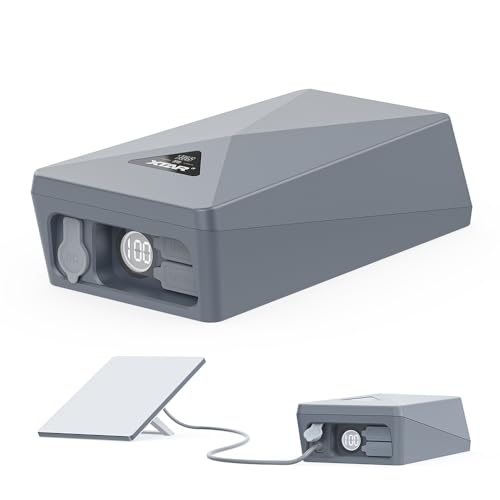
Pros
- Direct 15-21V DC output eliminates inverter losses and prevents Starlink Mini restarts caused by voltage drops
- High-capacity 158Wh design supports up to 8 hours of satellite internet operation along with 100W laptop charging
- Rapid 100W USB-C input enables a full recharge in roughly 2.3 hours when using an appropriate charger
- Versatile port selection supports simultaneous charging for laptops, phones, drones, or third-party routers
Cons
- Substantially larger and heavier than standard pocket-sized phone chargers due to its 158Wh capacity
- Requires a separate high-wattage 100W USB-C PD wall charger to achieve the advertised 2.3-hour recharge time
- Lacks standard AC household outlets, limiting use strictly to direct DC and USB-powered equipment
The XTAR-Link MP158 is a high-capacity portable power bank engineered specifically to solve common power issues associated with running the Starlink Mini satellite dish while functioning as a versatile multi-device charging hub. Unlike standard consumer phone chargers, this battery pack is purpose-built for remote workers, RV travelers, digital nomads, campers, and field professionals who require sustained off-grid internet connectivity alongside reliable backup power for laptops, phones, and small electronics.
Real-world power delivery is centered around an efficient 15-21V DC output explicitly tailored to power the Starlink Mini without the voltage dropouts or reboot cycles common to standard USB-C banks. By feeding the dish a direct DC current, the unit bypasses the conversion losses inherent in portable AC power stations, which the manufacturer states delivers 10 percent or more runtime. With an integrated 158Wh capacity, the power bank is rated to run the Starlink Mini for up to 8 hours on a single charge. It also features a bidirectional 100W USB-C Power Delivery port capable of powering high-draw laptops and mobile devices, as well as an 18W USB-A port for smartphones, cameras, and drones.
The physical design emphasizes operational safety through a separated power and antenna setup. Users can place the battery pack inside an RV, tent, or cabin to safeguard the lithium cells from extreme heat or freezing cold, while routing the power cable to the Starlink Mini dish mounted outdoors. This architecture protects long-term battery lifespan and ensures reliable operation across challenging weather conditions.
Replenishing the power bank is streamlined through 100W USB-C Power Delivery input, which can recharge the entire 158Wh pack in approximately 2.3 hours when paired with a compatible high-wattage wall adapter. At 158Wh, the battery hits the upper threshold commonly evaluated by commercial airlines for carry-on electronics, making it an attractive option for flight travel compared to bulky power stations. Travelers should always verify current airline and regulatory battery policies before flying.
Realistic limitations revolve around its dedicated form factor and lack of AC inverter capability. Because this is a direct DC and USB power bank, it cannot run traditional AC household appliances or devices that require standard three-prong plugs. In addition, achieving the advertised 2.3-hour recharge requires a separate 100W USB-C PD charger and rated cable, which may require an additional purchase if not already owned.
For outdoor workers, mobile professionals, and campers who rely on the Starlink Mini and USB-C laptops in remote locations, the XTAR-Link MP158 provides a well-engineered balance of direct DC stability, rapid recharge speeds, and substantial runtime. Shoppers who only need to top off a phone during a daily commute should choose a much smaller pocket battery, but those needing dependable satellite connectivity and high-wattage device backup away from the grid will find this specialized unit hard to beat.
The primary advantage of the XTAR-Link MP158 is its specialized power output architecture. The dedicated 15-21V DC output provides steady, direct-current voltage designed specifically for the Starlink Mini, preventing the sudden shutdowns and restarts that occur when using general-purpose 12V batteries or standard USB ports.
Beyond running satellite internet terminals, the unit serves as a robust mobile workstation charger. The primary USB-C port supports up to 100W Power Delivery output, making it capable of powering compatible USB-C laptops, tablets, portable gaming systems, and drones at high charging speeds. The secondary 18W USB-A port offers fast charging for smartphones, headphones, action cameras, and portable routers without interrupting the main DC or USB-C power feeds.
Field reliability is a core consideration in the engineering of the MP158. Operating high-draw electronics outdoors often exposes battery cells to direct sunlight or freezing temperatures, reducing performance and accelerating cell degradation. The separated power design allows the battery pack to remain inside climate-controlled living spaces, such as an RV or tent, while feeding power through a cable to the external dish.
For air travel, the 158Wh rating is positioned right under the common 160Wh upper limit enforced by many major airlines for passenger carry-on electronics. While passengers should always confirm individual airline and regulatory requirements prior to flight, this capacity offers far greater flexibility for mobile travel than larger wheeled power stations that cannot be brought onto commercial flights.
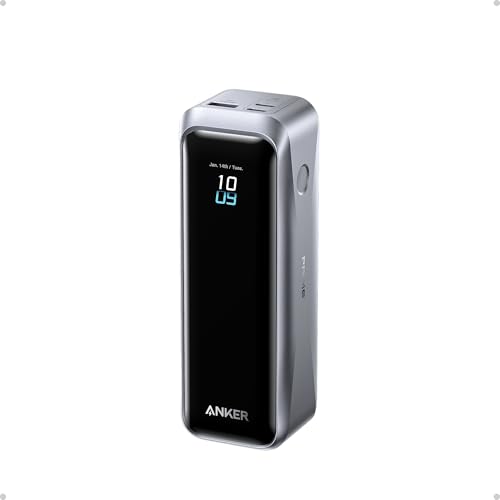
Pros
- Exceptional 140W single-port output capable of charging high-power USB-C laptops at full speed.
- Massive 220W combined output accommodates three devices simultaneously without stalling power delivery.
- Rapid 100W USB-C recharge capability significantly cuts down turnaround time between trips.
- Includes a premium 3.3-foot 240W USB-C to USB-C cable and travel pouch in the package.
- The 72.36Wh energy rating complies with standard airline travel rules for carry-on electronics.
Cons
- Weighs approximately 1.12 pounds, making it noticeably bulkier than standard pocket phone chargers.
- Does not include a 100W wall adapter, which is required separately to achieve advertised recharging speeds.
- The thick pillar-style shape is better suited for a backpack or laptop bag than a jacket pocket.
The Anker Prime Power Bank (20,100mAh, 220W) is a high-performance portable charger engineered for users who need to power demanding electronics on the move. Built with a nominal battery capacity of 20,100mAh (72.36Wh), this external battery pack bridges the gap between everyday pocket chargers and oversized power stations. It is designed primarily for professionals, remote workers, students, and frequent flyers who rely on power-hungry devices such as USB-C laptops, tablets, and modern flagship smartphones.
Charging capability is the primary strength of this battery pack, offering up to 140W of high-speed power from a single USB-C port when using a compatible 5A cable. According to manufacturer lab testing, this 140W output can charge a 16-inch MacBook Pro (M4 Pro) to 50% in roughly 28 minutes. When all three ports are occupied-consisting of two USB-C ports and one USB-A port-the power bank can push up to 220W of combined total output. For mobile phone users, the manufacturer states the 20,100mAh capacity provides enough reserve power for up to 4.2 days of video streaming on an iPhone 17 Pro Max. While actual charging power always depends on device acceptance limits and operational thermals, the available headroom easily accommodates demanding multi-device workflows.
In terms of physical design, the unit sports a sleek Phantom Gray casing with an elongated, pillar-style profile. Measuring 5.78 by 1.75 by 1.96 inches and weighing approximately 1.12 pounds, the charger trades slim pocketability for serious electrical throughput and capacity. The vertical footprint works well on crowded coffee shop tables or compact airplane tray tables, resting cleanly beside a notebook without taking up unnecessary surface area. The port layout places all connections within easy reach on the top panel, making it straightforward to swap cables in low-light environments or tight quarters.
Recharging the power bank itself is equally rapid thanks to its 100W maximum USB-C input support. Based on manufacturer specifications, the internal battery can reach a 50% charge in just 25 minutes when connected to a 100W or higher USB-C wall charger. In the box, Anker includes a 3.3-foot USB-C to USB-C charging cable rated for up to 240W, ensuring you have the necessary cable hardware to unlock both maximum charging and recharging speeds. With an energy rating of 72.36Wh, the battery pack falls well under the typical 100Wh limit enforced by airlines and the TSA for carry-on luggage, though travelers should always verify specific carrier rules before flying.
Prospective buyers should take note of a few practical tradeoffs. At roughly 1.12 pounds, this is not an ultralight battery pack, and carrying it in a pants pocket or small sling bag is impractical compared to a standard 5,000mAh or 10,000mAh phone bank. Additionally, because a high-output wall charger is not included in the box, users must supply their own 100W-capable USB-C wall adapter to achieve the fastest recharge times. Multi-port power distribution will also share the total 220W pool across connected devices, meaning individual port wattages will adjust dynamically based on the number and type of connected gadgets.
For mobile professionals, college students with heavy laptop workloads, and travelers who need reliable, high-wattage power away from AC outlets, the Anker Prime 20,100mAh Power Bank is an outstanding choice. Buyers who strictly need a compact charger for quick smartphone top-ups during a daily commute may prefer a lighter, more pocket-friendly alternative. However, if your primary goal is maintaining full-speed laptop charging alongside phone and accessory backup in a flight-compliant package, this model delivers exceptional speed and build quality.
The Anker Prime Power Bank is specifically optimized to meet the high wattage requirements of modern USB-C laptops. With up to 140W output available from a single port, the charger provides sufficient power to handle resource-intensive laptops, including a 16-inch MacBook Pro, under active processing loads. Supplying this level of power requires a 5A-rated cable, which Anker provides in the box with an included 240W-rated USB-C to USB-C cable.
For multi-device setups, the three available ports allow users to power a laptop, a smartphone, and smaller accessories simultaneously. The 220W total output pool gives the charger sufficient overhead to maintain fast speeds across multiple ports at the same time, preventing significant charging slowdowns when an extra device is plugged in. This versatility makes the unit a practical mobile docking hub for remote work at airports, libraries, and off-grid workspaces.
Airline travel compliance is a major advantage of the Anker Prime 20,100mAh battery pack. Its nominal capacity of 72.36Wh sits comfortably below the standard 100Wh maximum limit established by the FAA, TSA, and international aviation authorities for carry-on lithium-ion batteries. While spare lithium-ion batteries must always remain in carry-on luggage rather than checked bags, this rating ensures broad compatibility with major airline travel policies.
Turnaround time between flights is minimized by the 100W maximum USB-C input capability. According to manufacturer laboratory data, the battery can replenish from empty to 50% in approximately 25 minutes when connected to a 100W power source. The included travel pouch protects the Phantom Gray finish from scratches inside a backpack, making the entire kit convenient to pack and transport on road trips, daily commutes, or cross-country flights.

Pros
- Massive 192Wh energy capacity paired with high-efficiency 140W bidirectional USB-C PD 3.1 charging
- Five dedicated DC ports allow multiple laptops, phones, and tablets to charge at the same time up to 200W aggregate output
- Durable LiFePO4 battery chemistry rated for 3,000 cycles delivers years of dependable daily or outdoor use
- Versatile recharging options through high-wattage USB-C, 12V car sockets, or compatible solar panels up to 100W
- Noticeably smaller and more compact than traditional AC-equipped power stations of similar battery size
Cons
- DC-only architecture lacks standard 120V AC wall plug outlets, restricting use strictly to USB-powered gear
- At 192Wh, the battery capacity exceeds standard 100Wh airline passenger carry-on limits without special airline carrier approval
- Wall charging block, solar panels, and shoulder carry strap are not included and must be purchased separately
The Anker SOLIX C200 DC is a dedicated DC portable power station and high-capacity battery bank designed for outdoor campers, field creators, road trippers, and remote professionals who need serious off-grid USB charging. Unlike bulky traditional power stations that house heavy internal AC inverters, this unit focuses entirely on high-efficiency DC power delivery. Built with a 192Wh energy capacity and a 200W maximum system output, it bridges the gap between pocket-sized portable chargers and oversized power stations, making it an excellent match for users powering multiple mobile workstations, cameras, drones, and mobile devices off the grid.
The port array offers exceptional charging capability centered around modern USB-C Power Delivery standards. It features five DC ports: one two-way 140W USB-C port supporting USB PD 3.1, a second 100W USB-C port, a 15W USB-C port, and two 12W USB-A connections. The primary 140W USB-C port is capable of driving high-demand USB-C laptops at full speed while simultaneously allowing smaller devices to top up from the secondary ports. Because it supplies up to 200W of aggregate DC output, multi-device charging remains fast and dependable, though individual port wattages adjust to stay within the total 200W operational limit.
Under the hood, the SOLIX C200 DC utilizes premium LiFePO4 (LFP) battery cells rated for 3,000 charge cycles before reaching 80% of original capacity. This chemistry offers significantly longer service life and thermal stability compared to conventional lithium-ion alternatives, backed by a 3-year manufacturer warranty. The dark gray exterior measures 3.94 x 7.28 x 4.33 inches and weighs approximately 4.19 pounds, presenting a form factor that Anker reports is 39% smaller than typical power stations with equivalent battery capacity. The housing includes integrated attachment points for an optional carrying strap, keeping the layout clean and functional on picnic tables, camp benches, or mobile workdesks.
Recharging the internal 192Wh battery is versatile and fast, offering three distinct input methods to keep downtime low. Using the 140W bidirectional USB-C port with a compatible high-output wall charger, the power station can reach an 80% charge in approximately 1.3 hours according to manufacturer specifications. When operating off-grid, users can recharge via a 12V vehicle socket or connect a compatible solar panel supporting up to 100W solar input, such as Anker 60W or 100W panels. Note that the unit is not compatible with low-voltage 5V/3A USB-C solar chargers or high-voltage arrays like the PS200 and PS400, so matching solar gear correctly is essential for field deployment.
The most significant limitation to consider is that the SOLIX C200 DC is strictly a DC power source without any 120V AC wall plug outlets. If you require standard three-prong AC power for household appliances, CPAP machines requiring AC plugs, or older power tools, you will need a conventional inverter power station instead. Additionally, because its 192Wh battery exceeds the standard 100Wh capacity limit typically enforced by commercial airlines for carry-on luggage, travelers should check airline policies before planning air travel. Shoppers should also note that a wall charging adapter, solar panels, and the shoulder carry strap must be acquired separately.
For campers, digital nomads, and emergency-prep kits looking to ditch the bulk of heavy inverters while securing heavy-duty USB charging, the Anker SOLIX C200 DC offers outstanding capability. Its combination of 140W USB PD 3.1 output, durable LFP battery cells, and solar recharging support makes it one of the most capable DC-focused mobile power hubs available. If your portable tech ecosystem is already centered on USB-C and USB-A devices, this portable power station delivers reliable, long-cycle power in a remarkably manageable footprint.
The Anker SOLIX C200 DC is built around a robust 200W total DC power architecture that easily handles demanding electronics. The centerpiece is its two-way 140W USB-C port, which utilizes USB Power Delivery 3.1 to deliver high wattage to compatible laptops, tablets, and handheld devices. A secondary 100W USB-C port provides ample sustained power for an additional notebook or high-speed tablet, while the third 15W USB-C port and dual 12W USB-A ports accommodate smartphones, headphones, action cameras, and smartwatches.
When utilizing multiple ports simultaneously, the power station dynamically manages output to stay within its 200W ceiling. This generous total wattage threshold ensures that charging multiple devices at once does not result in the steep speed drops commonly experienced on smaller power banks. Furthermore, the 140W port acts as a bidirectional channel, meaning that recharging the station itself is equally rapid when paired with an 18W or higher USB-C wall charger or high-output laptop charger.
Weighing approximately 4.19 pounds and measuring 3.94 x 7.28 x 4.33 inches, the SOLIX C200 DC is engineered to maximize energy density in a compact form factor. By eliminating bulky internal AC inverters and heavy transformers, Anker reduced the overall chassis volume by roughly 39% compared to conventional portable power stations with similar capacity. This condensed footprint makes it simple to pack inside a camping tote, camper van cabinet, or backpack gear bin.
Long-term durability is reinforced by the integration of LiFePO4 (LFP) battery chemistry, which provides up to 3,000 charge cycles before experiencing standard battery degradation. The rugged dark gray shell resists typical outdoor scuffs, while dedicated mounting anchors allow users to add an optional shoulder strap for hands-free transport around the campsite or job site.

Pros
- High 165W total output with 100W-capable USB-C connections readily handles compatible USB-C laptops and tablets.
- Dual built-in USB-C cables minimize cord clutter and streamline mobile travel charging.
- Meets the 100Wh airline boundary, allowing compliant storage in carry-on baggage for flights.
- Powers up to four devices at the same time across integrated cables, an extra USB-C port, and a USB-A port.
Cons
- A 100W or higher wall charger is required for the fastest power bank recharge speeds and is not included.
- The elongated 6.18-inch by 2.13-inch body is bulkier and heavier than single-charge pocket power banks.
- Charging four devices simultaneously splits the total 165W output across active ports.
The Anker 25,000mAh Laptop Power Bank is a heavy-duty portable charging station engineered specifically for mobile professionals, commuters, and airline travelers who need dependable power for power-hungry hardware. Combining high-wattage throughput with built-in cord management, this external battery eliminates the friction of carrying tangled charging cables. It is primarily built to keep USB-C laptops, tablets, and smartphones running through long travel days, cross-country flights, or remote work sessions where wall outlets are out of reach.
In terms of charging performance, the unit boasts a substantial 25,000mAh nominal capacity and delivers up to 165W in combined output. For laptop users, the battery pack features three USB-C connections-comprising two integrated USB-C cables and one open USB-C port-each capable of supplying up to 100W individually. In total, the unit can power up to four devices at once by pairing the dual built-in cables with its auxiliary USB-C port and USB-A port, letting users simultaneously charge a laptop, a smartphone, wireless earbuds, and an additional accessory.
The physical design prioritizes travel utility with its clever integrated cable management. Anker equipped the battery pack with an extendable 2.3-foot retractable USB-C cable tested for up to 20,000 retractions, alongside a secondary 0.98-foot USB-C cable that securely loops to function as a carrying strap rated for over 20,000 bends. Measuring 6.18 by 2.13 by 1.93 inches and weighing approximately 0.66 pounds, the durable black chassis fits neatly into briefcase compartments, carry-on bags, or laptop backpacks without snagging loose cords.
Operating and maintaining this power bank is straightforward, though recharging efficiency depends on your existing wall charger. To achieve the fastest possible replenishment of the 25,000mAh capacity, the manufacturer recommends pairing the unit with a 100W or higher USB-C wall charger. For flyers, this battery pack complies with the standard 100Wh airline limit, qualifying it for regular carry-on baggage on domestic and international flights, though passengers should always store lithium battery packs in their carry-on luggage rather than checked bags.
While the feature set is extensive, prospective buyers should account for a few practical limitations. Achieving the advertised ultra-fast power bank recharge requires purchasing a high-wattage 100W adapter separately, as no wall charger is included in the box. Additionally, while individual USB-C lines can deliver up to 100W on single-device duty, connecting four devices simultaneously distributes the 165W aggregate ceiling, which reduces the wattage supplied to individual ports under heavy simultaneous loads.
The Anker 25,000mAh 165W Laptop Power Bank is an outstanding investment for frequent flyers, remote knowledge workers, and multi-device tech users who require dependable laptop-grade charging on the move. Everyday smartphone users seeking a lightweight pocket companion may find its high capacity and elongated frame larger than necessary. However, for anyone who demands sustained 100W laptop output, four-way multi-device versatility, and integrated retractable cables, this model represents top-tier travel convenience.
One of the primary highlights of the Anker 25,000mAh Laptop Power Bank is its integrated dual-cable system, engineered to end the hassle of forgotten charging cords. The main built-in USB-C cable extends up to 2.3 feet and features a smooth retraction mechanism tested to withstand 20,000 retractions, giving you plenty of slack to comfortably work on a laptop at an airport gate or coffee shop desk.
Complementing the retractable cord is a secondary 0.98-foot USB-C cable engineered for heavy duty. This shorter cord doubles as a built-in carrying handle and strap, rated to endure more than 20,000 structural bends. Together, these integrated lines allow travelers to leave loose cords packed away while keeping modern USB-C laptops, tablets, and phones fully charged.
Navigating airport security with high-capacity electronics requires attention to battery ratings, and the Anker 25,000mAh power bank is explicitly built to satisfy standard transit guidelines. The battery pack complies with the common 100Wh airline restriction, making it eligible for carry-on luggage across major commercial airlines.
As with all lithium-ion power sources, passengers must keep the unit in their carry-on bags or personal items rather than checked luggage. With its rugged carry strap, protective storage pouch, and retractable cable, the unit provides reliable backup power for transcontinental flights, long road trips, and off-grid camping without exceeding travel safety thresholds.
FAQs
Can any high-capacity USB-C power bank run a Starlink Mini?
No. A USB-C connector alone does not guarantee Starlink Mini compatibility. The Starlink Mini dish requires a specific voltage range to start and operate without rebooting. Some USB-C power banks, even those with USB Power Delivery, can cause the dish to restart or fail to power on. The Anker Prime 26,250mAh 300W explicitly notes it is not compatible with Starlink Mini. Products like the StarGrid All-in-One Kit for Starlink Mini and the XTAR-Link MP158 Portable Power Bank for Starlink use direct DC output designed specifically for the dish’s power requirements, which can provide more stable operation.
What’s the difference between mAh and Wh, and which matters more for Starlink Mini?
Wh (watt-hours) is the more useful measurement for estimating how long a battery can run a device like Starlink Mini. mAh describes charge capacity at a specific voltage (usually 3.6-3.7V for lithium cells), but Starlink Mini draws power at a higher voltage. A 90,000mAh battery rated at 288Wh and a 24,000mAh battery rated at roughly 86Wh will deliver very different runtimes. The StarGrid kit lists 288Wh and claims over 8 hours of Starlink Mini runtime, while the XTAR MP158 lists 158Wh and also claims up to 8 hours, likely due to its more efficient direct DC delivery that avoids inverter or conversion losses.
Does the Anker SOLIX C300 DC work with Starlink Mini?
The Anker SOLIX C300 DC Portable Power Station, 288Wh offers 288Wh capacity, a 120W car socket (DC output), and two 140W USB-C ports with PD 3.1. Its car socket output and high Wh rating make it a candidate for powering Starlink Mini, though the product listing does not explicitly confirm or deny Starlink Mini compatibility. Buyers should verify voltage and connector requirements before relying on this station for their dish. The C300 DC does use LiFePO4 cells with a 3-year warranty, which is a durable battery chemistry suited for repeated deep cycling.
Is a 20,000mAh power bank enough for Starlink Mini?
A 20,000mAh power bank is generally too small for meaningful Starlink Mini runtime. At typical lithium-cell voltage, 20,000mAh translates to roughly 72-74Wh, which may only power the dish for a couple of hours at best, depending on network load, temperature, and conversion efficiency. Products like the Anker Power Bank, 20,000mAh Travel Essential are better suited for phones, tablets, and laptops rather than satellite internet hardware. For Starlink Mini, look at options with 150Wh or higher.
Why do some Starlink Mini batteries use DC output instead of USB-C?
DC output avoids the energy losses that come with USB-C power conversion. The XTAR MP158 delivers power through a 15-21V DC output, which feeds the Starlink Mini a stable voltage without needing a boost converter or AC inverter. This approach can extend runtime by 10% or more compared to batteries that rely on 12V output requiring a booster, or AC power stations that waste energy through inverter conversion. The StarGrid kit also uses a DC cable connection alongside USB-C PD for device charging. If you’re interested in fast-charging Anker power banks for phones, USB-C PD is ideal, but for Starlink Mini specifically, direct DC tends to be more efficient.
Can I charge my phone and run Starlink Mini from the same battery?
Yes, several options in this list support multi-device charging alongside Starlink Mini. The StarGrid kit supports pass-through charging and can run Starlink Mini via DC while simultaneously charging a phone or laptop through USB-C PD (up to 100W output). The XTAR MP158 also offers USB-C 100W and USB-A 18W outputs for secondary devices. The Anker SOLIX C300 DC has 7 ports total, including multiple USB-C and USB-A outputs. Just keep in mind that powering additional devices will reduce total Starlink Mini runtime since you’re drawing from the same battery capacity.
Are these high-capacity batteries allowed on airplanes?
It depends on the Wh rating. Most airlines follow guidelines that allow lithium batteries under 100Wh in carry-on luggage without special approval. The Anker 737 (24,000mAh), Anker Prime 27,650mAh (99.54Wh), and XTAR MP158 (158Wh, marketed as the largest airline-friendly size) each fall into different categories. Batteries between 100Wh and 160Wh typically require airline approval. The 288Wh options like the Anker SOLIX C300 DC and StarGrid kit exceed the 160Wh limit and are generally not permitted on commercial flights. Always check your specific airline’s current rules before traveling with any multi-port Anker power bank or portable power station.





Write Your Review
No reviews yet. Be the first to share your experience!