


Airport security checkpoints often spark sudden hesitation when travelers pack high-capacity battery packs for long journeys. Many passengers legitimately ask, can i bring 26800mah power bank on plane flights without gate agents confiscating their gear. Most commercial airlines and aviation safety bodies permit a portable charger rated up to 100 watt-hours in cabin baggage without special paperwork, meaning a standard 26,800mAh battery operating at 3.7 nominal volts safely sits right under the 99.16Wh ceiling. Storing that much backup energy provides relief on long overseas flights, though maximum capacity inevitably adds noticeable weight and bulk to your personal carry-on bag.
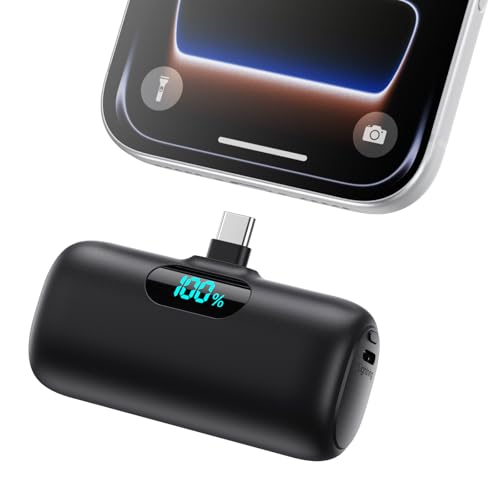
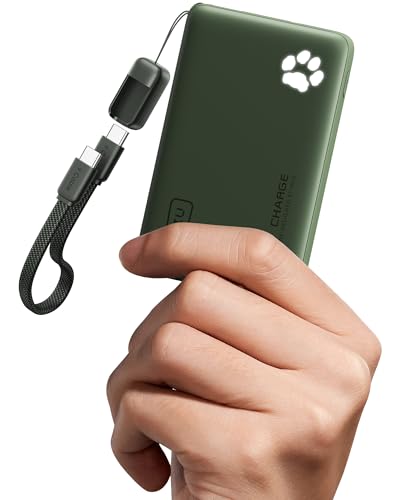
Smart packing requires balancing stored battery capacity against carry-on portability and charging efficiency. If a massive 26,800mAh brick feels too heavy for casual travel, compact alternatives like the AsperX 45W Portable Charger offer a lighter 20,000mAh footprint while keeping total energy well under airline thresholds. Studying a detailed specs comparison of power bank features helps travelers assess whether high-wattage USB-C Power Delivery, integrated cables, and bidirectional fast charging solve real travel hurdles better than raw capacity alone. Reliable mobile power keeps your phone navigation active and your tablet running, provided your gear stays firmly in your cabin bag rather than checked luggage.
Top Products

Frequently Asked Questions
Can you bring a 26800mAh power bank on an airplane in 2026?
Yes, you can bring a 26800mAh power bank on a commercial plane, provided you pack it strictly in your carry-on luggage. Major aviation authorities, including the FAA and TSA, set the standard limit at 100 watt-hours (Wh) per lithium-ion battery pack without requiring advance airline approval. A 26,800mAh battery cell rated at a nominal 3.7 volts equals roughly 99.16Wh, keeping it just beneath the regulatory limit. You must never place loose lithium battery packs in checked baggage.
Why do airlines restrict power banks to carry-on baggage instead of checked luggage?
Lithium-ion batteries present an inherent thermal runaway risk if damaged or short-circuited inside an unmonitored cargo hold. Cabin crews carry dedicated fire-suppression equipment to handle accidental battery fires quickly, whereas aircraft cargo holds cannot provide instant manual intervention. Keeping your portable charger inside your backpack or personal item ensures any potential issue is spotted and addressed immediately.
How do you calculate watt-hours from milliamp-hours (mAh)?
You calculate watt-hours by multiplying the battery capacity in milliamp-hours by the nominal voltage and dividing that result by 1,000. For example, multiplying a 26,800mAh capacity by standard 3.7V cell voltage gives 99,160 milli-watt-hours, which equals 99.16Wh. Airlines enforce energy restrictions by watt-hours rather than mAh, so checking the printed label on your travel power bank prevents security delays.
Is the AsperX 45W Portable Charger compliant with airline carry-on rules?
Yes, the AsperX 45W Portable Charger is compliant with airline carry-on rules because its 20,000mAh capacity stays comfortably under the 100Wh limit. The manufacturer explicitly lists compliance with airline regulations (under 100Wh) for onboard carriage without restriction. The integrated 1.05-foot braided USB-C cable also eliminates loose cord clutter when charging devices at crowded departure gates.
Can a fast-charging travel power bank charge laptops as well as phones?
It depends on the power bank’s maximum output wattage and your specific laptop’s input requirements. The AsperX charger provides a 45W maximum output via USB-C, which the manufacturer states can supply an estimated 0.8 to 1 full charge for a MacBook Air. Reviewing top rated Anker power bank Amazon customer reviews confirms that mobile travelers routinely weigh high-output laptop charging against physical battery pack weight.
What is Small Power Mode on a portable charger?
Small Power Mode is a specialized low-current setting that prevents a power bank from shutting off while charging small accessories. Standard portable chargers often power down automatically when connected to mini gadgets like wireless earbuds or smartwatches because the power draw is too small to trigger active output. Long-pressing the power button on compatible units safely keeps the circuit open without overcurrent cutoffs.




Write Your Review
No reviews yet. Be the first to share your experience!