


Airline Battery Limits for Portable Power
Long flights and airport layovers quickly drain your essential mobile devices, leaving you stranded without boarding passes when outlets are nowhere in sight. Packing a high-capacity portable charger solves this problem, but bringing lithium-ion battery packs onto planes raises valid safety questions. Travelers preparing for departure frequently ask can you fly with a 20000mah power bank without violating aviation security rules. A standard 20,000mAh battery operates at a nominal 3.7 volts to produce roughly 74 watt-hours (Wh), comfortably under the 100Wh carry-on limit set by the FAA and TSA. While carrying this substantial power reserve ensures your devices survive long journeys, you must balance stored energy against extra bag weight.
Aviation regulations strictly prohibit spare lithium batteries in checked luggage, meaning carry-on transport is mandatory. Before traveling, ensure your charger has its rated capacity clearly stamped on the housing for airport security agents. Options like the Anker Prime Power Bank, 20,100mAh 3-Port display a 72.36Wh rating and 220W total output, ensuring smooth screening while charging laptops and phones. Travelers seeking dependable power can review proven budget 20000mAh power banks or top best power bank under 100wh travel picks before flying.


Pros
- High 20,000 mAh nominal capacity offers substantial backup power for smartphones and tablets during off-grid travel.
- Durable IP65-rated ABS and PC exterior stands up to rain splashes, trail dust, and outdoor wear.
- Lightweight 0.52-pound build ensures easy portability without weighing down hiking packs or emergency kits.
- Three-mode LED flashlight offers practical emergency signaling with Strong, Strobe, and SOS functions.
- Dual-port layout supports modern USB-C devices alongside standard USB-A charging cables.
Cons
- Integrated solar panel is designed exclusively for slow emergency trickle-charging and cannot replace wall recharging.
- Maximum 15W output is intended for phones and small accessories rather than high-wattage laptop charging.
- Simultaneous dual-device charging splits available power across both connected ports.
The Luvknit 20000mAh Solar Power Bank is an outdoor-focused portable battery pack engineered for hikers, campers, road trippers, and emergency-preparedness kits. Built to withstand rugged environments, this charger serves as an off-grid power reservoir for smartphones, tablets, and essential USB gear when wall outlets are unavailable. For outdoor enthusiasts and storm-prep shoppers seeking an affordable, weather-resistant backup battery, this unit balances functional trail durability with dependable mobile charging.
Equipped with a nominal 20,000 mAh battery capacity, the charger provides meaningful backup energy for handheld electronics over extended trips. The manufacturer estimates the battery holds enough capacity for approximately two full charges of an iPhone 15 or 1.5 charges for an iPad mini, though delivered usable energy will vary based on conversion losses, temperature, and device battery health. Wired output is supplied through a dual-port configuration featuring one USB-C port and one USB-A port, allowing users to charge two handheld devices at the same time. The listed 15W charging speed delivers standard fast charging suited for phones, wireless earbuds, headlamps, and handheld GPS units.
Physical durability is a central highlight of the design, which incorporates a reinforced ABS and PC composite casing rated at IP65 for water and dust resistance. Measuring 5.63 by 2.91 by 0.85 inches and weighing only 0.52 pounds, the compact Gray Orange shell fits smoothly into backpack side pockets, tackle boxes, or car consoles. Directly integrated into the housing is an emergency LED flashlight featuring Strong, Strobe, and SOS modes, providing versatile utility for campsite setup in the dark or signaling during roadside breakdowns.
Recharging the power bank effectively requires understanding the role of each input method, particularly the distinction between wall power and solar energy. Users should always fully recharge the battery via its 15W USB-C input using a standard wall outlet before leaving home, as the integrated solar panel is engineered strictly for emergency trickle-charging in direct sunlight. The manufacturer also highlights that the unit stays under the 100Wh airline threshold for carry-on luggage, though travelers should always verify specific airline and regulatory policies prior to flying with lithium-ion battery packs.
Practical limitations center around charging speeds and solar panel physics. Because of the compact surface area of the built-in solar collector, solar recharging is inherently slow and should not be relied upon as a primary replenishment method. In addition, the 15W maximum output is not designed to support power-hungry laptops or notebooks, and charging two devices simultaneously distributes power across the ports rather than providing separate 15W feeds to each.
The Luvknit 20000mAh Solar Charger represents a dependable, budget-friendly power reservoir for hikers, festivalgoers, and homeowners preparing for severe weather outages. Shoppers who need high-wattage laptop charging or large-scale off-grid solar generation will require higher-tier gear, but users who want a lightweight, water-resistant backup charger for phones and emergency lighting will find practical utility in this rugged battery pack.
Recharging the Luvknit battery pack is designed around standard electrical outlets, with the solar surface acting as a supplemental contingency feature. Connecting the unit to a wall outlet provides a 15W input flow that replenishes the internal cells before you head into the backcountry or travel off the grid.
The built-in solar panel provides low-current trickle charging when exposed to direct sunlight, serving as an emergency safety net when electrical grids fail. Because compact solar panels require extended daylight exposure to deliver modest energy gains, relying on solar power should remain strictly reserved for backup situations rather than routine daily recharging.
Engineered for outdoor resilience, the housing is constructed from rugged ABS and PC materials engineered to endure trail impacts and harsh weather. Its IP65 ingress protection rating ensures the power bank resists dust infiltration and low-pressure water splashes, making it reliable in rainy campsite conditions.
Internal electronics are safeguarded by a multi-protection circuit that monitors for overcharging, over-discharging, and short circuits. Combined with the integrated three-mode emergency flashlight and a 24-month manufacturer warranty, the unit provides dependable operation for outdoor adventurers and emergency-kit builders alike.


Pros
- Exceptional 140W single-port output capable of charging high-power USB-C laptops at full speed.
- Massive 220W combined output accommodates three devices simultaneously without stalling power delivery.
- Rapid 100W USB-C recharge capability significantly cuts down turnaround time between trips.
- Includes a premium 3.3-foot 240W USB-C to USB-C cable and travel pouch in the package.
- The 72.36Wh energy rating complies with standard airline travel rules for carry-on electronics.
Cons
- Weighs approximately 1.12 pounds, making it noticeably bulkier than standard pocket phone chargers.
- Does not include a 100W wall adapter, which is required separately to achieve advertised recharging speeds.
- The thick pillar-style shape is better suited for a backpack or laptop bag than a jacket pocket.
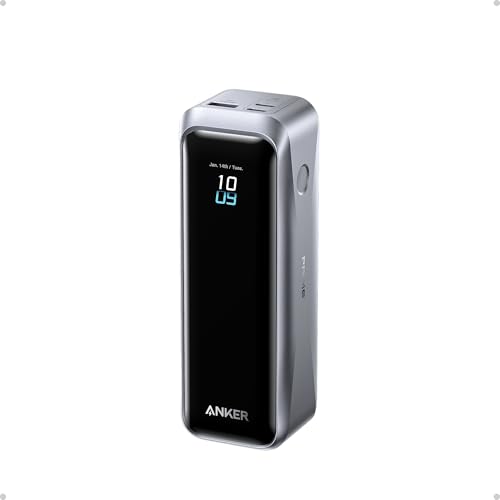
The Anker Prime Power Bank (20,100mAh, 220W) is a high-performance portable charger engineered for users who need to power demanding electronics on the move. Built with a nominal battery capacity of 20,100mAh (72.36Wh), this external battery pack bridges the gap between everyday pocket chargers and oversized power stations. It is designed primarily for professionals, remote workers, students, and frequent flyers who rely on power-hungry devices such as USB-C laptops, tablets, and modern flagship smartphones.
Charging capability is the primary strength of this battery pack, offering up to 140W of high-speed power from a single USB-C port when using a compatible 5A cable. According to manufacturer lab testing, this 140W output can charge a 16-inch MacBook Pro (M4 Pro) to 50% in roughly 28 minutes. When all three ports are occupied-consisting of two USB-C ports and one USB-A port-the power bank can push up to 220W of combined total output. For mobile phone users, the manufacturer states the 20,100mAh capacity provides enough reserve power for up to 4.2 days of video streaming on an iPhone 17 Pro Max. While actual charging power always depends on device acceptance limits and operational thermals, the available headroom easily accommodates demanding multi-device workflows.
In terms of physical design, the unit sports a sleek Phantom Gray casing with an elongated, pillar-style profile. Measuring 5.78 by 1.75 by 1.96 inches and weighing approximately 1.12 pounds, the charger trades slim pocketability for serious electrical throughput and capacity. The vertical footprint works well on crowded coffee shop tables or compact airplane tray tables, resting cleanly beside a notebook without taking up unnecessary surface area. The port layout places all connections within easy reach on the top panel, making it straightforward to swap cables in low-light environments or tight quarters.
Recharging the power bank itself is equally rapid thanks to its 100W maximum USB-C input support. Based on manufacturer specifications, the internal battery can reach a 50% charge in just 25 minutes when connected to a 100W or higher USB-C wall charger. In the box, Anker includes a 3.3-foot USB-C to USB-C charging cable rated for up to 240W, ensuring you have the necessary cable hardware to unlock both maximum charging and recharging speeds. With an energy rating of 72.36Wh, the battery pack falls well under the typical 100Wh limit enforced by airlines and the TSA for carry-on luggage, though travelers should always verify specific carrier rules before flying.
Prospective buyers should take note of a few practical tradeoffs. At roughly 1.12 pounds, this is not an ultralight battery pack, and carrying it in a pants pocket or small sling bag is impractical compared to a standard 5,000mAh or 10,000mAh phone bank. Additionally, because a high-output wall charger is not included in the box, users must supply their own 100W-capable USB-C wall adapter to achieve the fastest recharge times. Multi-port power distribution will also share the total 220W pool across connected devices, meaning individual port wattages will adjust dynamically based on the number and type of connected gadgets.
For mobile professionals, college students with heavy laptop workloads, and travelers who need reliable, high-wattage power away from AC outlets, the Anker Prime 20,100mAh Power Bank is an outstanding choice. Buyers who strictly need a compact charger for quick smartphone top-ups during a daily commute may prefer a lighter, more pocket-friendly alternative. However, if your primary goal is maintaining full-speed laptop charging alongside phone and accessory backup in a flight-compliant package, this model delivers exceptional speed and build quality.
The Anker Prime Power Bank is specifically optimized to meet the high wattage requirements of modern USB-C laptops. With up to 140W output available from a single port, the charger provides sufficient power to handle resource-intensive laptops, including a 16-inch MacBook Pro, under active processing loads. Supplying this level of power requires a 5A-rated cable, which Anker provides in the box with an included 240W-rated USB-C to USB-C cable.
For multi-device setups, the three available ports allow users to power a laptop, a smartphone, and smaller accessories simultaneously. The 220W total output pool gives the charger sufficient overhead to maintain fast speeds across multiple ports at the same time, preventing significant charging slowdowns when an extra device is plugged in. This versatility makes the unit a practical mobile docking hub for remote work at airports, libraries, and off-grid workspaces.
Airline travel compliance is a major advantage of the Anker Prime 20,100mAh battery pack. Its nominal capacity of 72.36Wh sits comfortably below the standard 100Wh maximum limit established by the FAA, TSA, and international aviation authorities for carry-on lithium-ion batteries. While spare lithium-ion batteries must always remain in carry-on luggage rather than checked bags, this rating ensures broad compatibility with major airline travel policies.
Turnaround time between flights is minimized by the 100W maximum USB-C input capability. According to manufacturer laboratory data, the battery can replenish from empty to 50% in approximately 25 minutes when connected to a 100W power source. The included travel pouch protects the Phantom Gray finish from scratches inside a backpack, making the entire kit convenient to pack and transport on road trips, daily commutes, or cross-country flights.


Pros
- Heavy-duty IP68 waterproof and shockproof build withstands harsh outdoor conditions and 2-meter drops.
- Smart digital display reveals precise battery percentage and live charging current in milliamps.
- Integrated 420-lumen camping lantern features five lighting modes and a standard tripod socket.
- Dual USB-C and USB-A output ports support simultaneous charging for mobile devices.
Cons
- Weighing 1.03 pounds and measuring over 8.8 inches long, the bulky form factor is not pocket-friendly.
- Manufacturer specifications do not detail exact maximum wattage output figures for the USB-C PD port.
- Ports and seals must be thoroughly dried after water exposure before connecting charging cables.
The aswayke 20,000mAh Rugged Power Bank is an outdoor-focused portable charger engineered for campers, hikers, overland travelers, and home emergency kits. Unlike slim portable chargers designed primarily for light office commutes, this device merges high-capacity power storage with heavy-duty structural defense and an integrated 420-lumen camping lantern. It is tailored for users who need dependable backup energy in environments where rain, dirt, mud, and accidental drops are frequent hazards.
In terms of charging performance, the internal battery pack offers a listed 20,000mAh nominal capacity equipped with fast-charging USB-C Power Delivery and a standard USB-A output port. The manufacturer notes that this capacity is capable of delivering up to five full charges for standard smartphones, though real-world delivered energy depends on conversion efficiency, ambient temperature, and device charging limits. The dual-port arrangement supports simultaneous charging, allowing users to keep a primary smartphone powered up while simultaneously topping off a tablet, GPS navigator, or headlamp.
Durability is the standout aspect of the brown 3.2mm ABS and polycarbonate shockproof housing. It carries an IP68 rating, which indicates resistance to dust ingress and the ability to withstand water submersion up to 1.5 meters for up to 30 minutes. In addition to surviving 2-meter drops, the housing incorporates a standard threaded tripod mount on its base. This mount allows users to attach the power bank to outdoor tripods or hang it inside tents, turning the 420-lumen light into a hands-free campsite area lamp or night photography fill light across five selectable settings: High, Soft, Warm, SOS, and Strobe.
Routine operation and device monitoring are handled via an integrated digital display screen. Rather than relying on simple four-stage LED dots, the screen provides an exact battery percentage from 0 to 100 percent along with live readouts of input current while recharging and output current while powering connected electronics. The bidirectional USB-C port handles both output to devices and input recharging for the power bank itself, connecting easily to standard USB-C wall adapters, car sockets, or compatible solar panels.
Despite its broad outdoor utility, the unit has clear physical tradeoffs. At 8.85 by 3.1 by 3.3 inches and a weight of 1.03 pounds, it is significantly bulkier than standard 20,000mAh commuter battery packs and is best carried in a backpack, tackle box, or vehicle console rather than a pocket. Furthermore, because specific maximum wattage outputs are not explicitly detailed beyond general USB-C PD support, it is best suited for phones, tablets, and small electronic gear rather than power-demanding USB-C laptops. Users must also ensure all ports are completely dry before plugging in cables after any water exposure.
For outdoor adventurers, field personnel, and survival-kit builders looking for an all-weather charging hub with built-in emergency lighting, this aswayke model offers a strong blend of durability, capacity, and hands-free functionality. Commuters seeking a minimal everyday-carry pack should consider smaller pocket alternatives, but those prioritizing drop resistance, water protection, and clear current monitoring will find solid value backed by the manufacturer's 6-month warranty.
The aswayke power bank is constructed from a reinforced 3.2mm ABS and polycarbonate composite designed to resist impact damage from drops up to 2 meters. Its IP68 ingress protection rating ensures internal electrical components remain shielded against fine sand, trail dust, and complete water submersion up to 1.5 meters for 30 minutes, provided the port covers are sealed.
The integrated 420-lumen lantern illuminates areas up to 50 square meters and offers five distinct operational modes. Users can cycle between High, Soft, Warm, Strobe, and SOS signals depending on whether they need soft tent lighting, trail navigation, or emergency signaling. A built-in standard tripod socket on the base adds functional flexibility, letting users mount the unit to camping tripods or photography rigs for stable overhead illumination.
Connection options include a bidirectional USB-C port alongside a standard USB-A port, providing compatibility with both modern USB-C charging cables and legacy USB-A accessories. The USB-C port supports Power Delivery fast charging for compatible smartphones and tablets, while also serving as the primary input port for recharging the 20,000mAh internal cell.
The built-in digital display removes guesswork by presenting real-time power metrics directly on the face of the unit. In addition to a precise 0 to 100 percent remaining battery level indicator, the display shows real-time input current in milliamps when recharging the battery pack and output current in milliamps when powering connected devices.


Frequently Asked Questions
Can you bring a 20,000mAh power bank on a plane?
Yes, you can bring a 20,000mAh power bank on commercial flights, provided it stays in your carry-on luggage. FAA and TSA guidelines permit lithium-ion batteries rated up to 100 watt-hours (Wh) without special airline approval. A typical 20,000mAh unit calculates to approximately 74Wh at 3.7 volts, placing it safely beneath the 100Wh limit.
Can a 20,000mAh power bank go into checked luggage?
No, airline regulations strictly prohibit spare lithium batteries in checked baggage. Aviation rules require them in the cabin where flight crews can monitor and respond to any rare thermal incident. Screening agents will confiscate spare batteries found in checked bags, so always place yours in a personal item or carry-on bag.
Can a 20,000mAh power bank charge a laptop on a flight?
Yes, provided the power bank supports adequate USB Power Delivery (PD) wattage for your specific laptop. High-performance models like the Anker Prime Power Bank, 20,100mAh 3-Port output up to 140W via USB-C to charge notebooks quickly. Travelers needing dedicated computer power on long trips can compare specialized laptop power banks before flying.
How do airport security agents verify power bank capacity?
Security officers inspect the manufacturer specifications printed directly on the battery casing. TSA agents look for clear text detailing milliamp-hours (mAh) or watt-hours (Wh) to ensure compliance. If factory markings are worn off or unreadable, security personnel may confiscate the device at screening.
How many phone charges does a 20,000mAh battery provide during travel?
A 20,000mAh battery typically delivers between three and five full charges for modern smartphones. Voltage conversion and thermal resistance mean usable energy is slightly lower than nominal cell capacity. Manufacturers like AsperX 45W Portable Charger state four to five charges for an iPhone 15, while everyday phone power banks offer varied capacities to match your flight itinerary.


Write Your Review
No reviews yet. Be the first to share your experience!