


Running out of battery during an extended commute or an off-grid weekend trip quickly turns convenience into pure frustration. While pocket-sized backup batteries handle emergency phone top-ups, outdoor adventures often require sustainable energy capture alongside compact portability. Shoppers frequently search for an anker nano solar power bank to pair compact charging hardware with off-grid recharge capabilities. Evaluating these models requires looking at the balance between listed battery capacity, actual USB-C Power Delivery speeds, and compatibility with external solar inputs. Some users lean toward a heavy-duty solar power bank station for extended camping, while others simply need a pocket-sized battery pack that slips effortlessly into a daily bag.
Manufacturers approach portable energy from two distinct angles: pocket-sized fast chargers designed for everyday carry and modular solar systems built for outdoor resilience. Pocketable units like the Anker Nano series feature integrated fold-out connectors, built-in cables, or Qi2 magnetic wireless charging reaching up to 15W for compatible smartphones. True solar setups utilize LiFePO4 battery cells and dedicated DC ports to accept solar panel input during daylight hours. Matching your specific charging routine to either an ultra-slim 5,000mAh battery pack or an outdoor solar power kit ensures you never carry unnecessary bulk or get stuck without an available charging port.

Pros
- Integrated folding USB-C connector eliminates the need to carry an extra charging cable
- Up to 22.5W output delivers swift wired charging for supported USB-C smartphones
- Extremely lightweight at around 0.22 pounds with a pocket-friendly footprint
- Dual USB-C connectivity offers both a built-in connector and an additional port
- Comes complete with a 2 ft USB-C cable and a 24-month warranty
Cons
- 5,000mAh nominal capacity is designed for a single quick top-up rather than multiple device charges
- The integrated connector design may not seat flush if used with very thick or heavy-duty phone cases
- 22.5W maximum output is built for phones and small mobile gear rather than power-hungry laptops
The Anker Nano Power Bank is an ultra-compact 5,000mAh portable battery pack engineered primarily for smartphone users who need quick backup power without cable clutter. Measuring 3.03 by 1.45 by 0.98 inches and weighing just under 0.22 pounds, this mini charger features an integrated, foldable USB-C connector that plugs directly into the base of your device. It is tailored for commuters, travelers, college students, and everyday-carry users who prioritize minimal pocket bulk over heavy, multi-day battery bricks.
In terms of charging capability, the unit features PowerIQ 3.0 technology across dual USB-C ports and delivers a listed output of up to 22.5W. This power level allows rapid charging for compatible USB-C hardware, including iPhone 15 models and standard mobile devices. The 5,000mAh nominal capacity represents the internal battery cell rating rather than guaranteed delivered energy to a connected phone, as conversion losses naturally occur during power transfer. For daily usage, this capacity profile serves as an efficient single-charge safety net to get users through a long workday or evening outing.
The build centers around user convenience with its folding USB-C connector mechanism, which tucks neatly into the sleek black housing when not in use to protect the plug from snagging or bending inside a pocket or bag. Anker also equips the pack with a secondary USB-C port, providing flexible connection choices when using external cables. The exterior dimensions ensure that the power bank sits comfortably against the bottom edge of a connected smartphone, allowing one-handed handling while the phone charges.
Operating and maintaining the power bank is straightforward, with simple plug-and-charge functionality directly through the integrated connector. To replenish the battery pack itself, users can connect a power source via USB-C, and Anker includes a 2-foot (0.6-meter) USB-C to USB-C cable in the box alongside a welcome guide. Its small profile makes it easy to slip into a jacket pocket, small purse, or carry-on backpack, serving as an accessible mobile charger for flights, commutes, or emergency kits.
Realistic limitations center around battery capacity and form factor clearance. A 5,000mAh nominal capacity cannot provide multi-day power or replenish power-hungry devices like laptops that require higher wattage and significantly larger energy reserves. In addition, while the foldable connector offers great portability, extremely thick or heavy-duty phone cases may prevent the connector from seating fully into the charging port without removing the case.
The Anker Nano Power Bank is a practical purchase for smartphone users who want an unobtrusive, cable-free battery pack to prevent their phone from dying away from home. Those needing multiple complete phone recharges or laptop charging should consider larger 10,000mAh or 20,000mAh power banks with higher wattage outputs. For lightweight pocket carry, streamlined commuting, and fast 22.5W top-ups for iPhone 15 and USB-C devices, this model delivers reliable everyday convenience backed by a 24-month warranty.
With a compact form factor measuring 3.03 by 1.45 by 0.98 inches and an ultra-light weight of approximately 0.22 pounds, this portable charger is specifically designed to eliminate pocket bulk. The foldable connector folds flat into the housing, ensuring it does not scratch other items or get damaged while resting in a purse, backpack, or pocket.
For commuters, airline travelers, and festival attendees, the main benefit is true cable-free operation. You can plug the power bank directly into your phone and continue using the device with one hand, making it ideal for checking maps, taking photos, or texting on the go without trailing cords.
The Anker Nano Power Bank provides a 5,000mAh nominal battery capacity and up to 22.5W output via PowerIQ 3.0 fast-charging technology. It features dual USB-C ports, comprising the foldable direct-connect plug and a standard USB-C port for connection versatility.
The package includes the portable charger, a 2 ft (0.6 m) USB-C to USB-C cable, an instruction manual, and Anker's 24-month worry-free warranty, giving buyers dependable support from an established mobile charging brand.

Pros
- Ultra-slim design at just 0.33 inches thick makes it exceptionally easy to pocket while attached
- Full Qi2 certification enables up to 15W wireless charging on supported iPhone models
- Versatile 20W max wired USB-C port allows for faster emergency wired charging
- Graphene cooling and dual NTC sensors keep operating temperatures below 104 degrees Fahrenheit
Cons
- Manufacturer explicitly advises against using it with Android phones due to fit and alignment issues
- 5,000mAh nominal capacity is designed for single-day top-ups rather than multiple device charges
- A separate USB-C wall adapter is required to recharge the battery pack
The Anker Nano Magnetic Power Bank is an ultra-slim portable charger designed specifically for iPhone users who want a lightweight backup battery that snaps directly to their phone. Featuring a 5,000mAh nominal capacity and full Qi2 certification, this unit delivers up to 15W magnetic wireless charging alongside a 20W USB-C wired connection. It is built primarily for daily commuters, students, office workers, and travelers who need extra battery life to get through a busy day without carrying cumbersome brick-style power banks or tangling with loose charging cables.
Charging capability centers around Qi2 standards, delivering up to 15W of wireless power to compatible MagSafe iPhones. Anker highlights internal lab testing showing that this 15W magnetic rate can charge an iPhone 16 Pro up to 25% in 42 minutes, though real-world rates always vary based on starting battery level, screen usage, and ambient temperature. For moments when maximum wired speed is required, the integrated USB-C port supplies up to 20W of output. Buyers should understand that 5,000mAh represents the internal nominal capacity rather than net delivered energy, as standard circuit conversion and wireless induction losses mean it is tailored for a dependable daily top-up rather than multiple consecutive full phone recharges.
Physical design and build quality are where this power bank differentiates itself, measuring 4.02 by 2.77 by 0.33 inches. At approximately a third of an inch thick, it is one of the slimmest magnetic chargers available, allowing users to comfortably take calls, browse the web, or text while the unit remains magnetically fastened to the handset. Internal temperature regulation is managed through graphene cooling layers, dual NTC thermal sensors, and active heat control. Anker engineered this system to keep device surface temperatures below 104 degrees Fahrenheit, which helps avoid excessive phone heating during wireless power transfer.
Routine setup and daily operation are completely seamless for supported devices. Snapping the charger to a bare iPhone or a MagSafe-compatible case initiates charging automatically with magnetic alignment holding it in place. Recharging the power bank itself occurs via the USB-C port using the included USB-C to USB-C cable, though users must provide their own standard USB-C wall adapter. Thanks to its low-profile rectangular casing, the charger stores easily in front pockets, small sling bags, or backpack pouches without creating awkward bulk.
The most important limitation is device compatibility. Anker explicitly does not recommend using this power bank with Android smartphones, citing physical fit and magnetic coil alignment differences that can result in poor placement or reduced charging speeds. Furthermore, the 5,000mAh cell size is not intended for power-hungry tablets or laptops, and users seeking heavy-duty capacity for multi-day camping trips or airline travel across multiple time zones will want a larger external battery pack.
For iPhone owners who prioritize slim portability, reliable magnetic alignment, and Qi2 15W wireless speeds, the Anker Nano Magnetic Power Bank is an exceptionally practical daily-carry accessory. It removes the friction of carrying tangled cords while keeping operating temperatures in check, backed by a 24-month warranty. Users looking for cross-platform Android compatibility or massive multi-charge battery reservoirs should choose a traditional high-capacity power bank instead.
Qi2 certification represents a significant step forward for magnetic wireless charging by standardizing 15W output on supported devices. The Anker Nano leverages this standard to provide full 15W wireless delivery to compatible MagSafe-ready iPhones, doubling the traditional 7.5W ceiling found on older standard Qi magnetic packs.
This increased wireless speed allows users to top up their device rapidly during quick desk breaks, coffee stops, or commutes. While wired charging through the 20W USB-C port remains the fastest method, the convenience of 15W cable-free attachment makes this charger especially practical for active daily mobile use.
At just 0.33 inches thick, the Anker Nano is engineered to be one of the slimmest magnetic power banks on the market. Its compact dimensions of 4.02 by 2.77 inches prevent it from hanging over phone edges or obstructing normal one-handed camera operation and pocket storage.
Wireless charging naturally produces warmth, but Anker addresses this with graphene cooling sheets and dual NTC temperature chips designed to keep the unit under 104 degrees Fahrenheit. This intelligent thermal design ensures the charger remains comfortable to handle while protecting battery longevity during wireless transfer.

Pros
- Built-in bidirectional USB-C cable eliminates the need to carry separate cords.
- Rapid 30W charging output supports quick top-ups for modern phones and tablets.
- Compact 4.09 x 2.06 x 0.94-inch form factor with a lightweight 0.47-pound body.
- Fast 30W input allows the internal battery to reach 50% recharge in roughly 45 minutes.
- Outer housing uses 80% post-consumer recycled plastic materials.
Cons
- Non-removable integrated cable means wear or damage to the cord limits primary functionality.
- 30W output provides modest charging rates for high-demand laptops under active workloads.
- Does not include an AC wall charging adapter in the box.
The Anker Nano 10,000mAh 30W Portable Charger is a compact external battery designed for everyday carry, commuting, and travel where minimizing cable clutter is a top priority. Built with a permanently integrated bidirectional USB-C cable, this portable battery supplies up to 30W of power to compatible devices and recharges its own internal cells using that same attached cord. It best suits smartphone users, students, and mobile professionals who want dependable portable power on hand without hunting through bags for loose charging cables.
In terms of charging performance, the unit delivers two-way 30W power transfer paired with a 10,000mAh nominal battery capacity. According to manufacturer specifications, this 30W bi-directional capability allows the power bank to recharge itself up to 50% in approximately 45 minutes, or charge an iPhone 14 to 50% in roughly 30 minutes. The manufacturer explicitly lists compatibility across smartphones, tablets, and laptops, offering versatile backup utility across modern USB-C electronics. Buyers should recognize that nominal battery capacity represents total internal cell rating rather than guaranteed energy delivered to a device, as standard voltage conversion and thermal dissipation will naturally account for some energy loss during operation.
The physical design emphasizes streamlined portability and material sustainability. Measuring 4.09 by 2.06 by 0.94 inches and weighing just under 0.47 pounds, the charger features a pocket-friendly form factor that fits comfortably into small bags, purses, or jacket pockets. The exterior casing is manufactured using 80% post-consumer recycled plastic (PCR), supporting an environmentally conscious build while maintaining a clean Pure Black finish. The built-in USB-C cable remains securely attached to the housing, doubling as a practical loop when carrying the unit between meetings or classes.
Daily operation is straightforward, as the integrated cable manages both input and output duties without requiring specialized setup. Recharging the battery involves connecting the built-in USB-C connector directly into a compatible USB-C wall charger, while topping up a device requires plugging the same cord into your phone, tablet, or laptop port. For airline passengers and commuters, having the cable permanently attached eliminates the common frustration of leaving essential cords behind in hotel rooms or transit hubs. Note that a separate wall adapter is not included in the box, so users must supply their own USB-C power source to recharge the pack.
While the all-in-one design provides significant convenience, there are practical tradeoffs to consider before purchasing. Because the built-in USB-C cable is non-detachable, long-term wear or physical damage to the cord could affect how the battery connects and recharges. In addition, while 30W provides brisk charging for smartphones and smaller tablets, it offers modest charging for full-size laptops, meaning power-hungry notebooks may charge gradually or simply hold their charge during intensive tasks. Users requiring multiple open ports to charge several gadgets at the exact same moment may also find the single integrated connection restrictive.
This Anker Nano portable charger is a great match for commuters, travelers, and everyday smartphone users seeking a reliable 10,000mAh battery that delivers true 30W charging speeds without the hassle of packing cords. It strikes an effective balance between pocketable size, rapid device top-ups, and eco-friendly construction. Shoppers needing higher wattage for demanding laptop workloads or multi-day off-grid capacity will be better served by a larger heavy-duty battery pack, but for daily pocket-sized peace of mind, this model stands out for its all-in-one convenience.
The Anker Nano power bank features 30W bi-directional power delivery through its built-in USB-C cable. The manufacturer specifies that this two-way fast-charging system can power an iPhone 14 up to 50% in 30 minutes, or recharge the power bank itself to 50% in approximately 45 minutes when connected to a compatible high-output wall adapter.
While the manufacturer lists support for smartphones, tablets, and laptops, actual charging wattage and speed will depend on the connected device charging limits and active power draw. The 10,000mAh nominal capacity offers a reliable power cushion for daily use, keeping essential electronics running during busy commutes or travel days without needing an electrical outlet.
Weighing roughly 0.47 pounds and measuring 4.09 x 2.06 x 0.94 inches, this portable charger fits comfortably in the palm of your hand or a small sling bag. Its compact form factor prevents unnecessary bulk, making it practical for students moving across campus or business travelers navigating airport terminals.
The build also incorporates sustainable materials, using 80% post-consumer recycled plastic (PCR) in the outer shell to deliberately reduce carbon emissions. The integrated USB-C cable remains tethered to the frame, serving as both the charging connector and a handy carrying loop for streamlined mobile power management.

Pros
- Exceptionally slim form factor at roughly 0.34 inches thick and 0.24 pounds for comfortable handheld use
- Qi2 certification enables full 15W wireless charging speeds on supported MagSafe iPhones
- Versatile wired capability with up to 20W USB-C output when faster wired power is needed
- Smart thermal control with graphene cooling prevents excessive heat buildup, staying under 104 degrees Fahrenheit
- Backed by Anker's 24-month warranty and includes a USB-C to USB-C cable
Cons
- Manufacturer explicitly advises against Android phone use due to fit and magnetic alignment differences
- Modest 5,000mAh capacity provides everyday top-up power rather than multiple full recharges
- Does not include an AC wall charger to replenish the power bank
The Anker Nano Magnetic Power Bank (5K, MagGo, Slim) is an ultra-compact magnetic wireless portable charger built specifically for iPhone users seeking a lightweight, low-profile backup battery. At just under 0.34 inches thick and weighing 0.24 pounds, this power bank addresses the common complaint of bulky magnetic battery packs that feel awkward in hand or in a pocket. It is primarily engineered for commuters, travelers, office professionals, and everyday smartphone users who want snap-on power without carrying thick bricks or dangling cords.
In terms of charging performance, this battery pack incorporates official Qi2 certification to deliver up to 15W wireless charging to compatible MagSafe iPhones. According to manufacturer laboratory data, this enables a compatible device like the iPhone 16 Pro to reach 25 percent in approximately 42 minutes wirelessly. For situations where speed is essential, the integrated USB-C port provides up to 20W wired output. The 5,000mAh nominal capacity offers essential reserve power, making it well-suited for topping off an iPhone during an evening out, an airport layover, or an extended workday away from a wall outlet.
The physical housing stands out for its minimalist engineering, measuring roughly 4.02 inches long by 2.78 inches wide and only 0.34 inches thin. To combat the typical thermal issues associated with magnetic induction, Anker incorporates graphene cooling, dual NTC temperature sensors, and smart heat-control software. According to the manufacturer, this thermal design helps keep operational temperatures below 104 degrees Fahrenheit, which is 14 degrees cooler than common industry standards. This level of temperature protection helps maintain comfortable handling and safeguards battery longevity over prolonged charging sessions.
Daily operation is straightforward and snap-and-go. The internal magnetic array aligns directly with compatible iPhone cases or bare MagSafe devices, staying firmly in place while allowing uninterrupted phone use. Recharging the battery pack itself is handled via the bidirectional USB-C port, and Anker bundles a USB-C to USB-C cable in the box to facilitate connections. Because of its light weight and flat profile, the pack slides effortlessly into a front jeans pocket, sling bag, or laptop sleeve without creating uncomfortable bulk during travel or daily commutes.
The primary limitation of this portable charger lies in its intentional device specialization. The manufacturer explicitly does not recommend using this power bank with Android devices, as variations in dimensions and coil alignment can disrupt magnetic placement and degrade charging speeds. Additionally, with a nominal capacity of 5,000mAh, users should view this as an everyday-carry top-up solution rather than a multi-day emergency battery or a laptop power source. Like most portable chargers, an AC wall adapter is not included in the packaging, requiring users to supply their own USB-C power block for recharging.
For iPhone owners wanting a sleek, travel-ready external battery that supports full 15W Qi2 wireless charging, the Anker Nano Magnetic Power Bank represents an exceptionally refined choice. Its combination of ultra-thin ergonomics, controlled operating temperatures, 20W wired flexibility, and a 24-month warranty makes it an outstanding everyday accessory. Conversely, Android smartphone users and individuals requiring high-capacity packs for tablets, laptops, or multiple full device recharges should opt for larger, cross-platform power banks.
Qi2 certification represents a significant upgrade over standard Qi wireless charging, offering precise magnetic alignment and power delivery up to 15W on compatible iPhones. This design allows users to achieve the faster wireless rates previously reserved for official MagSafe accessories, bypassing the slower 7.5W limit typical of older wireless power banks.
Thermal control is a key highlight of this power bank, featuring graphene heat dissipation alongside dual NTC sensors. The system is engineered to cap operating temperatures at 104 degrees Fahrenheit, helping to prevent the device throttling and excessive heat that often accompany high-output magnetic wireless charging.
This portable charger is explicitly tailored for iPhone models featuring MagSafe technology. Anker specifically notes that it is not recommended for Android smartphones, as physical dimensions and camera bump clearances can prevent proper magnetic alignment and lower overall charging performance.
Measuring 4.02 by 2.78 by 0.34 inches and weighing just 0.24 pounds, this battery pack is among the thinnest magnetic power banks available. Its pocketable form factor ensures that holding the phone during use remains ergonomic and natural, whether walking across a campus, navigating transit, or working at a desk.

Pros
- Dual high-wattage USB-C ports (140W and 100W) handle demanding laptops and tablets simultaneously
- Recharges to 80% in only 50 minutes from a wall outlet, with flexible solar, car, and USB-C recharging options
- Durable LiFePO4 battery chemistry backed by a 3-year warranty for reliable long-term use
- Compact 4.19-pound design is 39% smaller than typical power stations in this capacity range
- Includes a 60W solar panel and necessary cables right out of the box for off-grid backup
Cons
- Features DC outputs only and lacks standard 120V AC household wall outlets
- The matching shoulder carry strap is sold separately and not included in the box
- Solar input is capped at 60W and explicitly incompatible with Anker SOLIX PS30, PS200, or PS400 panels
The Anker SOLIX C200 DC Portable Power Station with 60W Solar Panel is a specialized, high-capacity DC power hub designed for mobile tech users, campers, road trippers, and remote professionals. Unlike bulkier emergency generators that feature heavy internal AC inverters, this unit focuses entirely on high-efficiency DC and USB power delivery. Featuring a 192Wh energy capacity and an overall 200W output threshold, it is engineered for travelers who need to keep USB-C laptops, smartphones, tablets, cameras, and handheld electronics powered off the grid.
Charging performance is anchored by an advanced five-port DC configuration. The primary connection is a bidirectional 140W USB-C port supporting the USB Power Delivery (PD) 3.1 standard, capable of delivering serious charging wattage to compatible power-hungry notebooks. A second USB-C port supplies up to 100W, a third USB-C port provides 15W for smaller accessories, and dual USB-A ports offer 12W each for legacy cables. With up to 200W of total simultaneous output, the SOLIX C200 DC easily distributes power across multiple devices without requiring separate wall bricks for each gadget.
In terms of physical design, the SOLIX C200 DC is roughly 39% smaller than comparable portable power stations, measuring approximately 7.28 by 3.94 by 4.33 inches and weighing 4.19 pounds. The housing features a durable dark gray finish, integrated attachment points for an optional carry strap, and a clear layout that keeps all five charging ports accessible on the front panel. Under the hood, Anker utilizes Lithium Iron Phosphate (LiFePO4/LFP) battery chemistry, which is well-regarded for its thermal stability, extended cycle lifespan, and safety, reinforced by a 3-year manufacturer warranty.
Recharging versatility is a major highlight for travelers and outdoor enthusiasts. When connected to a wall outlet, the station can recharge to 80% in approximately 50 minutes. For off-grid travel, the included 60W solar panel connects via an included solar-to-XT-60 cable and extension cord, fully replenishing the battery in about 4 hours under direct sunlight. Users can also recharge via a vehicle 12V auxiliary port or through the bidirectional 140W USB-C port. The box includes a 60cm 140W USB-C to USB-C charging cable, meaning users have high-speed cabling ready immediately.
The most important limitation to consider is that the SOLIX C200 DC is strictly a DC power station with no 120V AC household plug outlets. It cannot power small kitchen appliances, CPAP machines requiring standard AC plugs, or tools that rely on a standard wall plug. Additionally, the solar input is limited to 60W, and the manufacturer explicitly notes that this station is not compatible with Anker SOLIX PS30, PS200, or PS400 solar panels. Shoppers should also be aware that while the chassis supports a shoulder strap for transport, the strap itself is sold separately.
The Anker SOLIX C200 DC bundle is an outstanding choice for digital nomads, outdoor photographers, campers, and road travelers who primarily charge modern USB-C and USB-A devices. Its combination of 140W PD 3.1 charging, durable LiFePO4 cells, 50-minute wall recharge, and bundled 60W solar panel delivers exceptional portable convenience. Buyers needing traditional three-prong AC wall outlets should consider an inverter-equipped generator instead, but those focused on clean, high-speed DC mobile power will find this system exceptionally capable.
The Anker SOLIX C200 DC offers five dedicated DC outputs to power a full workstation away from an electrical outlet. The main port is a 140W USB-C port using the PD 3.1 protocol, which operates bidirectionally for both high-speed device charging and power bank recharging. It is accompanied by a secondary 100W USB-C port, a 15W USB-C port, and two 12W USB-A ports, delivering a shared maximum output of up to 200W across connected devices.
Recharging flexibility allows users to replenish the 192Wh battery through several distinct methods. From an AC wall outlet, the unit can reach an 80% charge level in just 50 minutes. When traveling off-grid, the bundled 60W solar panel and XT-60 cable can replenish the station in approximately 4 hours in strong sunlight. Recharging is also supported via standard 12V car auxiliary outlets or through high-wattage USB-C PD 3.1 chargers using the included 140W USB-C cable.
At the core of the SOLIX C200 DC is a 192Wh Lithium Iron Phosphate (LiFePO4) battery pack. LFP chemistry offers distinct advantages in durability, maintaining a longer operating lifespan and superior thermal stability compared to conventional lithium-ion cells. Anker pairs this robust battery design with a 3-year manufacturer warranty for dependable multi-year performance on the road or in emergency readiness kits.
The bundled 60W solar panel provides an eco-friendly charging option for camping, van life, and field work. The package includes both an extension cable and a solar-to-XT-60 charging cable for straightforward outdoor setup. Note that the solar input circuitry is engineered specifically for matching 60W solar inputs and is explicitly incompatible with Anker SOLIX PS30 5V/3A USB-C panels, PS200 panels, and PS400 panels.

Pros
- Four built-in cables provide immediate plug-and-play charging for iPhone, Android, and legacy Micro-USB devices.
- Substantial 49,800 mAh nominal capacity offers extended power reserve for long camping weekends and power outages.
- Versatile charging options combine 22.5W wired fast charging with a 15W wireless pad.
- Rugged IP65-rated body and multi-mode emergency flashlight provide practical utility for outdoor use.
Cons
- Bulky 1.28-inch thick housing and heavy overall footprint make it awkward for standard pocket carry.
- The large 49,800 mAh capacity is likely to exceed typical airline carry-on battery limits without prior approval.
- Solar charging speed is naturally limited by the small surface area and is suitable primarily for emergency replenishment.
The BLASOUL Solar Power Bank is a high-capacity external battery pack engineered specifically for outdoor recreation, emergency backup preparedness, and multi-device mobile users. Outfitted with a nominal 49,800 mAh lithium-polymer battery, built-in cables, and an integrated solar cell, this unit serves as a self-contained mobile power station. It best suits campers, hikers, road trippers, and homeowners preparing for severe weather outages who require dependable backup power without packing a tangled assortment of separate charging accessories.
Charging performance is anchored by versatile wired and wireless options, delivering up to 22.5W through supported Power Delivery 3.0 and Quick Charge 3.0 standards. The dedicated built-in USB-C cable provides up to 20W when used alone, which the manufacturer states can take an iPhone 14 up to 60 percent in approximately 30 minutes. In addition to tethered charging, the unit features an elevated 15W wireless charging pad compatible with wireless-capable devices such as recent Apple iPhone and Samsung Galaxy handsets. Buyers should note that nominal battery capacity represents internal cell storage rather than net delivered energy, as routine voltage conversion and environmental factors naturally influence usable output.
The physical casing measures 7 by 3.66 by 1.28 inches and is built to withstand demanding conditions, featuring an IP65 rating for water, dust, and shock resistance. Cable management is neatly integrated into the frame, stowing three output connectors (Lightning, USB-C, and Micro-USB) along with a USB-A input cable directly within molded channels. An ultra-bright LED flashlight is integrated into the housing, offering steady beam, SOS emergency beacon, and strobe signaling modes for nighttime campsite navigation and roadside breakdowns.
Replenishing the power bank itself can be accomplished either via an external wall adapter using the built-in USB-A lead or through compatible USB-C inputs. While the integrated solar panel provides auxiliary top-off capability when exposed to direct sunlight, solar replenishment is fundamentally slow due to the compact surface area and should be treated as an off-grid safety net rather than a daily charging method. Because of the substantial 1.28-inch profile and heavy battery mass, the charger is much better suited for storage in backpacks, dry bags, or emergency bins than everyday jacket pockets. Furthermore, because a 49,800 mAh lithium battery rating significantly exceeds standard 100Wh airline carry-on limits, air travelers should consult airline policies and avoid counting on this unit for standard commercial flight travel.
The primary limitations of this power bank stem directly from its heavy-duty capacity and ruggedized build. Everyday commuters looking for an ultralight, pocket-friendly charger will find the substantial dimensions cumbersome for quick urban transit. In addition, integrated cables cannot be individually swapped or upgraded if a single connector experiences wear over time, meaning users must handle the tethered leads carefully. Full AC wall replenishment also requires dedicated planning before heading outdoors, as relying on the solar panel alone to fill an empty battery pack of this size is impractical.
The BLASOUL 49800mAh Solar Power Bank is an excellent match for outdoor enthusiasts, remote field workers, and families assembling storm-ready emergency kits. Minimalist commuters and airline passengers will be better served by a slim, lower-capacity power bank that complies smoothly with standard flight regulations. However, for anyone needing multi-day battery reserves, broad cross-device compatibility, and all-in-one cable convenience away from electrical grids, this rugged charger offers outstanding practical value.
Wired charging speeds on the BLASOUL battery pack reach up to 22.5W via compatible PD 3.0 and QC 3.0 fast-charging protocols. The integrated USB-C cable delivers up to 20W output when used independently, offering rapid power delivery to modern smartphones, action cameras, and portable camping gadgets.
Wireless charging functionality supports up to 15W maximum output for Qi-enabled devices. Users can simply place an iPhone, Samsung Galaxy, or compatible wireless earbud case on the designated charging zone, eliminating the need to untangle cords during downtime at camp or at a work desk.
Outdoor resilience is reinforced by an IP65 weather-resistant casing designed to repel dust, splashes, rain, and minor trail impacts. The rugged exterior makes it a dependable companion for kayaking, fishing, backpacking, and unpredictable outdoor environments.
Emergency functionality is bolstered by the top-mounted LED illumination system and solar charging strip. The flashlight toggles between continuous steady light, an emergency SOS distress pulse, and a rapid strobe signal, while the built-in solar panel provides passive trickle replenishment during extended grid failures.

Pros
- Dual 140W bidirectional USB-C ports allow rapid charging for high-demand laptops and the station itself.
- Fast AC wall recharge restores the internal battery to 80% capacity in about 50 minutes.
- Long-lasting LiFePO4 battery cells deliver up to 3,000 cycles for extended long-term durability.
- Versatile eight-port selection accommodates AC appliances, car accessories, and standard USB devices simultaneously.
- Whisper-quiet 25dB cooling operation prevents disruption during quiet work or camping hours.
Cons
- Weighing 9.1 pounds with a 288Wh capacity, it is too heavy for backpackers and exceeds standard airline carry-on battery limits.
- The shoulder carrying strap is sold separately rather than included in the retail package.
- Solar recharging is limited to 100W maximum input and lacks compatibility with certain low-voltage USB-C solar panels and high-wattage solar arrays.
The Anker SOLIX C300 is a compact 288Wh portable power station engineered to bridge the gap between heavy tabletop generators and handheld battery packs. Designed specifically for road trippers, car campers, content creators, and remote workers who need off-grid electricity, this unit delivers versatile portable power in an upright format. With 300W continuous AC output (600W surge) alongside dedicated DC and USB outputs, it serves users needing sustained energy for laptops, cameras, mobile devices, and small appliances far from standard wall outlets.
Charging capability centers on eight physical ports tailored for both modern USB-C electronics and standard household gear. The power station integrates two bidirectional USB-C ports supporting up to 140W each via USB Power Delivery 3.1, making them capable of fast-charging compatible high-wattage laptops, tablets, and smartphones. An additional 15W USB-C port and a 12W USB-A port manage auxiliary tech such as wireless earbuds and smartwatches, while three AC outlets share up to 300W for small electronics. A 120W car socket supports portable coolers, 12V camping accessories, or drone battery chargers.
Built with durable, impact-resistant housing in a dark gray finish, the SOLIX C300 measures 4.88 x 4.72 x 7.87 inches and weighs roughly 9.1 pounds. At the core of the power station is a premium LiFePO4 (lithium iron phosphate) battery system designed to endure 3,000 cycles before reaching 80% of original capacity. This cell chemistry provides roughly a decade of regular use, backed by manufacturer smart temperature monitoring and a 5-year warranty. An integrated top handle aids portability, though the optional shoulder strap must be purchased separately.
Recharging the power station itself is straightforward and adaptable to varied environments. When connected to a standard AC wall receptacle, the internal battery can recharge to 80% in approximately 50 minutes. For outdoor or vehicle travel, users can replenish power using a compatible 12V car socket, bidirectional 140W USB-C input, or a compatible solar panel rated up to 100W. Daily operation remains notably quiet, producing only 25dB of operating noise at a distance of 3.3 feet, making it unobtrusive during overnight tent use or quiet mobile office sessions.
Despite its versatile output and relatively compact footprint, the SOLIX C300 has distinct operational boundaries. At 288Wh and over 9 pounds, it significantly exceeds standard domestic and international airline carry-on energy limits, restricting its travel utility strictly to road and ground transportation. The 300W AC inverter rating also means high-draw heating appliances like hair dryers, electric kettles, and full-sized microwaves will exceed the unit's capacity. Additionally, solar input is limited to 100W and does not support Anker SOLIX PS30 5V panels or higher-wattage PS200 and PS400 solar setups.
The Anker SOLIX C300 is an excellent investment for vehicle travelers, remote digital professionals, and campsite weekenders seeking a reliable, high-cycle LiFePO4 backup supply. Its standout advantage is the dual 140W USB-C capability, providing desktop-class charging speeds without needing dedicated AC wall bricks. Shoppers who require pocket-sized everyday carry chargers, airline-approved flight power, or heavy-duty appliance backup should seek smaller power banks or larger 1000Wh home generators instead.
The Anker SOLIX C300 features eight versatile ports distributed across its front panel to power multiple devices simultaneously. The port array includes three grounded 300W AC wall-style sockets, two 140W USB-C ports with PD 3.1 support, one 15W USB-C port, one 12W USB-A port, and a protected 120W 12V car auxiliary outlet.
The dual 140W USB-C ports operate bidirectionally, allowing users to charge high-draw laptops and recharge the power station through the same interface. Meanwhile, the combination of legacy USB-A and lower-wattage USB-C ensures smaller accessories such as smartwatches, portable lights, and GPS units can recharge safely without consuming high-draw outlets.
The power station utilizes a 288Wh LiFePO4 battery pack engineered for longevity, retaining capacity through 3,000 complete charging cycles. LiFePO4 chemistry provides enhanced thermal stability and extended operational life compared to conventional lithium-ion cells, supported by internal smart temperature regulation to safeguard against overheating.
Replenishing the battery offers exceptional flexibility across four distinct input pathways. Fast AC wall recharging restores 80% capacity in approximately 50 minutes, while users on the road can recharge through a 12V car port, a high-wattage USB-C PD input, or a compatible solar panel up to 100W for sustained off-grid energy.
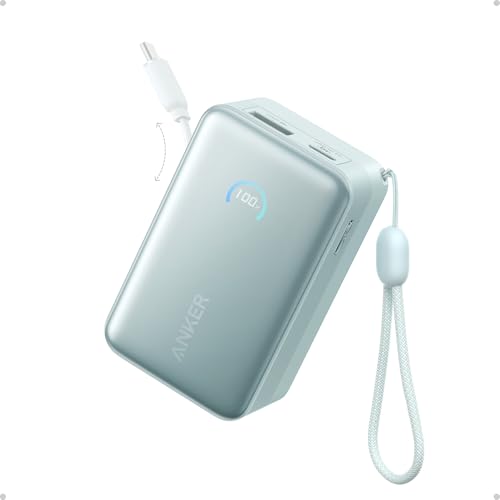
Pros
- Delivers up to 45W maximum output, charging an iPhone 16 Pro to 50% in approximately 27 minutes
- Durable retractable USB-C cable keeps your setup organized and eliminates the need to pack loose wires
- Two-way fast recharging accepts up to 30W input, replenishing the power bank to 100% in roughly two hours
- Informative smart display shows battery percentage clearly without relying on vague LED dots
Cons
- Integrated retractable USB-C cable cannot be independently replaced if the cord or internal spring mechanism wears out
- Nominal 10,000mAh capacity is designed primarily for smartphones and smaller electronics rather than heavy laptop backup
- Lacks wireless or magnetic charging surfaces, requiring a direct wired connection for all connected devices
The Anker Nano 45W 10,000mAh Power Bank is a compact, high-speed portable charger designed specifically for smartphone users, commuters, and mobile travelers seeking clutter-free power on the go. Featuring an integrated retractable USB-C cable and an additional USB-C port, this unit provides a dedicated charging solution for users of newer iPhone models, Samsung Galaxy devices, and other compatible USB-C electronics. It best suits everyday-carry enthusiasts, office workers, students, and frequent flyers who want to fast-charge their mobile gear without packing tangled loose cords.
In terms of charging performance, this battery pack delivers up to 45W maximum single-port output and supports up to 40W fast charging for the iPhone 16 series and compatible Samsung phones. The manufacturer notes that an iPhone 16 Pro can reach 50% battery in approximately 27 minutes using the high-speed connection. It also incorporates pass-through charging technology, allowing you to charge a connected device while the power bank itself is plugged into a power source. While the 10,000mAh nominal capacity represents the internal battery cell rating rather than the exact energy transferred after conversion losses, it provides plenty of backup juice for daily mobile needs.
The physical design emphasizes streamlined portability, measuring 3.21 by 1.99 by 1.42 inches and weighing roughly 8.2 ounces. A key highlight is the built-in retractable USB-C cable, which the manufacturer states is rated for over 20,000 bends, allowing users to pull out the cord to a comfortable length and retract it neatly when finished. The housing also features an integrated smart display that provides clear visual feedback on remaining battery percentage and operational status. Anker integrates 24/7 battery protection systems to monitor operational safety, heat, and power regulation continuously during use.
Recharging the power bank is efficient thanks to two-way fast-charging architecture supporting up to 30W maximum USB-C input. Using an appropriate high-wattage wall adapter, the battery pack can recharge to 100% in approximately two hours. Its modest footprint makes it easy to slip into a purse, sling bag, or carry-on backpack, and the manufacturer lists the unit as flight-approved for standard airline travel. Routine handling is simplified by the all-in-one cable design, meaning you can pull the pack out at an airport gate or desk and begin powering your device immediately.
Despite its versatility, buyers should keep several practical tradeoffs in mind before purchasing. Because the retractable USB-C cable is permanently integrated into the chassis, any potential damage to the wire or retraction spring over long-term use cannot be fixed with a simple cord swap. Additionally, while the 45W peak output is generous for mobile phones and handheld electronics, the 10,000mAh capacity is not intended to serve as a sustained battery backup for power-hungry laptops. Furthermore, the unit does not provide Qi wireless or magnetic charging surfaces, so devices requiring wireless power must rely on a standard cable connection.
For smartphone owners and commuters who prioritize fast wired charging and clean cable management, the Anker Nano 45W 10,000mAh Power Bank offers an exceptionally convenient and capable package. It is especially well-matched for iPhone 16 and Samsung Galaxy users looking to reduce daily bag clutter while enjoying swift top-ups away from a wall outlet. Shoppers seeking multi-device wireless pads or massive capacity for extended off-grid laptop productivity will want to look at larger dedicated battery stations, but for everyday carry and travel, this model delivers solid practical value.
The Anker Nano Power Bank provides strong wired charging capabilities through its 45W maximum single-port USB-C output. The manufacturer states that the USB-C port and built-in cable support up to 40W fast charging for the iPhone 16 series and compatible Samsung devices, allowing an iPhone 16 Pro to reach 50% capacity in about 27 minutes. Actual charging speed will always depend on device power input limits, operating temperature, and current battery levels.
Two-way fast charging ensures rapid replenishment of the battery pack itself via a 30W maximum USB-C input, which can recharge the power bank to 100% in around two hours. The unit also includes pass-through charging technology, enabling simultaneous charging of the external battery and an attached device. Anker incorporates 24/7 battery protection to continuously regulate power delivery, helping maintain safe and steady operation throughout the charge cycle.
Portability is a defining feature of the Anker Nano Power Bank, which measures 3.21 by 1.99 by 1.42 inches and weighs approximately 8.2 ounces. The manufacturer notes this form factor is about 16% smaller than standard 10,000mAh models, making it easy to store in pockets, purses, or commuter backpacks. The built-in retractable USB-C cable allows users to pull out the necessary cord length and retract it cleanly, keeping storage compartments free of tangled wires.
Constructed for everyday durability, the retractable cable is rated to withstand over 20,000 bends during standard operation. An integrated smart display provides precise battery-level data so travelers know exactly how much charge remains before boarding a flight or leaving the house. The manufacturer lists the power bank as flight-approved, offering reliable backup power for airline passengers and daily commuters alike.

Pros
- Integrated retractable USB-C cable eliminates the hassle of carrying and detangling separate charging cords
- Up to 45W single-port USB-C output supplies fast power delivery to compatible smartphones and tablets
- Smart digital display provides immediate visual feedback on remaining battery percentage
- Efficient two-way fast charging allows the internal battery to recharge fully in roughly two hours with a 30W input
- Small footprint and light 8.2-ounce weight make it exceptionally convenient for daily commuting and air travel
Cons
- The built-in retractable connector is permanently USB-C, requiring a separate cable or adapter for older Lightning-equipped devices
- A 10,000mAh capacity is built for portable convenience rather than sustained multi-day off-grid power or large laptop recharging
- A high-wattage wall adapter is not included in the box and must be purchased separately to achieve the two-hour recharge speed
The Anker Nano 45W 10,000mAh Power Bank is a compact portable battery pack engineered primarily for mobile users who want rapid on-the-go charging without carrying tangled cords. Featuring an integrated retractable USB-C cable, an auxiliary USB-C port, and an integrated smart display, this charger targets commuters, daily office workers, students, and travelers seeking dependable backup power. Its design focuses on convenience and pocketability, bridging the gap between pocket battery packs and larger laptop power banks.
In terms of charging performance, the unit offers a nominal battery capacity of 10,000mAh alongside a maximum single-port USB-C output of 45W. The manufacturer specifies that both the built-in cable and USB-C port support up to 40W charging speeds for compatible phones like the iPhone 16 series and modern Samsung Galaxy devices. According to Anker, this power level can elevate an iPhone 16 Pro from zero to 50 percent in roughly 27 minutes. Nominal milliamp-hour capacity reflects internal battery cell ratings rather than net delivered energy, meaning real-world output will vary due to standard conversion loss and device thermal regulation. The unit also includes pass-through charging technology, which lets users power an attached device while simultaneously recharging the internal cell.
The physical layout centers around portability and streamlined cable management. Measuring 3.21 by 1.99 by 1.42 inches and weighing 8.2 ounces, the power bank is roughly 16 percent smaller than standard 10,000mAh bricks. A prominent feature is the pull-to-adjust retractable USB-C cable, which the manufacturer states has undergone testing for more than 20,000 bends to ensure durability over long-term commuting routines. On the exterior, a digital smart display monitors charging parameters and remaining power, replacing traditional multi-dot LED indicators with clear, readable operational status.
Recharging the power bank itself is straightforward thanks to two-way fast-charging architecture. The pack accepts an input of up to 30W over USB-C, which can replenish the internal 10,000mAh battery to full capacity in approximately two hours when connected to a compatible high-wattage wall adapter. While the manufacturer notes the device is flight-approved for air travel, passengers should always double-check current airline regulations and keep spare lithium battery packs in carry-on baggage rather than checked luggage. In everyday use, slipping the smooth housing into a work bag, jacket pocket, or backpack requires minimal effort because the retractable cable remains neatly stowed away until needed.
Despite its versatile design, there are several practical constraints to consider. While 45W is sufficient to fast-charge modern smartphones and provide moderate power to small tablets, a 10,000mAh capacity is generally too limited for sustained power-hungry laptop sessions or multi-day off-grid camping trips. In addition, users with older Lightning-equipped iPhones will still need to supply a separate USB-C to Lightning cable, as the integrated lead is strictly USB-C. The retail package includes the battery pack, an integrated cable, and a 24-month warranty, but a separate high-wattage wall charger is required to achieve the advertised two-hour replenishment speed.
For smartphone owners, daily commuters, and frequent domestic travelers prioritizing compact convenience and fast wired delivery, the Anker Nano 45W Power Bank is an exceptionally well-balanced choice. Its combination of 45W peak output, an integrated retractable cord, and a smart status screen eliminates the clutter of carrying loose cables during a busy workday. Shoppers needing multi-device charging for larger laptops or heavy multi-day power needs may prefer a bulkier 20,000mAh or higher-capacity station, but for pocket-friendly daily carry, this model delivers reliable, efficient performance.
Weighing only 8.2 ounces with compact dimensions of 3.21 by 1.99 by 1.42 inches, this charger is structured for effortless transport in everyday carry bags, briefcases, and travel packs. The retractable USB-C mechanism ensures that the cable stays contained during transit, avoiding knots with keys, pens, or other daily essentials.
With a 10,000mAh nominal capacity, the unit fits well within standard airline carry-on battery limits, serving as a dependable power source for airport terminals, cross-country flights, and busy commutes. Travelers should keep portable power banks inside carry-on personal items rather than stowing them in checked luggage to align with aviation safety policies.
Frequently Asked Questions
Can an Anker Nano power bank recharge directly from solar panels?
No, standalone Anker Nano pocket chargers do not feature onboard solar cells or direct DC solar inputs. They recharge via standard USB-C wall adapters or compatible USB-C power sources. To recharge off-grid via solar energy, you need a dedicated solar power kit like the Anker SOLIX series paired with a 60W or 100W solar panel. Buyers heading into the backcountry often pair compact everyday packs with a solar power bank generator for camping to sustain multiple devices over several days.
What is the difference between listed battery capacity and usable energy?
Listed battery capacity in milliamp-hours (mAh) represents the internal cell rating at nominal voltage, not the exact amount of energy delivered to your device. Voltage conversion from internal 3.7V lithium cells up to 5V, 9V, or higher USB charging levels causes natural energy loss. Power banks also experience minor thermal dissipation during high-speed charging. For a more reliable comparison of delivered energy across varying device voltages, check the watt-hour (Wh) rating provided on the battery specification label.
Does a built-in USB-C connector charge faster than magnetic wireless charging?
Yes, a direct wired USB-C connection typically delivers higher charging wattage and better electrical efficiency than magnetic wireless alternatives. For example, wired Anker Nano models offer 22.5W to 45W output, while Qi2 magnetic wireless chargers provide up to 15W for supported phones. Wired connections avoid the thermal overhead inherent to inductive wireless coils. However, slim magnetic battery packs eliminate loose cables and snap directly to compatible phone cases for convenient one-handed use.
Can a 10,000mAh portable charger power a USB-C laptop?
It depends entirely on the power bank’s maximum single-port output wattage and your laptop’s minimum power threshold. A 10,000mAh battery pack with a 45W USB-C output can charge lightweight USB-C laptops or provide steady supplemental power to a MacBook Air. Conversely, a 22.5W or 30W portable battery may only trickle charge laptops while in sleep mode. Always verify that your laptop supports USB Power Delivery at the charger’s specific output tier.
Are high-capacity solar power banks allowed on commercial flights?
Most commercial airlines permit portable chargers in carry-on baggage as long as their capacity remains under 100 watt-hours (Wh). Compact 5,000mAh and 10,000mAh battery packs fall well below this federal threshold, making them flight-approved. Larger power stations like the 192Wh Anker SOLIX C200 DC exceed the standard 100Wh limit and require airline permission. Spare lithium-ion batteries must always stay in carry-on luggage rather than checked bags.
How practical is a built-in solar panel on an everyday portable charger?
Built-in solar panels on pocket-sized power banks serve primarily as emergency backups rather than primary recharge methods. The small surface area of a single handheld panel generates minimal current under direct sunlight, requiring dozens of hours of clear daylight to replenish a depleted cell. Many shoppers seeking budget-friendly outdoor backup look into an affordable stable connection solar power bank with integrated cables. Recharging via a standard wall outlet remains the most practical method before setting out.





Write Your Review
No reviews yet. Be the first to share your experience!