


Low-battery anxiety can ruin travel when a portable charger suddenly refuses to hold a charge or deliver reliable current. Learning how to repair power bank battery often comes down to distinguishing between a simple cable glitch, a tripped safety circuit, and irreversible cell degradation. Safety always comes first with high-density lithium cells, meaning sealed battery packs should never be punctured or disassembled once physical failure sets in. For travelers needing dependable backup power, checking a detailed specs comparison of power bank features helps determine whether a faulty pack can be revived or if replacement is the smarter move.
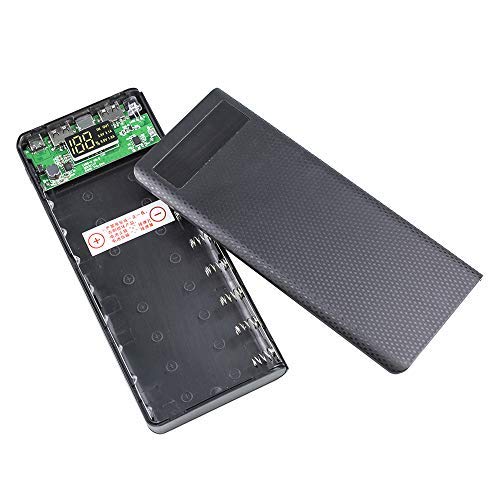
Modular battery boxes offer repairability, while factory-sealed units trade maintenance for compact durability. Understanding power bank capacity, rated output, and protection circuitry lets you diagnose whether an external pack merely needs a full reset cycle or complete replacement. While DIY cases allow users to swap standard flat-head 18650 cells without soldering, integrated packs rely on sealed enclosures to protect sensitive electronics. Knowing these hardware differences prevents dangerous short circuits and keeps your devices safely powered on the go.


Pros
- Two 120V AC outlets with pure sine wave output allow powering small appliances that standard USB power banks cannot support
- Lightweight 3-pound design is compact enough to carry in a bag or store in a vehicle for emergency use
- Multiple output types including AC, USB, and DC provide versatility for different devices and use cases
- Manufacturer lists multiple safety protections including OCP, OVP, short circuit protection, and auto power off protection
- CE, FCC, RoHS, and UL certifications are listed along with factory ISO9001 approval
Cons
- 146Wh capacity is relatively modest, so powering higher-draw AC devices will drain the battery quickly
- Heating appliances are limited to under 100W, and total AC draw must stay under 200W, which restricts what you can plug in
- The manufacturer recommends keeping the battery above 30% and recharging every 3 months to avoid battery degradation, requiring regular maintenance even when not in use
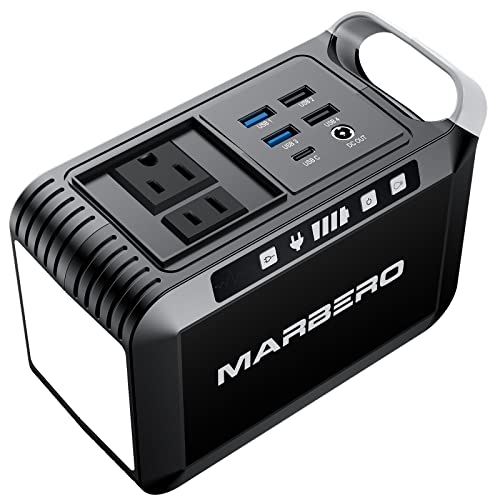
The Powkey 200W is a portable power station rather than a standard USB power bank. It is designed for users who need AC outlet power on the go, not just USB charging. With two 120V AC outlets, four USB ports, and one DC port, it targets campers, road trippers, emergency-kit builders, outdoor event attendees, and anyone who occasionally needs to run small AC-powered appliances away from a wall outlet. This positions it differently from pocket-sized phone chargers - it is a small-scale portable power station meant to bridge the gap between a basic power bank and a full-size generator.
The Powkey 200W lists a 146Wh energy capacity using a Grade A lithium polymer battery. That 146Wh figure describes the total stored energy in the battery, not the exact amount of energy that will reach your devices after conversion losses. The two AC outlets deliver pure sine wave power at 120V with a combined maximum of 200W. Pure sine wave output is a meaningful specification because it produces cleaner current than modified sine wave inverters, which can cause buzzing in speakers, interference in sensitive electronics, and compatibility issues with certain devices. The manufacturer notes that heating products should draw less than 100W, and all connected devices must stay under the 200W combined limit. Users should check the wattage rating of any appliance before plugging it in.
The four USB ports provide additional charging flexibility for smartphones, tablets, and other USB-powered devices, though the product data does not specify individual USB port output wattage or whether any ports support fast-charging protocols like USB Power Delivery or Quick Charge. The DC port adds another output option for compatible accessories. Build quality appears straightforward with a black housing measuring 7.87 x 1.81 x 5.71 inches and a listed net weight of 3 pounds (4 pounds gross weight including all accessories). Four LED indicators serve as the battery level display, providing a simple visual reference rather than a precise percentage readout.
Recharging the Powkey 200W is handled through a 15V/2A DC input, with the manufacturer listing approximately 5-6 hours for a full recharge. This is a reasonable timeframe for a unit of this capacity, and it means you can realistically recharge it overnight or during a workday. The manufacturer emphasizes that the battery should be maintained above 30% charge and recharged at least every three months to prevent degradation - a common recommendation for lithium polymer batteries that users should take seriously to preserve long-term battery health. The unit ships with accessories included in the gross weight, though the product data does not specify whether a wall adapter is included or must be purchased separately.
The most significant limitation of the Powkey 200W is its 146Wh capacity relative to the AC power demands it supports. Running a device that draws 100W from the AC outlet would theoretically deplete the battery in well under two hours after accounting for inverter conversion losses. This makes it suitable for short-duration AC use - charging a laptop, running a small fan, powering a lamp during a brief outage - but not for extended off-grid AC power needs. The 200W cap also means it cannot power hair dryers, space heaters, full-size coffee makers, or other high-draw appliances. Users who need sustained AC power for hours should consider a higher-capacity power station.
The Powkey 200W portable power station is best suited for users who specifically need AC outlet capability in a lightweight, portable package. Campers who want to power a small lamp or charge a laptop at a campsite, families building an emergency power kit for short outages, and road trippers who need to occasionally plug in an AC device will find the most value here. Users who only need to charge phones and tablets would be better served by a standard USB power bank with higher energy density for that purpose. The strongest reason to choose this model is the combination of pure sine wave AC output, multiple port types, and a genuinely portable 3-pound weight - a combination that gives you real outlet power without the bulk of larger power stations.
The Powkey 200W portable power station provides three types of output: two 120V AC outlets, four USB ports, and one DC port. This variety of output types is what distinguishes it from standard USB-only power banks. The AC outlets use pure sine wave inverter technology with a combined maximum output of 200W, which the manufacturer notes is suitable for lamps, phones, laptops, TVs, printers, fans, car pumps, and small appliances as long as total draw stays under 200W.
The product data does not specify individual USB port output ratings, supported fast-charging protocols, or whether any USB ports are USB-C versus USB-A. Buyers who rely on specific fast-charging standards for their smartphones should verify compatibility before purchase. The DC port provides an additional output option, though specific DC output voltage and amperage are not detailed beyond the input specification of 15V/2A for recharging the unit itself.
For recharging, the unit accepts 15V/2A DC input. The manufacturer does not specify whether the included accessories contain a compatible wall adapter or if one must be sourced separately. Users planning to recharge from a vehicle's 12V outlet or solar panel would need to verify input compatibility, as the product data does not mention these recharge methods.
At 3 pounds and 7.87 x 1.81 x 5.71 inches, the Powkey 200W is compact enough to fit in a backpack, carry-on bag, or car trunk without adding significant bulk. This makes it practical for road trips, camping, tailgating, outdoor photography sessions, and situations where temporary AC power would be useful. The relatively slim profile for a power station with AC outlets is one of its distinguishing features.
For air travel, the listed 146Wh energy capacity is a specification travelers should carefully evaluate against current airline and regulatory battery policies. Many airlines reference a 100Wh threshold for lithium batteries carried without special approval, with some allowing batteries between 100Wh and 160Wh with airline approval. The Powkey 200W's 146Wh rating falls in this range, so travelers should verify current rules with their specific airline before attempting to bring it on a flight. Lithium battery policies can vary by carrier and jurisdiction, and this unit should never be placed in checked baggage.
For car-based travel, camping, and outdoor events, the Powkey 200W makes more straightforward sense. Having two AC outlets available at a campsite or in a vehicle provides genuine convenience for powering devices that require standard wall outlets, and the 5-6 hour recharge time means you can top it off from a wall outlet before heading out.
The manufacturer lists several protection systems built into the Powkey 200W: overcurrent protection (OCP), overvoltage protection (OVP), short circuit protection, and auto power off protection. These are standard safety features for portable power stations and are designed to help protect both the unit and connected devices from electrical faults during normal use.
The product lists CE, FCC, RoHS, and UL certifications, along with MSDS and UN38.3 documentation and factory ISO9001 approval. These certifications indicate the manufacturer has submitted the product for relevant compliance testing. The Grade A lithium polymer battery cells are noted as the highest quality available according to the manufacturer.
An important maintenance note from the manufacturer: users should keep the battery level at or above 30% (2 bars on the LED indicator) and recharge the unit at least every 3 months to avoid battery degradation. Lithium polymer batteries can suffer permanent capacity loss if stored at very low charge levels for extended periods, so this recommendation is worth following even if you only use the power station occasionally.

Frequently Asked Questions
Can you safely repair a swollen or degraded power bank battery at home?
No, you should never open or repair a swollen or degraded lithium power bank battery at home. Sealed cells carry severe thermal runaway risks when punctured or modified. If a battery pack stops charging, safe troubleshooting is limited to testing new cables or cleaning debris from the USB-C port. For budget-conscious users, switching to a fresh replacement like a universal Anker power bank under 25 dollars is far safer than physical disassembly.
How do you reset a power bank whose protection circuit has tripped?
It depends on the model, but connecting the battery to an active wall charger often resets tripped protection circuitry. Built-in smart chips automatically shut down output during overcurrent, short circuits, or high operating temperatures. Connecting the unit to its manufacturer-rated input adapter signals the circuit board to restore normal power flow. If status indicator LEDs remain unresponsive after several hours, the internal cells have likely fallen below recoverable voltage thresholds.
What is the best way to maintain a DIY 18650 power bank?
The safest approach is using a solderless modular battery case designed for standard flat-head 18650 lithium cells. Enclosures like the LHIABNN DIY Power Bank Box Flat Head Battery case feature individual slots with automatic polarity detection. This modular setup allows you to swap worn cells without soldering dangerous wiring. Built-in LCD panels show real-time charging status, giving you full control over battery health.
Why do high-capacity portable power stations lose charge in storage?
Normal self-discharge gradually depletes battery cells during storage, risking low-voltage lockouts. High-capacity power stations like the powkey 200W Portable Power Bank require recharging at least every three months to keep power levels above 30 percent. Letting cells sit empty can permanently damage protection electronics. Convenient options like the best Anker power bank with wall plug prevent deep discharge by making routine charging effortless.
When should you replace a power bank instead of troubleshooting how to repair power bank battery?
You should replace an external battery immediately if you notice casing expansion, burning smells, or extreme heat during charging. Swollen packs indicate chemical failure that cannot be repaired safely. When a slim charger like an Evopow unit drops output unexpectedly across USB ports, internal resistance has compromised performance. Proper recycling at an electronics drop-off center is the only safe solution.


Write Your Review
No reviews yet. Be the first to share your experience!