


Running out of battery during an off-grid excursion or power outage disrupts critical communications and navigation. A reliable backup battery drawing energy from the sun eliminates low-battery anxiety by providing self-sustaining power outdoors. An authentic Ef Solar Power Bank On Sale deal helps you secure reserve capacity without spending a fortune on oversized utility gear. Portable stations like the EF ECOFLOW TRAIL 200 deliver pure DC power through versatile ports, making them ideal companions alongside a smart solar power bank for camping. Checking nominal watt-hour ratings and solar input limits ensures steady recharging under direct sunlight.
Balancing energy storage against carry weight is essential when picking portable gear. Pocket chargers with integrated solar panels fit easily into a hiking pack, while larger stations like the EF ECOFLOW RIVER 2 Pro run small appliances. Long-lasting LiFePO4 battery cells maintain reliable cycle life over thousands of recharges, giving you dependable longevity on road trips. Prioritizing fast USB-C Power Delivery guarantees that your phones and tablets stay operational through unexpected delays.

Pros
- Exceptional 140W USB-C PD 3.1 bidirectional port supports high-power modern laptops and rapid station recharging
- Long-lasting LiFePO4 battery chemistry provides stable operation, thermal resistance, and long service longevity
- Quad-port DC layout provides 220W combined output to run four devices simultaneously
- Significantly lighter and smaller footprint than conventional power stations of similar capacity due to the dedicated pure-DC design
Cons
- Does not feature traditional 120V AC wall outlets, restricting use strictly to USB and DC-powered electronics
- Does not include a charging cable or wall adapter in the box, requiring users to supply their own high-wattage USB-C cable and charger
- The 192Wh capacity exceeds the standard 100Wh unrestricted commercial flight limit, requiring airline approval before air travel
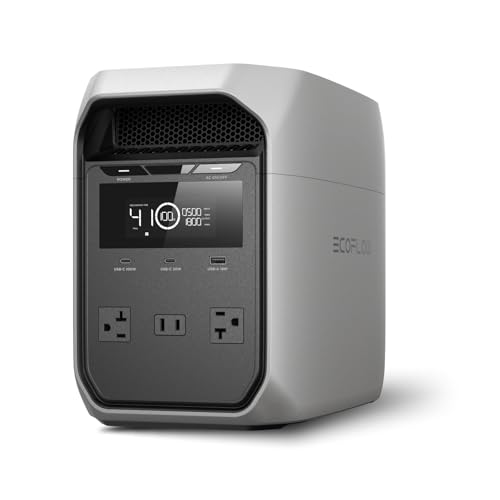
The EcoFlow Trail 200 DC is a high-capacity, DC-only portable power bank station designed primarily for outdoor enthusiasts, remote laptop professionals, field photographers, and mobile device users. Unlike full-sized portable power stations that carry heavy, energy-sapping AC inverters, this unit focuses entirely on pure DC power delivery. By eliminating the internal inverter, EcoFlow creates a dedicated handheld battery hub that is roughly 48 percent lighter and 60 percent smaller than traditional power stations of comparable capacity. This makes it an attractive middle ground between an oversized battery pack and a bulky generator for road trips, campsite tables, and off-grid workstations.
Charging capability is the primary strength of this unit, highlighted by a massive 192Wh energy capacity and a total pure DC output of 220W across four ports. The centerpiece is a USB-C port supporting the USB Power Delivery 3.1 standard, capable of delivering up to 140W in either direction. That level of power output is sufficient to handle high-demand USB-C laptops, professional cameras, and tablets at their maximum supported speeds. A secondary USB-C port provides up to 100W bidirectional power, while two USB-A ports offer 12W each for lower-draw gear such as headlamps, smartwatches, and smartphones. Because pure DC eliminates the standard 15 to 20 percent efficiency loss common with DC-to-AC conversion, connected devices receive direct, efficient power delivery.
Build quality and battery safety are centered on long-term reliability. EcoFlow constructs the Trail 200 DC with LiFePO4 (lithium iron phosphate) battery cells, which offer superior thermal stability, safety, and longevity compared to standard lithium-ion chemistry. The internal pack is monitored by an intelligent Battery Management System (BMS) engineered to provide up to five years of regular outdoor use. For trail and travel readiness, the exterior housing features five layers of physical protection and carries UN38.3 certification for impact and drop resistance, giving outdoor users added reassurance when packing the unit alongside hiking, climbing, or camping equipment.
In practical day-to-day handling, the unit functions as an effortless tabletop charging station. Measuring 6.18 x 8.66 x 7.36 inches, the compact form factor fits easily into a gear bin, backpack, or vehicle console. Recharging the power station itself is straightforward thanks to the bidirectional 140W and 100W USB-C ports, which allow rapid replenishment when paired with a compatible high-wattage USB-C wall charger. However, buyers should prepare their accessory kit in advance, as EcoFlow includes the power station, user guide, and warranty card, but does not include any USB-C charging cables or wall adapters in the package.
There are a few realistic limitations to consider before purchasing. The most obvious is the complete absence of standard three-prong 120V AC wall outlets, meaning household appliances, power tools, and older devices requiring an AC plug cannot be powered by this unit. Additionally, while the 192Wh rating provides ample run time for phones and laptops, it exceeds the typical 100Wh threshold for unrestricted commercial airline carry-on luggage in the United States, meaning travelers must consult their specific airline carrier before flying. Users looking for the lightest pocket-sized commuter charger will also find this unit too substantial for everyday pocket carry.
For outdoor adventurers, mobile content creators, and remote professionals who primarily charge modern USB-C laptops, phones, and camping accessories, the EcoFlow Trail 200 DC is an outstanding investment. It strips away the unnecessary bulk and idle power drain of AC outlets to deliver maximum battery life and fast charging in a remarkably compact, rugged chassis. Shoppers who need AC plugs should look toward the standard EcoFlow River line, but those who want pure, efficient, high-wattage DC power will find this model exceptionally practical.
The EcoFlow Trail 200 DC stands out by providing up to 220W of simultaneous pure DC power across its four ports. The flagship USB-C PD 3.1 port pushes up to 140W, providing full-speed charging capability for power-hungry laptops, mobile workstations, and fast-charging portable electronics. The secondary USB-C port operates at up to 100W, allowing two high-draw devices to charge quickly at the same time.
For smaller devices, the two standard USB-A ports provide steady 12W output each, making them ideal for wireless earbuds, action cameras, camping lanterns, or handheld GPS units. Because the station relies solely on direct DC conversion rather than stepping power up to 120V AC and back down through a brick, energy loss is minimized, resulting in cooler operation and maximized run times from the 192Wh internal battery.
Connectivity on the Trail 200 DC is tailored specifically to modern mobile setups. The front panel includes two USB-A ports (12W each), one 100W bidirectional USB-C port, and one 140W bidirectional USB-C PD 3.1 port. Both USB-C ports function as high-speed inputs for recharging the internal LiFePO4 battery pack as well as outputs for powering connected gear.
Because the unit does not include charging cables in the box, users will need to pair it with high-quality, E-marked 100W or 140W USB-C cables to unlock its maximum rated charging speeds. The clean, forward-facing port layout ensures all four cables can remain plugged in simultaneously without tangling on a desk, picnic table, or tailgate.

Pros
- Ultra-fast 70-minute AC wall recharging reduces downtime before road trips or emergencies
- Durable LFP battery chemistry offers roughly ten years of regular use with over 3,000 rated cycles
- Eleven output ports allow simultaneous powering of phones, laptops, and household gear
- Built-in carry handle and moderate 17.2-pound design keep off-grid transport practical
- Supported by a comprehensive 5-year manufacturer service commitment
Cons
- Weighing over 17 pounds, it is designed for vehicles or campsites rather than standard backpack carry
- Maximum continuous 800W AC output will not run high-wattage heavy appliances like central heaters or large power tools
- Solar panels required for off-grid solar recharging must be purchased separately
The EcoFlow RIVER 2 Pro is a high-capacity portable power station engineered to supply dependable off-grid electricity for road trips, outdoor adventures, mobile workstations, and home emergency backup. Equipped with a 768Wh battery capacity and an 800W continuous AC output, this model bridges the gap between handheld phone chargers and large, stationary home backup generators. It is designed for outdoor enthusiasts, remote professionals, and families who need to power multiple personal electronics, laptops, and modest home appliances away from conventional electrical outlets.
In terms of real-world output, the RIVER 2 Pro features 11 versatile outlets spanning standard AC receptacles to USB-C ports, with the ability to handle appliances drawing up to 1600W through internal output-boosting technology. The 768Wh energy capacity enables users to power essential gear simultaneously without overloading the unit. Internal energy storage relies on durable LFP (Lithium Iron Phosphate) battery cells rated for more than 3,000 charge cycles before dropping to 80 percent capacity, providing nearly ten years of regular service. An integrated Battery Management System (BMS) continuously regulates voltage, current, and operating temperature to preserve internal cell health.
The physical structure prioritizes portability and straightforward operation, measuring 10.5 by 10.1 by 8.5 inches and weighing approximately 17.2 to 18.2 pounds. A sturdy rear-facing handle provides a secure grip when lifting the station in and out of a vehicle trunk or moving it around a job site. The front panel neatly organizes the AC outlets, USB-C and USB-A connections, DC ports, and an informative display screen that provides clear readings for real-time power consumption, input wattage, and remaining runtime.
Recharging the internal power pack is exceptionally fast, taking only 70 minutes to reach a complete charge from a standard AC wall outlet via EcoFlow's X-Stream fast-charging system. For off-grid replenishment, the unit accepts up to 220W of solar input, allowing users to achieve a full battery recharge in approximately 3.5 hours under optimal outdoor conditions. The package includes an AC wall charging cable and user manual, ensuring immediate operational readiness right out of the box without requiring specialized third-party adapters.
The main limitation of the RIVER 2 Pro comes down to physical scale when compared against everyday-carry battery packs. Weighing over 17 pounds, this unit is intended for vehicle transport, basecamp utility, or household emergency kits, and it is not suitable for airline travel or daily commuter backpacks. Additionally, while its 800W continuous output easily supports consumer electronics, televisions, and small kitchen equipment, it cannot run heavy continuous loads like whole-room electric space heaters, standard electric clothes dryers, or large electric ovens.
The EcoFlow RIVER 2 Pro is an outstanding choice for campers, mobile content creators, and homeowners who want rapid wall recharging, versatile 11-port connectivity, and the extended lifespan of LFP battery chemistry. Commuters looking exclusively for pocketable phone power should opt for a lightweight handheld power bank. However, for users who need a dependable, fast-recharging power hub capable of supporting laptops, electronics, and small appliances during travel or power outages, the RIVER 2 Pro provides tremendous practical value.
The standout operational strength of the EcoFlow RIVER 2 Pro is its rapid recharge capability, which eliminates the multi-hour wait times typical of standard high-capacity power banks. Using standard alternating current from a wall outlet, the system utilizes EcoFlow X-Stream technology to charge from zero to 100 percent in just 70 minutes. This makes it easy to replenish power on short notice before bad weather strikes or during a brief stop at an RV park.
For outdoor recreation and emergency scenarios away from the electrical grid, the unit supports clean solar replenishment. With an input capacity of up to 220W of solar energy, the internal battery can be fully recharged in as little as 3.5 hours when connected to compatible solar panels in clear sunlight. The versatile multi-port output array provides 800W continuous AC delivery with transient capability up to 1600W, permitting the operation of up to 80 percent of typical consumer electronics and basic appliances.
The internal battery system utilizes premium Lithium Iron Phosphate (LFP) chemistry, which offers notable thermal stability and longevity compared to traditional lithium-ion formulations. The manufacturer rates these LFP cells for more than 3,000 full charge and discharge cycles before capacity degrades to 80 percent, translating to roughly ten years of daily or weekly use.
Operational safety is governed by an integrated Battery Management System (BMS) that actively tracks real-time operating metrics. This system oversees voltage, amperage, and internal temperatures to prevent electrical stress, overcharging, and excessive heat buildup. Paired with a robust exterior chassis and backed by a 5-year manufacturer service backing, the RIVER 2 Pro is built for dependable long-term field deployment.

Pros
- Up to 20W fast charging output via USB-C for modern smartphones and handheld electronics
- Rugged IPX5 water resistance, shockproofing, and dust sealing withstand outdoor exposure
- Charges up to three devices at the same time using combined wired and wireless outputs
- Dual super-bright flashlights and compass carabiner add practical emergency preparedness value
- Lightweight 0.58-pound profile clips easily to hiking bags or packs into travel luggage
Cons
- Compact solar panel is intended primarily for emergency top-offs rather than rapid daily recharging
- Connecting multiple devices simultaneously distributes power and lowers individual charging speeds
- Maximum 20W output is engineered for phones and small mobile electronics rather than USB-C laptops
The BLAVOR Solar Power Bank 10,000mAh is a rugged portable charger engineered for outdoor enthusiasts, campers, travelers, and emergency-prep users who need durable off-grid backup power. Built around a 10,000mAh Lithium-cobalt battery pack, this unit combines traditional wired power with a wireless charging surface and an emergency solar panel. It best suits American smartphone users, hikers, and commuters seeking a resilient secondary power source that can withstand unpredictable weather while keeping essential mobile gear operational.
In terms of charging performance, the unit features an upgraded USB-C output supporting up to 20W fast charging alongside wireless charging functionality. According to manufacturer claims, the 20W wired connection can power an iPhone 15 up to 65% in approximately 30 minutes, with broad compatibility spanning iPhone, iPad, Samsung Galaxy, and other USB-powered mobile devices. The manufacturer also estimates that a fully charged 10,000mAh battery can recharge an iPhone 8 up to 3.6 times, an iPhone 14 Pro up to 2.2 times, or an iPad Air once. Users can charge up to three devices simultaneously using the available wired and wireless outputs, though connecting multiple devices will divide overall output power.
The physical design emphasizes field durability, featuring flame-retardant ABS and PC construction wrapped in a rubberized protective coating with waterproof silicone port sealing. Measuring 5.9 x 3.1 x 0.8 inches and weighing roughly 0.58 pounds, the battery pack remains comfortably portable for backpacks, daypacks, or glove compartments. It carries an IPX5 water-resistance rating along with dustproof and shockproof qualities to endure outdoor exposure. Dual integrated super-bright flashlights provide nighttime visibility around camp, while the included compass carabiner lets hikers secure the charger directly to exterior pack webbing.
Routine operation is straightforward, with dedicated ports for wired connections and a dedicated surface for wireless charging. Recharging the internal battery pack is primarily completed through its wired input for speed and consistency before heading out on trips. While the integrated solar panel provides an auxiliary method to harvest sunlight, solar inputs on compact hand-held chargers are inherently gradual and best reserved for emergency top-offs rather than daily replenishments. The lightweight profile and included attachment clip make it simple to monitor battery status while trekking or commuting.
Important practical limitations should be weighed before relying solely on this charger in remote locations. First, the 20W peak output is optimized for smartphones, earbuds, and small tablets, meaning it is not designed to power USB-C laptops that require higher wattage profiles. Second, simultaneous multi-device charging will naturally distribute the power budget, reducing individual port speeds across connected gear. Finally, the nominal 10,000mAh capacity will experience standard conversion and circuit losses during wired and wireless transfers, so delivered energy will be lower than the raw battery cell rating.
For hikers, road trippers, and emergency-kit planners wanting an affordable, weather-resistant charger with fast wired and wireless options, the BLAVOR 10,000mAh Solar Power Bank is a practical and versatile choice. Everyday commuters who only need pocketable power for office use may prefer a slimmer, non-rugged power bank without exterior outdoor tools. However, for outdoor recreation and reliable emergency backup, its combination of 20W USB-C output, IPX5 protection, integrated dual flashlights, and durable Lithium-cobalt construction offers solid utility.
The BLAVOR portable charger delivers power through a 20W USB-C fast-charging output as well as an integrated wireless charging pad. This dual-format design accommodates modern smartphones such as iPhone and Samsung Galaxy devices, along with portable accessories like wireless earbuds. The charger supports powering up to three devices simultaneously, providing flexible backup options during outdoor outings or power outages.
Because total power is shared when multiple devices are connected, the fastest charging rates are achieved when plugging a single device directly into the 20W USB-C port. Actual charging speeds will always depend on device reception limits, cable capability, and operating temperatures.
Engineered for outdoor survival and demanding environments, the charger features an IPX5 water-resistant, dustproof, and shock-resistant chassis. The housing combines flame-retardant ABS and PC materials with internal silicone seals and a tactile rubber skin-feel exterior to resist drops and adverse weather.
BLAVOR utilizes a Lithium-cobalt battery composition, which the manufacturer states provides 50% more cycle life compared to standard lithium-polymer cells. Integrated dual super-bright flashlights and an included compass carabiner deliver functional utility for nighttime navigation and gear attachment.

Pros
- Fastest-in-class 60-minute full AC wall recharge using the included standard cable
- Long-lasting LiFePO4 battery cells deliver 3,000+ charge cycles for extended operational life
- Compact 7.7-pound form factor with a rigid molded carry handle for easy portability
- Multiple output options including standard 300W AC wall outlets and USB-C connectivity
- Clean 110W solar charging input enables renewable off-grid energy replenishment
Cons
- A 300W continuous AC output rating cannot run high-draw heating appliances like microwaves, space heaters, or hair dryers
- The 256Wh battery capacity exceeds typical commercial airline carry-on limits (generally capped at 100Wh to 160Wh)
- Solar panels required for renewable outdoor recharging must be purchased separately
The EcoFlow RIVER 2 is a compact, entry-level portable power station engineered to bridge the gap between handheld power banks and bulky emergency generators. Built for mobile device users, outdoor enthusiasts, remote field workers, and suburban emergency kits, this unit provides off-grid electrical independence in a package that fits easily into a vehicle or closet shelf. It allows users to run standard AC wall-plug devices alongside modern USB electronics without needing noisy, gas-powered machinery.
Charging capability is centered around a 256Wh lithium iron phosphate (LiFePO4/LFP) battery pack and an internal inverter providing 300W of continuous AC output, with EcoFlow rating the unit to handle up to 600W for certain essential appliances. The station supports up to six devices simultaneously through a balanced port array that includes standard 300W AC outlets, USB-C, and USB-A connections. This configuration makes it well-suited for keeping smartphones, tablets, USB-C laptops, cameras, CPAP machines, and small camping coolers energized during outdoor trips or unexpected municipal power interruptions.
In terms of physical design and durability, the RIVER 2 weighs approximately 7.7 pounds and measures 9.6 x 8.4 x 5.5 inches, presenting a solid and space-efficient rectangular profile. A sturdy rear-facing integrated carry handle enables quick one-handed transport between a vehicle trunk and a campsite picnic table. Under the hood, EcoFlow integrates an advanced Battery Management System (BMS) that constantly monitors voltage, current, and operating temperatures. The underlying LFP chemistry provides over 3,000 full recharge cycles before degrading to 80 percent of original capacity, representing nearly 10 years of routine use.
Recharging speed is one of the most practical everyday advantages of this power station. Utilizing EcoFlow's X-Stream fast-charging technology, the RIVER 2 can achieve a full zero-to-100-percent recharge from an AC wall outlet in only 60 minutes with the included charging cable. For outdoor off-grid scenarios, the unit also accepts up to 110W of solar input, capable of replenishing the battery in as little as 2.3 hours under optimal sun conditions, giving campers and field crews a sustainable way to maintain power away from civilization.
Users should be mindful of the physical and electrical boundaries inherent to this compact form factor. While 300W of continuous power easily handles consumer electronics, field displays, and small personal gear, it cannot power heavy thermal appliances such as electric skillets, hair dryers, or space heaters. Furthermore, because its 256Wh energy rating surpasses standard FAA and commercial airline carry-on allowances (typically restricted to 100Wh, or 160Wh with airline approval), this battery station is strictly suited for ground travel, road trips, camping excursions, and home preparedness rather than air travel.
The EcoFlow RIVER 2 stands out as an exceptional investment for campers, van travelers, remote digital creators, and homeowners who need a reliable, fast-recharging power station for essential devices and small appliances. Buyers looking to power heavy power tools or entire kitchen setups will need to step up to higher-wattage power stations, but those seeking long-life battery chemistry, rapid AC turnaround, and genuine 7.7-pound portability will find the RIVER 2 to be an outstanding everyday solution.
The EcoFlow RIVER 2 utilizes advanced LFP (lithium iron phosphate) battery cells, providing a substantial lifespan upgrade over traditional lithium-ion alternatives. While conventional battery packs often begin degrading after 500 charge cycles, the LFP cells in the RIVER 2 are rated for more than 3,000 complete charge and discharge cycles before capacity drops to 80 percent. This equates to nearly a decade of regular use, offering long-term reliability for frequent campers and long-term emergency preparation.
With an energy storage capacity of 256Wh and an inverter delivering 300W of continuous AC output, the station offers ample energy reserves for portable electronics. EcoFlow also incorporates power management technology that handles loads up to 600W, preventing unwanted overload shutdowns on supported devices. Integrated thermal and electrical protections continuously track current and voltage fluctuations to ensure safe power delivery across all connected mobile devices and gear.
Recharging convenience is a primary strength of the EcoFlow RIVER 2 platform. Through its integrated X-Stream technology, the unit accepts standard AC wall input via the included wall cable, accomplishing a complete 100 percent recharge in roughly 60 minutes without requiring a bulky external power brick. This allows users to top off their battery completely during a brief stop at home or an RV hookup before heading outdoors.
For remote off-grid operation, the RIVER 2 features a dedicated solar charging port that accommodates up to 110W of clean solar input. When paired with compatible portable solar panels under strong, direct sunlight, the internal MPPT controller can replenish the entire 256Wh battery pack in as little as 2.3 hours. This dual-charging flexibility ensures reliable power availability whether preparing at home or operating off the grid.

Pros
- Four built-in cables provide immediate plug-and-play charging for iPhone, Android, and legacy Micro-USB devices.
- Substantial 49,800 mAh nominal capacity offers extended power reserve for long camping weekends and power outages.
- Versatile charging options combine 22.5W wired fast charging with a 15W wireless pad.
- Rugged IP65-rated body and multi-mode emergency flashlight provide practical utility for outdoor use.
Cons
- Bulky 1.28-inch thick housing and heavy overall footprint make it awkward for standard pocket carry.
- The large 49,800 mAh capacity is likely to exceed typical airline carry-on battery limits without prior approval.
- Solar charging speed is naturally limited by the small surface area and is suitable primarily for emergency replenishment.
The BLASOUL Solar Power Bank is a high-capacity external battery pack engineered specifically for outdoor recreation, emergency backup preparedness, and multi-device mobile users. Outfitted with a nominal 49,800 mAh lithium-polymer battery, built-in cables, and an integrated solar cell, this unit serves as a self-contained mobile power station. It best suits campers, hikers, road trippers, and homeowners preparing for severe weather outages who require dependable backup power without packing a tangled assortment of separate charging accessories.
Charging performance is anchored by versatile wired and wireless options, delivering up to 22.5W through supported Power Delivery 3.0 and Quick Charge 3.0 standards. The dedicated built-in USB-C cable provides up to 20W when used alone, which the manufacturer states can take an iPhone 14 up to 60 percent in approximately 30 minutes. In addition to tethered charging, the unit features an elevated 15W wireless charging pad compatible with wireless-capable devices such as recent Apple iPhone and Samsung Galaxy handsets. Buyers should note that nominal battery capacity represents internal cell storage rather than net delivered energy, as routine voltage conversion and environmental factors naturally influence usable output.
The physical casing measures 7 by 3.66 by 1.28 inches and is built to withstand demanding conditions, featuring an IP65 rating for water, dust, and shock resistance. Cable management is neatly integrated into the frame, stowing three output connectors (Lightning, USB-C, and Micro-USB) along with a USB-A input cable directly within molded channels. An ultra-bright LED flashlight is integrated into the housing, offering steady beam, SOS emergency beacon, and strobe signaling modes for nighttime campsite navigation and roadside breakdowns.
Replenishing the power bank itself can be accomplished either via an external wall adapter using the built-in USB-A lead or through compatible USB-C inputs. While the integrated solar panel provides auxiliary top-off capability when exposed to direct sunlight, solar replenishment is fundamentally slow due to the compact surface area and should be treated as an off-grid safety net rather than a daily charging method. Because of the substantial 1.28-inch profile and heavy battery mass, the charger is much better suited for storage in backpacks, dry bags, or emergency bins than everyday jacket pockets. Furthermore, because a 49,800 mAh lithium battery rating significantly exceeds standard 100Wh airline carry-on limits, air travelers should consult airline policies and avoid counting on this unit for standard commercial flight travel.
The primary limitations of this power bank stem directly from its heavy-duty capacity and ruggedized build. Everyday commuters looking for an ultralight, pocket-friendly charger will find the substantial dimensions cumbersome for quick urban transit. In addition, integrated cables cannot be individually swapped or upgraded if a single connector experiences wear over time, meaning users must handle the tethered leads carefully. Full AC wall replenishment also requires dedicated planning before heading outdoors, as relying on the solar panel alone to fill an empty battery pack of this size is impractical.
The BLASOUL 49800mAh Solar Power Bank is an excellent match for outdoor enthusiasts, remote field workers, and families assembling storm-ready emergency kits. Minimalist commuters and airline passengers will be better served by a slim, lower-capacity power bank that complies smoothly with standard flight regulations. However, for anyone needing multi-day battery reserves, broad cross-device compatibility, and all-in-one cable convenience away from electrical grids, this rugged charger offers outstanding practical value.
Wired charging speeds on the BLASOUL battery pack reach up to 22.5W via compatible PD 3.0 and QC 3.0 fast-charging protocols. The integrated USB-C cable delivers up to 20W output when used independently, offering rapid power delivery to modern smartphones, action cameras, and portable camping gadgets.
Wireless charging functionality supports up to 15W maximum output for Qi-enabled devices. Users can simply place an iPhone, Samsung Galaxy, or compatible wireless earbud case on the designated charging zone, eliminating the need to untangle cords during downtime at camp or at a work desk.
Outdoor resilience is reinforced by an IP65 weather-resistant casing designed to repel dust, splashes, rain, and minor trail impacts. The rugged exterior makes it a dependable companion for kayaking, fishing, backpacking, and unpredictable outdoor environments.
Emergency functionality is bolstered by the top-mounted LED illumination system and solar charging strip. The flashlight toggles between continuous steady light, an emergency SOS distress pulse, and a rapid strobe signal, while the built-in solar panel provides passive trickle replenishment during extended grid failures.

Pros
- High-power dual 140W USB-C PD 3.1 ports allow rapid charging and recharging for modern electronics
- LiFePO4 battery chemistry offers superior cycle life and stability compared to standard lithium-ion packs
- Ultra-compact footprint is roughly 48 percent smaller and 27 percent lighter than comparable AC-equipped units
- Includes a native 12V 10A car accessory port for outdoor and vehicle-based appliances
Cons
- Lacks 120V AC wall outlets, restricting power delivery strictly to DC, USB, and 12V devices
- Charging cables are not included in the box and must be purchased or supplied separately
- At 288Wh, the energy capacity exceeds typical airline carry-on limits for passenger flights
The EcoFlow TRAIL 300 DC is a high-capacity portable power station engineered specifically around pure DC power delivery. Built with a 288Wh energy capacity and a total DC output rating of 300W, this unit bridges the gap between oversized camping power stations and standard handheld power banks. By eliminating the heavy internal AC inverter found on conventional generator stations, EcoFlow created a compact power source tailored for campers, road trippers, digital nomads, and emergency-preparedness kits where USB and 12V gear make up the bulk of portable power demands.
Charging versatility is centered around five DC output ports capable of powering five devices at once. The centerpiece of the layout is a pair of USB-C Power Delivery 3.1 ports that support up to 140W each for both input and output. These high-output ports make the station well suited for power-hungry USB-C laptops, mobile workstations, tablets, and fast-charging smartphones. Accompanying the USB-C ports are two 12W USB-A ports for low-power accessories like earbuds or smartwatches, alongside a standard 12V 10A car accessory socket that can directly run 12V electric coolers, camp lanterns, and small vehicle appliances.
Durability and packability are key highlights of the TRAIL 300 DC design. The station uses premium LiFePO4 (lithium iron phosphate) battery chemistry, which is recognized for stable thermal performance and extended cycle life over traditional lithium chemistries. Measuring 6.18 x 8.66 x 8.39 inches and weighing approximately 5.69 pounds, the unit is roughly 48 percent smaller and 27 percent lighter than EcoFlow River 3 models in a similar capacity range. The rugged, impact-resistant shell and five layers of internal safety protection help the station withstand the vibrations, drops, and rough handling common during outdoor travel.
Replenishing the internal battery is fast and versatile thanks to multiple recharging pathways. When connected to dual 140W USB-C chargers, the TRAIL 300 DC can recharge from 0 to 80 percent in around 85 minutes. For off-grid and vehicle use, the station also accepts up to 110W of car charging input or up to 110W of solar input when paired with compatible solar panels. Buyers should note that EcoFlow does not include charging cables in the box, meaning users will need to provide their own high-wattage USB-C cables and power adapters to achieve optimal charging speeds.
Before buying, shoppers should weigh a few important functional tradeoffs. Because this is a pure DC station, there are no standard three-prong 120V AC wall plugs, meaning traditional household appliances and standard AC wall chargers cannot be plugged in directly. Additionally, while the 288Wh capacity offers substantial stored energy for multi-day trips, it exceeds standard commercial passenger airline battery limits (typically 100Wh to 160Wh with airline approval), so it is not suitable for air travel carry-on baggage. Users must also account for device compatibility, as charging speeds will be governed by the maximum input power supported by the connected phone, tablet, or laptop.
For outdoor enthusiasts, road trippers, and remote workers who primarily rely on modern USB-C electronics and 12V car accessories, the EcoFlow TRAIL 300 DC represents a highly efficient, space-saving power solution. It eliminates the weight and efficiency losses of an unused AC inverter while delivering serious 140W USB-C PD 3.1 output. However, users who require standard AC wall outlets for small home appliances should consider an AC-equipped station instead.
The EcoFlow TRAIL 300 DC features a comprehensive 5-port DC output array capable of delivering up to 300W of total power. It includes two USB-C PD 3.1 ports rated for up to 140W per port, allowing users to charge demanding laptops and fast-charge smartphones at their maximum supported speeds. Two 12W USB-A ports provide steady power for low-drain mobile devices, while an integrated 12V 10A car outlet supports automotive appliances like electric coolers and portable air compressors.
Because the unit relies entirely on pure DC power, it avoids the conversion losses associated with DC-to-AC inverters. This design maximizes energy efficiency when running DC-native gear and USB-powered electronics. However, the system cannot output AC power, so devices requiring a standard 120V wall plug must use compatible USB-C or 12V adapters to draw power from this station.
Equipped with a 288Wh LiFePO4 battery pack, the EcoFlow TRAIL 300 DC provides reliable energy storage designed for long service life and high thermal stability. The internal cells are backed by five layers of electrical protection to guard against overvoltage, overcurrent, short circuits, and extreme temperatures during demanding charge and discharge cycles.
Recharging is flexible across three distinct methods: dual USB-C fast charging, car charging, and solar power. Using dual 140W USB-C inputs, the battery can replenish from 0 to 80 percent in approximately 85 minutes. When traveling off the grid, the station supports up to 110W via vehicle 12V ports or up to 110W from compatible solar panels (sold separately). Note that no charging cables are included in the package, requiring users to supply appropriate cords for their preferred charging setup.
Pros
- Rapid 45-minute recharge to 80 percent minimizes downtime before outdoor excursions or severe weather.
- Durable LiFePO4 battery cells deliver long-term longevity rated for over a decade of regular use.
- Fast sub-10ms transfer switch protects sensitive computers and workstations against data loss during power cuts.
- Robust 1800W AC output with 2600W X-Boost headroom powers both sensitive electronics and heavy appliances.
Cons
- At 26.7 pounds, it requires vehicle transport or two-handed lifting rather than convenient personal carry.
- Not compatible with DELTA 2 Smart Extra Batteries or Delta 3 Series Smart Extra Batteries for capacity expansion.
- Solar panels for off-grid recharging are not included and must be purchased separately.
The EcoFlow DELTA 3 Classic is a high-output portable power station engineered to deliver heavy-duty backup electricity for home emergency preparedness, vehicle camping, remote job sites, and off-grid road trips. Built around a 1024Wh battery capacity, this unit bridges the gap between handheld power banks and bulky fuel-powered generators. It is primarily built for users who need to run demanding electronic equipment away from grid power, providing a dependable solution for keeping laptops, communications gear, medical equipment, and appliances operating during power outages or mobile work sessions.
In terms of output performance, the DELTA 3 Classic provides 1800W of continuous AC output with a 3600W surge threshold, allowing it to start and operate power-demanding devices. The onboard X-Boost technology extends operational support up to 2600W for resistive loads, enabling users to run appliances such as microwaves, refrigerators, and portable cooking gear alongside standard workstations. In addition, the system integrates an emergency power switchover rating of under 10ms. This rapid switchover functions as an uninterruptible power supply (UPS) for desktop PCs, personal servers, and sensitive medical devices, ensuring continuous operation without system rebooting or lost data during blackouts.
The build quality relies on lithium iron phosphate (LiFePO4) battery cells housed in an EV-grade cell-to-chassis (CTC) layout. The manufacturer rates these battery cells for more than 10 years of daily usage, protected by an intelligent Battery Management System that continuously tracks voltage, current, and temperature parameters. With physical dimensions of 7.9 x 11.1 x 15.7 inches and an overall weight of 26.7 pounds, the chassis offers a compact footprint relative to its 1024Wh capacity. The solid casing can be comfortably positioned in an RV cabinet, car trunk, or home closet without consuming excessive room.
Recharging the power station is remarkably fast thanks to EcoFlow X-Stream AC charging technology, which can take the internal battery from 0 to 80 percent in roughly 45 minutes using standard wall power. When traveling off the grid, the station accepts up to 500W of solar input, replenishing the battery in as little as 2.5 hours under optimal sunlight when paired with a compatible solar panel. Users can monitor real-time power metrics and control features wirelessly through the EcoFlow mobile app, which allows charging speed adjustments, scheduling, and specialized standby settings such as Storm Alert mode directly from a smartphone.
There are important operational tradeoffs and hardware limits to consider. Weighing 26.7 pounds, this unit is designed for vehicle transport or stationary setup rather than backpack carry or everyday mobility. Furthermore, the manufacturer explicitly indicates that the DELTA 3 Classic model is not compatible with DELTA 2 Smart Extra Battery or Delta 3 Series Smart Extra Battery units, so the 1024Wh capacity cannot be expanded with add-on battery packs. Solar charging panels are also an optional accessory sold separately, which adds to the overall investment for users seeking renewable solar power.
For remote professionals, road trippers, campers, and homeowners seeking a self-contained emergency power system, the EcoFlow DELTA 3 Classic offers an exceptional combination of fast AC charging, durable LiFePO4 cell longevity, and high continuous output. Its ability to power everything from laptops to refrigerators makes it a dependable backup option for unexpected outages. Those looking for an ultralight pocket-sized charger for daily commuting or users requiring an expandable modular battery system should consider smaller portable chargers or expandable power station models instead.
The EcoFlow DELTA 3 Classic stands out for its high-speed wall recharging capabilities. Using standard AC wall power, proprietary X-Stream technology recharges the 1024Wh battery from 0 to 80 percent in approximately 45 minutes, allowing travelers and emergency planners to prepare the station quickly before a road trip or approaching storm.
For outdoor adventurers and sustainable off-grid applications, the unit features a solar charging input supporting up to 500W. When paired with an optional 500W solar panel under optimal direct sunlight, the power station can reach a full recharge in roughly 2.5 hours, providing renewable power independence at campsites or remote cabins.
Designed for home backup integration, the DELTA 3 Classic features a sub-10ms automatic transfer switch. When connected between a household wall outlet and critical equipment, the station seamlessly takes over battery power within 10 milliseconds if the main electrical supply fails, protecting desktop computers, servers, and sensitive gear from sudden shutdown.
Through the EcoFlow companion smartphone app, users can customize power management preferences, view live input and output wattages, set charging time schedules, and activate Storm Alert mode to ensure the station is fully charged and ready whenever local severe weather threatens the electrical grid.

Pros
- Substantial 48,000 mAh nominal battery capacity provides extensive power reserves away from wall outlets
- Four built-in cables offer complete all-in-one charging convenience without packing extra cords
- Fold-out four-panel solar array significantly improves outdoor solar energy capture compared to single-panel alternatives
- Supports wired, port-based, and wireless charging simultaneously for up to seven devices
Cons
- Substantial 1.57-inch thickness and heavy build make it impractical for standard pocket carry
- High 48,000 mAh nominal capacity exceeds the standard 100 Wh airline carry-on threshold for commercial flights
- Maximum 5V/3A (15W) output does not support high-wattage USB Power Delivery for charging laptops
The SOARAISE 48000mAh Solar Power Bank is an outdoor-focused, high-capacity portable charger engineered for campers, road trippers, emergency-preparedness shoppers, and multi-device users who spend extended time away from AC outlets. Equipped with a massive 48,000 mAh lithium-polymer battery and four foldable solar panels, this unit serves primarily as a self-contained power hub. It is best suited for outdoor recreation, base camps, and severe weather backup where carrying separate cables and finding wall power are difficult.
Charging capability focuses on device versatility and simultaneous power sharing. The charger features a 5V/3A (15W) USB-C port that the manufacturer states can boost an iPhone from 15% to 60% in approximately 30 minutes, alongside two standard USB-A outputs and an integrated wireless charging pad. The system supports charging up to seven devices at the same time across its cables, ports, and wireless surface. Compatible phones include the iPhone 12 through iPhone 17 series as well as Samsung Galaxy S21 through S24 models. Buyers should understand that nominal battery capacity does not equal delivered energy to devices due to normal voltage conversion, thermal overhead, and cable resistance.
The build design emphasizes all-in-one convenience with an outdoor aesthetic. Measuring 6.38 by 3.43 by 1.57 inches, the unit combines a rugged black shell with high-visibility orange accents for quick locating in a backpack or survival tote. Rather than relying on a single small solar cell, it incorporates four fold-out solar panels that unfold to capture sunlight and snap securely against the casing for transport. Four built-in charging cables-USB-C, Phone, Micro-USB, and USB-A-tuck cleanly into molded grooves on the chassis, preventing cable tangles and ensuring support for both modern and legacy devices.
Daily operation and recharging depend on your power source and environment. While the quad-panel solar system is rated by the manufacturer to harvest energy up to five times faster than standard single-panel banks, portable solar charging remains an emergency and supplementary option rather than a quick replacement for grid electricity. For routine use, users should fully replenish the 48,000 mAh pack via wall adapter prior to leaving home, utilizing the solar panels to top off energy during sunny outdoor activities.
There are several realistic limitations buyers must consider before purchasing this model. At over 1.5 inches thick, this battery pack is noticeably bulky and unsuitable for everyday pocket carry or slim purse storage. In addition, its 48,000 mAh rating at typical 3.7V lithium-polymer voltage translates to roughly 177 Wh, which exceeds the standard 100 Wh limit set by the FAA and major international airlines for passenger carry-on bags. Furthermore, the 5V/3A charging ceiling provides standard smartphone fast charging but lacks the higher-wattage USB Power Delivery or PPS protocols required to power full-size laptops.
This solar portable charger is an outstanding choice for outdoor enthusiasts, tailgaters, road trippers, and families preparing home emergency storm kits who need high-capacity backup and total cable independence. Commuters seeking a lightweight pocket companion or air travelers needing a TSA-friendly flight charger should look toward smaller 10,000 mAh or 20,000 mAh battery packs. For off-grid resilience and multi-device camping convenience, the SOARAISE 48000mAh model offers exceptional utility in a durable package.
The SOARAISE 48000mAh Solar Power Bank delivers wide-ranging device connectivity designed to streamline mobile charging without requiring loose cords. The integrated cable array features dedicated USB-C, Phone, Micro-USB, and USB-A plugs, ensuring immediate compatibility with modern smartphones, older electronics, and rechargeable camping accessories.
Beyond the built-in cables, the power bank includes three dedicated ports: two USB-A output ports and a bidirectional USB-C input/output port rated up to 5V/3A. Together with the top-mounted wireless pad, the unit can distribute power to as many as seven connected devices simultaneously, functioning as a practical charging station for group outings and family trips.
Featuring four foldable high-efficiency solar panels, this portable charger captures sunlight up to five times faster than traditional single-panel solar banks according to manufacturer claims. The folding panel design unfolds quickly to maximize surface area under direct sun and folds flat against the body for easy packing.
While the solar panels provide valuable off-grid maintenance and emergency power during extended wilderness trips or power outages, natural solar charging speeds depend heavily on sunlight intensity and outdoor conditions. For best results, users should fully charge the battery via a wall charger before trips, using solar input to supplement power while off the grid.

Pros
- Fast 1-hour AC wall recharging via proprietary X-Stream technology
- Durable LiFePO4 battery cells rated for 3,000 cycles to 80 percent capacity
- Under 10ms UPS transfer switch prevents desktop PCs and routers from rebooting during outages
- Expandable modular design allows capacity growth up to 858Wh via optional extra batteries
- Compact footprint with 7 output ports including high-speed USB-C and 3 standard AC wall outlets
Cons
- Base capacity of 286Wh depletes rapidly when running high-draw heating or cooking appliances
- Carrying weight between 7.7 and 10.4 pounds is significantly heavier than pocket-sized phone battery packs
- Expansion batteries and solar panels must be purchased separately
The EcoFlow River 3 Plus is a compact portable power station engineered to bridge the gap between heavy outdoor generators and pocket-sized USB battery packs. Designed primarily for mobile professionals, campers, road trippers, and emergency home office preparedness, this unit provides traditional wall-style AC electricity alongside dedicated DC mobile outputs. Its integrated 286Wh capacity and 600W continuous output (surging to 1200W with X-Boost) provide a balanced off-grid power solution for running laptops, cameras, network routers, and low-draw electronics away from fixed wall outlets.
Charging capabilities center around seven dedicated output ports designed to power multiple consumer electronics simultaneously. The front panel features three AC outlets supported by a sub-10 millisecond UPS transfer switch, ensuring sensitive equipment like desktop computers and network storage devices remain running during unexpected outages. Mobile devices can recharge through a dedicated high-speed USB-C port, two standard USB-A ports, or a 12V car auxiliary socket. Devices drawing under 100W benefit from internal X-GaNPower efficiency, which EcoFlow notes provides up to twice the operational runtime compared to earlier architectures.
Physical construction balances desktop convenience with outdoor durability across a compact 9.2 by 9.1 by 5.8 inch chassis. The station incorporates an IP54-rated battery compartment to minimize water spray risks, encased in a fire-retardant exterior shell engineered to withstand a 3-foot (1.5-meter) drop. Acoustic performance is kept to a quiet 30 decibels at 1.6 feet during operation, making it unobtrusive in bedrooms, tents, or quiet office environments. An integrated front light bar adds immediate illumination for night travel, campsite staging, or unexpected blackout conditions.
Recharging the River 3 Plus is notably efficient, utilizing EcoFlow's X-Stream AC charging to achieve a zero-to-full recharge in approximately 60 minutes from a standard household outlet. Users operating off-grid can connect up to 220W of solar input to restore full capacity in as little as 1.5 hours under optimal sunlight. Day-to-day operation is streamlined through built-in Wi-Fi and Bluetooth connectivity, allowing users to monitor remaining wattage, adjust charging speeds, schedule power delivery, and receive low-battery warnings via the EcoFlow companion mobile application.
Despite its versatility, the River 3 Plus has distinct operational boundaries that prospective buyers must evaluate. With an internal capacity of 286Wh, running high-draw cooking appliances, power tools, or portable air conditioners will deplete the battery within minutes despite the 1200W X-Boost surge ceiling. Additionally, while compact for an AC power station, its listed weight of approximately 7.7 to 10.4 pounds makes it considerably bulkier than pocketable phone chargers, restricting its practical transport to car trunks, camper vans, or desk setups rather than daily airline carry-ons.
The EcoFlow River 3 Plus represents an outstanding investment for remote workers, tech enthusiasts, and weekend campers seeking dependable power protection and multi-port charging flexibility in a manageable form factor. Its long-lasting LiFePO4 battery chemistry offers 3,000 cycles to 80 percent health, while the sub-10ms UPS switchover makes it exceptionally useful as an uninterruptible power source for home workstations. Buyers who strictly need pocketable phone chargers should opt for smaller mobile battery packs, but those wanting genuine AC wall outlets and solar-ready independence will find the River 3 Plus exceptionally well rounded.
Built with long-lasting Lithium Iron Phosphate (LiFePO4) cell chemistry, the EcoFlow River 3 Plus is rated for 3,000 charge cycles before its capacity degrades to 80 percent, translating to roughly a decade of regular practical use.
For users who outgrow the base 286Wh capacity, the system supports modular battery expansion using EcoFlow Pogo Pin technology. Users can dock an optional EB300 (286Wh) or EB600 (572Wh) battery pack beneath the main unit to expand stored capacity up to 858Wh, while gaining an additional 140W USB-C input and output port without wrestling with external patch cords.
With an automated switchover speed of less than 10 milliseconds, the River 3 Plus operates as an uninterruptible power supply (UPS) for home workstations, desktop PCs, modems, and network-attached storage (NAS) drives.
The unit includes a specialized USB-B to USB-A communication cable that links directly to PCs and NAS hardware. Paired with EcoFlow desktop software, the power station can trigger automatic data saving and safe hardware shutdowns when the battery level drops during an extended power outage.
Frequently Asked Questions About Solar Backup Power
Can an Ef Solar Power Bank On Sale deal fully recharge a phone directly from sunlight?
Yes, compact solar power banks can generate power from sunlight, but recharge times depend heavily on panel surface area. Small single-panel units offer trickle charging intended mainly for emergency top-offs rather than everyday full recharges. Multi-panel arrays or larger solar generators harvest sunlight much faster during peak midday hours. For consistent daily power, user feedback suggests charging from a wall outlet before trips and relying on solar input for maintenance.
What is the difference between watt-hours and milliampere-hours on portable chargers?
Watt-hours (Wh) measure the absolute total energy capacity of a battery, whereas milliampere-hours (mAh) only measure electric charge at a specific voltage. Comparing battery units by Wh provides a more accurate metric across different chemistries and output voltages. Stations like the EF ECOFLOW RIVER 2 specify 256Wh to define total continuous workloads across outlets. For handheld batteries, reviewing a discount solar power bank 26800mah option clarifies how listed capacity translates to phone recharges.
Does a USB-C port guarantee fast laptop charging on portable power stations?
No, a USB-C port does not automatically deliver the high wattage required by modern laptops. Laptops typically need USB Power Delivery protocols supplying 45W to 140W depending on hardware demands. The EF ECOFLOW TRAIL 300 DC provides dual USB-C PD3.1 ports reaching up to 140W per port to support demanding laptops. Checking your laptop power requirement against the station port rating ensures complete compatibility.
How does LiFePO4 battery chemistry benefit outdoor power banks?
LiFePO4 cells deliver exceptional cycle longevity and thermal stability compared to standard lithium-ion batteries. EcoFlow stations using LFP cells often exceed 3,000 cycles before battery capacity drops to 80 percent, representing nearly a decade of regular use. While slightly heavier per watt-hour, their durable chemistry minimizes fire hazards and resists degradation across fluctuating temperatures.
Can you bring a solar power station on a commercial flight in 2026?
Most full-sized power stations cannot board commercial flights because aviation rules cap carry-on lithium batteries at 100Wh without special airline permission. Compact batteries like the BLAVOR 10,000mAh comply with FAA carry-on limits, but larger units like the EF ECOFLOW Delta 3 Classic are prohibited in cabins and cargo holds. Travelers should consult our guide to a travel solar power bank on sale for flight-friendly options.





Write Your Review
No reviews yet. Be the first to share your experience!